

Congress Battles Over Spy Powers
Premium domains for sale
Freedom Is Back In Style
Congress is once again engaged in a great debate over how to reform federal surveillance programs, with privacy hawks demanding a list of restraints on the government’s spy powers, Democrats showing little willingness to work with the administration, and committee leaders trying to get a compromise across the finish line.
Freedom Is Back
In Style
Premium domains for sale
On June 12, Section 702 of the Foreign Intelligence Surveillance Act (FISA), which grants the federal government the authority to surveil foreigners without a warrant, will expire.
“We cannot have a delay in FISA reauthorization,” Rep. Mike Lawler, R-N.Y., who sits on the House Foreign Affairs Committee, told reporters Wednesday.
“I think the Democrats need to stop putzing around on this,” Lawler added. “Let’s get this done and move on.”
For years, critics have demanded changes to the surveillance program, arguing it has led to the warrantless surveillance of Americans whose data is intermingled with that of foreign actors.
In April, Congress voted twice for short-term extensions of the power after failing to agree on a compromise framework for reforms.
House Republican leadership and Rep. Rick Crawford, R-Ark., the top Republican on the House Intelligence Committee, argued the program, which they consider vital for national security, has already been substantially reformed and that President Donald Trump’s administration has cracked down on its abuse.
Meanwhile, Democrats, following the lead of Rep. Jamie Raskin, D-Md., the top Democrat on the House Judiciary Committee, rejected a clean extension, denying Republican leadership the ability to easily overcome defections in their own party.
Most recently, the House passed a compromise bill that acceded to certain House Freedom Caucus requests for stricter warrant requirements and a ban on a government-issued central bank digital currency, but the Senate rejected it, sending the House back a short-term extension of the status quo, which it in turn passed.
Now, Congress is trying to come to a deal as Democrats in the Senate are up in arms about the appointment of Bill Pulte as acting Director of National Intelligence.
“The very nature of our collection is now going to be put in the hands of somebody who has a history of seeking out private information for political gain,” Sen. Chris Murphy, D-Conn., said of Pulte’s appointment.
As director of the Federal Housing Finance Agency, Pulte previously alleged that Federal Reserve Gov. Lisa Cook had improperly listed multiple primary residences.
The Trump administration used this allegation as justification to attempt to oust Cook.
Democrats’ public outrage over Pulte’s appointment could spell trouble for Republicans’ efforts to gather bipartisan support for a FISA extension in the House, as well.
Rep. Jim Himes of Connecticut, the top Democrat on the House intelligence committee, has called Pulte “unqualified.”
— House Freedom Caucus (@freedomcaucus) June 1, 2026
FISA EXPIRES IN 11 DAYS!
Americans are sick of Big Brother spying on them without a warrant.
House Freedom Caucus members are fighting back — demanding real reforms to protect our constitutional rights.
Protect the 4th Amendment.
Reform FISA.
Don’t Spy On Me. pic.twitter.com/9pHMKk410W
In the House, headliner conservatives in the House Freedom Caucus are also seeking to leverage the moment to obtain other privacy protection reforms, such as a permanent ban on the Federal Reserve issuing a central bank digital currency (CBDC).
Privacy hawks argue a digital U.S. dollar would enable constant government surveillance and control over Americans’ transactions.
Sens. Tom Cotton of Arkansas and Chuck Grassley of Iowa, the top Republicans on the Senate intelligence and judiciary committees, respectively, are communicating with colleagues about a potential three-year ban on a CBDC.
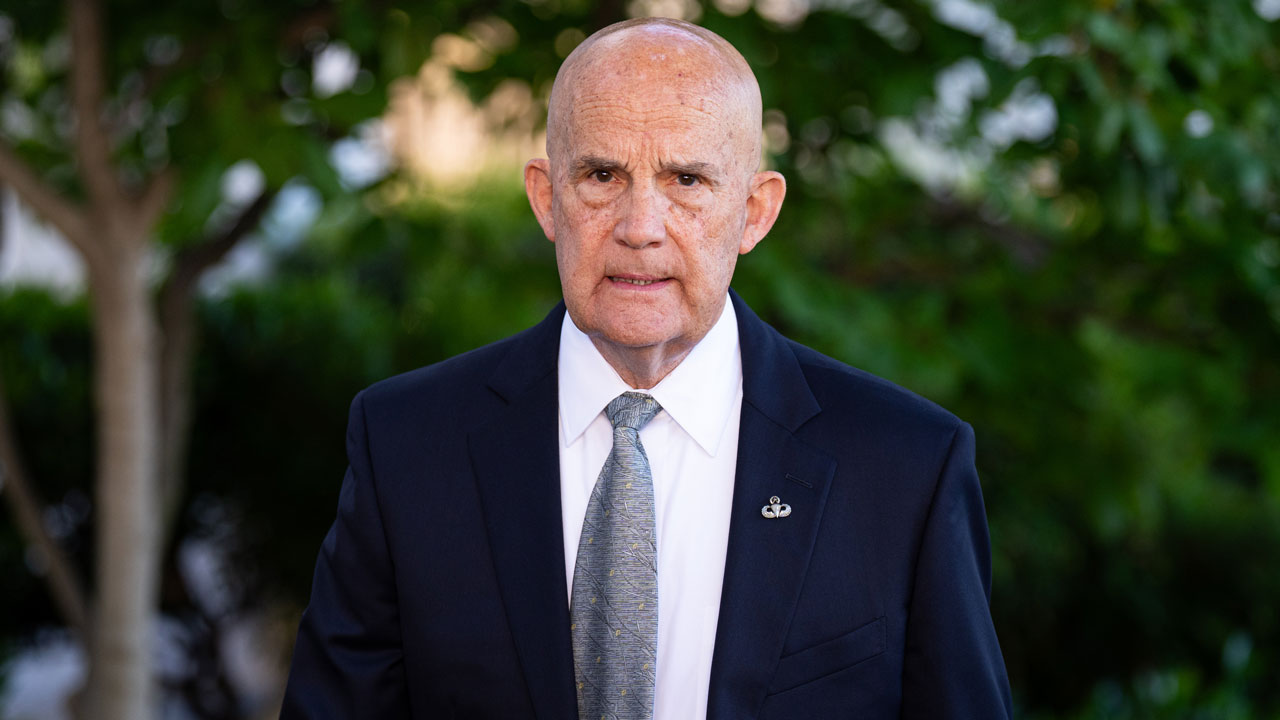
“We have to permanently ban the CBDC,” Rep. Keith Self, R-Texas, wearing a pin with the slogan “Don’t Spy on Me” printed on it, said Wednesday.
He added, “There is no other option. It’s been my position all along and anything else is just a moral issue with me.”
Rep. Andy Harris, R-Md., who chairs the House Freedom Caucus, similarly said Wednesday he’s demanding “protections for the average American citizen from data gathering by the federal government,” listing a permanent ban on a CBDC as a must-have.
Rep. Tim Burchett, R-Tenn., also said a permanent CBDC ban is important to many of his colleagues, since a three-year ban “would go out when the Trump administration goes out. We’re not sure that there will be a Republican in the [White House] and they’ll immediately reverse it.”
Self likewise said, “I don’t like three years. It puts [the expiration] squarely in the target of a new administration.”
More from this network:
Domains for Sale · GOTPeople.org · TheDSAPlatform · The Truth About Socialism
What's Your Reaction?
 Like
0
Like
0
 Dislike
0
Dislike
0
 Love
0
Love
0
 Funny
0
Funny
0
 Wow
0
Wow
0
 Sad
0
Sad
0
 Angry
0
Angry
0

I am just an average American. My teen years were in the late 70s and I participated in all that that decade offered. Started working young, too young. Then I joined the Army before I graduated High School. I spent 25 years in, mostly in Infantry units. Since then I've worked in information technology positions all at small family owned companies. At this rate I'll never be a tech millionaire. When I was young I rode horses as much as I could. I do believe I should have been a cowboy. I'm getting in the saddle again by taking riding lessons and see where it goes.
Premium domains for sale





















Comments (0)