

Fertility has a silent assassin — and it’s everywhere
Premium domains for sale
Freedom Is Back In Style
After a decades-long decline, America is now in the throes of the worst fertility crisis in our nation’s history. A record number of people are not having children.
Freedom Is Back
In Style
Premium domains for sale
The big question is why?
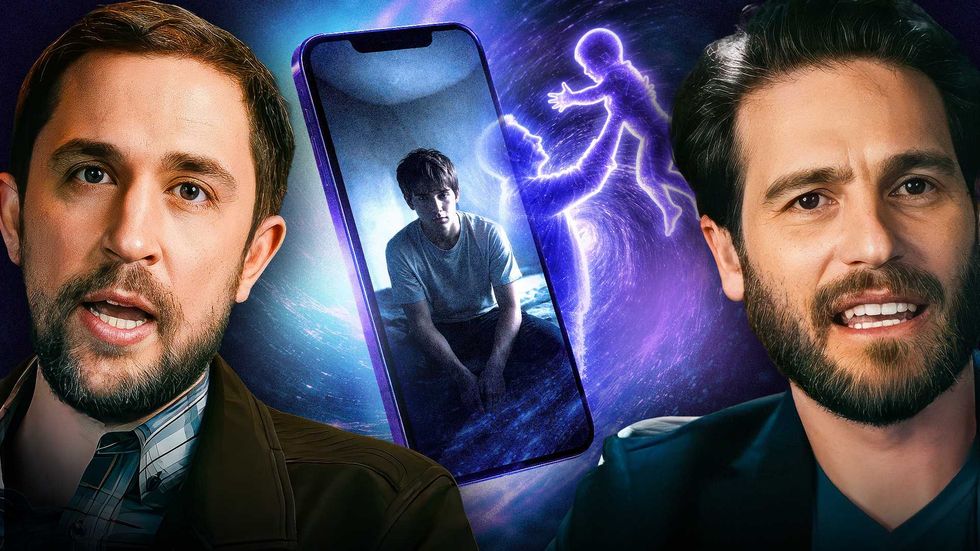
Certainly the answer is multifaceted, but there’s one undeniable driver behind America’s as well as nearly every other country’s declining birth rates, says Lyman Stone, senior fellow and director of the Pronatalism Initiative at the Institute for Family Studies: the iPhone.
On this episode of “Rufo & Lomez,” Christopher Rufo and Jonathan Keeperman speak with Stone about how our most pervasive technology is wrecking the world’s fertility numbers.
While there are many drivers behind globally declining birth rates — infertility issues, financial difficulties, a genuine desire to have fewer children, and even a desire to have no children at all — iPhones, says Stone, are “little sterilization boxes that we all carry in our pockets.”
But it’s not a literal sterilization — “The research suggests that the radiation from them is actually harmless,” Stone says — but rather a social sterilization.
“[Smartphones] change how we socialize together. ... Social media replaces in-person interaction; reading stuff online replaces in-person interaction, replaces intermediation in the physical world,” he explains.
“Increasingly, it's not just that people have fewer babies; they have fewer first kisses; they have fewer one-night stands; they have fewer dinner parties; they have fewer every kind of social interaction ... and so as social media and cell phones are just killing life together,” he adds.
This isn’t just speculation either. The data shows a major decline in face-to-face interaction starting in 2008 — just one year after the first iPhone hit the market.
Before 2008, fertility rates across the world would ebb and flow depending on a variety of circumstances, but following the invention of the iPhone, they’ve stayed consistently low, Stone explains.
The social isolation caused by the iPhone has resulted in a decline in marriage rates, which directly impacts birth rates.
Interestingly, statistics show that people who do marry young are having the amount of children they desire.
“There's no gap between desired fertility and actual fertility on average for people who marry before age 26,” says Stone.
Further, countries that have “religious prohibitions” on iPhone usage for extended periods of the day have also maintained higher birth rates.
“So Israel with Shabbat or Muslim countries, where we know from cellphone data everybody turns off their cell phone for 20 minutes five times a day ... still have high fertility,” says Stone.
iPhones, he explains, essentially turn off “the part of our brain that's supposed to know your tribe and recognize your tribe and really want to have sex with your tribe.”
Simultaneously, it supplies “an endless stream of porn” to keep people sexually satiated without producing children.
To hear more about the factors behind the world’s declining birth rate, watch the full interview above.
Want more from Rufo & Lomez?
To enjoy more of the news through the anthropological lens of Christopher Rufo and Lomez, subscribe to BlazeTV — the largest multi-platform network of voices who love America, defend the Constitution, and live the American dream.
More from this network:
Domains for Sale · GOTPeople.org · TheDSAPlatform · The Truth About Socialism
What's Your Reaction?
 Like
0
Like
0
 Dislike
0
Dislike
0
 Love
0
Love
0
 Funny
0
Funny
0
 Wow
0
Wow
0
 Sad
0
Sad
0
 Angry
0
Angry
0

I am just an average American. My teen years were in the late 70s and I participated in all that that decade offered. Started working young, too young. Then I joined the Army before I graduated High School. I spent 25 years in, mostly in Infantry units. Since then I've worked in information technology positions all at small family owned companies. At this rate I'll never be a tech millionaire. When I was young I rode horses as much as I could. I do believe I should have been a cowboy. I'm getting in the saddle again by taking riding lessons and see where it goes.
Premium domains for sale














Comments (0)