

High Tariff Could Harm American Semiconductor Industry. Here’s How to Get the Policy Right.
Premium domains for sale
Freedom Is Back In Style
All Americans should congratulate President Donald J. Trump on his progress to insource more American manufacturing. That being said, tariffs are tricky things.
Freedom Is Back
In Style
Premium domains for sale
If a country imposes no tariffs, it may well see its domestic industry bleed away to other countries. America saw a lot of that in recent decades. However, raise tariffs too high and on the wrong sectors of the economy, and you risk pinching off growth by eliminating inputs that industry needs to grow.
Americans are at this delicate point right now with the semiconductor industry.
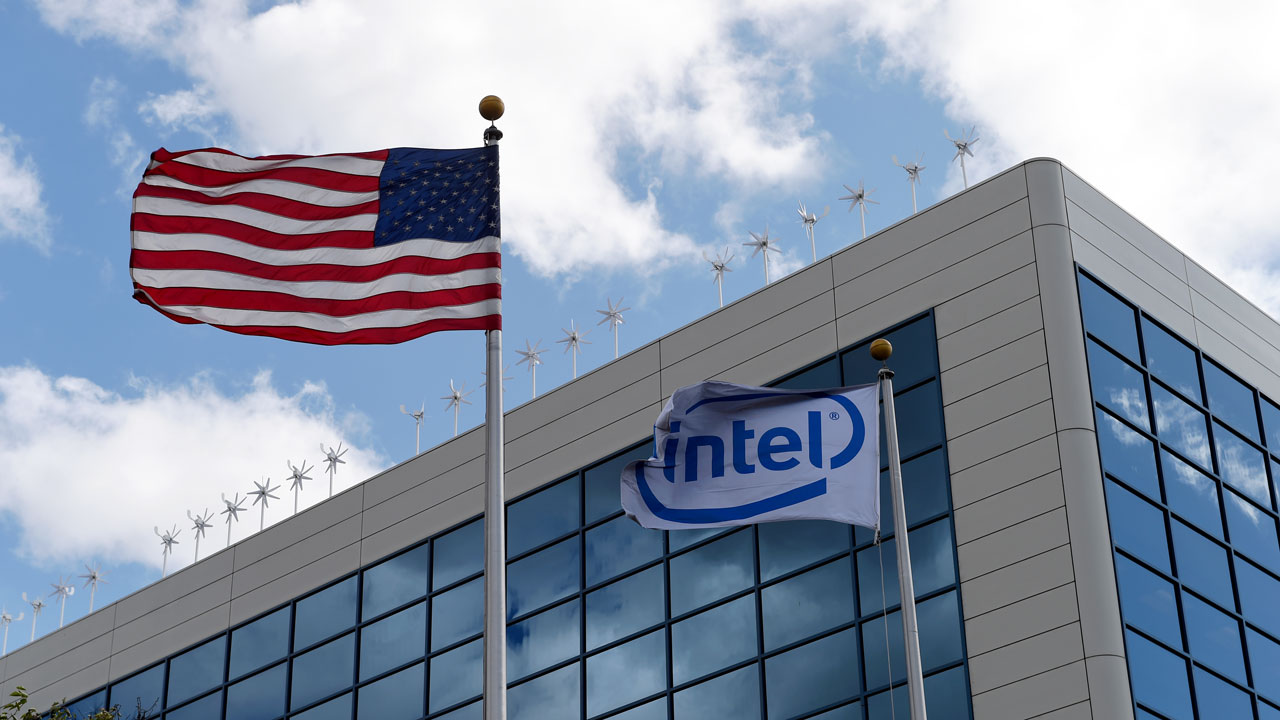
The Trump administration has taken sensible steps to build up semiconductor supply chains. Doing so is a cornerstone of its trade and national security agenda. It has used targeted Section 232 actions and policies to encourage domestic investment. This has strengthened America’s manufacturing base and improved the country’s strategic position.
By imposing sensible import limits, the administration has encouraged investment from other countries, which has helped improve trade and security relationships and created American jobs.
But it is important to remember that reshoring manufacturing requires time. The process is well underway, but imposing higher tariffs could end up harming the project instead of boosting it.
Building semiconductor fabrication facilities takes years and costs tens of billions of dollars. Domestic production is increasing every week, but that doesn’t change the fact that many domestic manufacturers–including defense contractors, automakers, medical device manufacturers, and tech companies–are going to continue to need to import semiconductors through globally integrated supply chains for years to come.
That means that if the administration imposes heavy tariffs before enough domestic capacity exists, the cost to make things here may become too high, increasing prices for everyone but not developing alternative sources of supply.
One policy the Trump administration seems wed to is broad tariffs through Section 232 of the Trade Expansion Act.
“In January 2026, the Trump administration began implementing a new round of Section 232 tariffs on semiconductors, semiconductor machinery, and downstream technology goods, citing national security concerns,” the Information Technology
& Innovation Foundation (ITIF) wrote. “The first phase imposed a 25 percent tariff on a narrow subset of semiconductors, while the second phase is expected to sharply raise tariff rates and introduce an offset program to reward firms investing in U.S. semiconductor production.”
ITIF warns that this tariff alone would reduce Information Communication and Technology consumption by 26 percent, directly impacting U.S. businesses, workers, and capital investment throughout the economy.
A higher tariff, of course, would slow down growth even more. “A 50 percent tariff on semiconductors would cause U.S. GDP to decline by more than $122 billion in the first year of implementation and by a cumulative $4.4 trillion over 10 years.”
Modern defense systems rely on semiconductors at every level, from missile defense systems and secure communications equipment to satellites, radar, cybersecurity infrastructure, and other AI-enabled capabilities.
It goes without saying that the U.S. cannot maintain its technological and military advantage if critical inputs become unnecessarily more expensive or difficult to obtain.
High semiconductor tariffs could cause supply chain disruptions that delay or increase the cost of these components could ultimately slow down procurement, weaken readiness, and increase costs across the defense industrial base.
The United States is competing with China on manufacturing capacity and innovation in the high-tech space. Our trade policy must boost the companies that are leading the American innovation economy. The U.S. cannot achieve and maintain its AI/technology leadership if tariffs constrain access to key materials.
The administration has taken sensible steps to boost and protect American industry, especially the semiconductor makers. But moving too fast or going too far risks endangering the gains it has made. Policymakers should slow down and give their policies a chance to work instead of boosting tariffs yet again.
We publish a variety of perspectives. Nothing written here is to be construed as representing the views of the Daily Signal.
More from this network:
Domains for Sale · GOTPeople.org · TheDSAPlatform · The Truth About Socialism
What's Your Reaction?
 Like
0
Like
0
 Dislike
0
Dislike
0
 Love
0
Love
0
 Funny
0
Funny
0
 Wow
0
Wow
0
 Sad
0
Sad
0
 Angry
0
Angry
0

I am just an average American. My teen years were in the late 70s and I participated in all that that decade offered. Started working young, too young. Then I joined the Army before I graduated High School. I spent 25 years in, mostly in Infantry units. Since then I've worked in information technology positions all at small family owned companies. At this rate I'll never be a tech millionaire. When I was young I rode horses as much as I could. I do believe I should have been a cowboy. I'm getting in the saddle again by taking riding lessons and see where it goes.
Premium domains for sale



















Comments (0)