

How ‘Pride And Prejudice’ Exposes The Empty Promise Of Hollywood’s Hypersexualized Romances
Premium domains for sale
Freedom Is Back In Style
This article is part of Upstream, The Daily Wire’s new home for culture and lifestyle. Real human insight and human stories — from our featured writers to you.
Freedom Is Back
In Style
Premium domains for sale
***
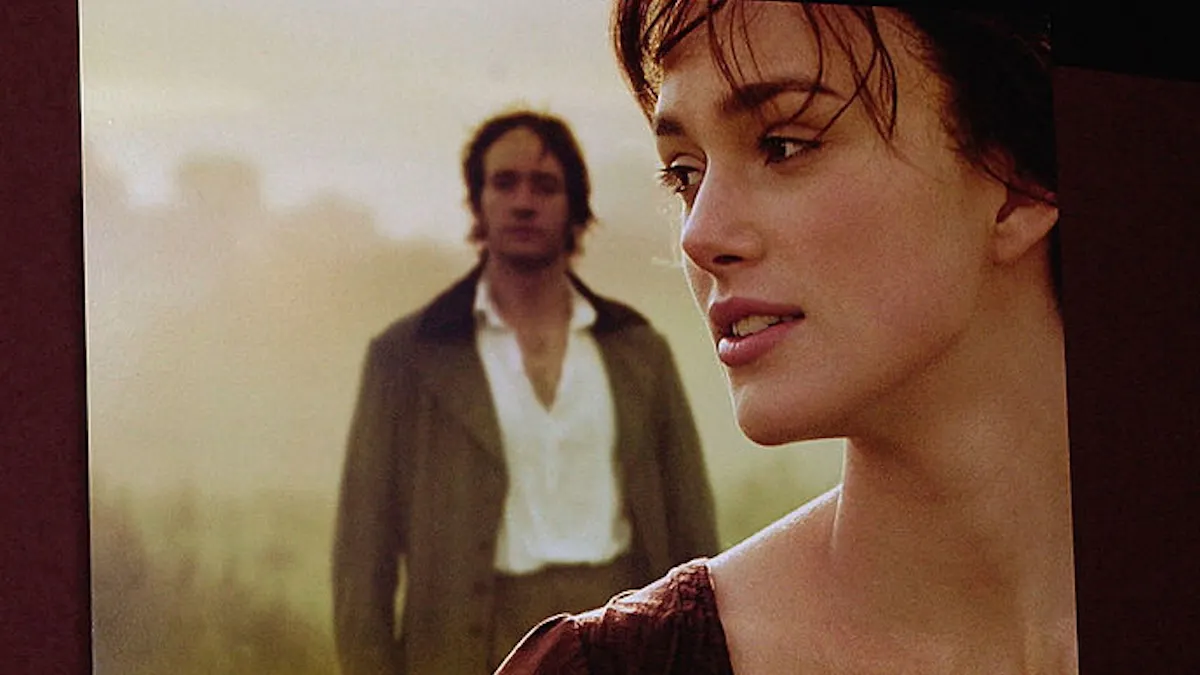
Ladies love the 1995 and 2005 film versions of “Pride and Prejudice.” Their timelessness has inspired a dedicated base of fans who prize the romantic, heartfelt relationships that have the time to build through character development and genuine affection.
Both beloved films had very little kissing and zero sex scenes, as pro-life activist Lila Rose recently noted, yet they managed to become wildly popular. The 2005 “Pride & Prejudice“ starring Keira Knightley was a box office success, grossing $121.6 million over a $28 million budget. The 1995 “Pride and Prejudice” BBC miniseries starring Colin Firth and Jennifer Ehle drew in about 10-11 million views per episode, selling 12,000 VHS copies within the first two hours of its release.
But Hollywood’s latest attempts to take on 19th-century romance have repeatedly resulted in historically inaccurate, hypersexualized cinema that fails to hold up against the established classics.
The smutty Jane Austen knock-off show “Bridgerton” brags an expensive budget of $7 million per episode, but the sparkle of the show seems to be dwindling. Though the viewer numbers are still high, season 4 streams dropped 12% from season 3 as the repetitive “will-they-won’t-they have sex” plot becomes predictable to audiences.
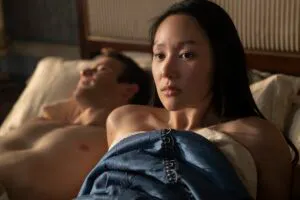
Liam Daniel/Netflix
In “Bridgerton,” the highlight of the season is often a dramatic sex scene for the main lovers, reinforcing in women’s minds that satisfying and steamy sex is the reward one should be looking for in a relationship. According to the show, a good love story is all about physicality and satisfying lust. But in faithful Jane Austen adaptations, physical touch is rare.
Romance is Darcy offering his hand as Elizabeth gets into the carriage, palms meeting during a dance, and, ultimately, the good character of Darcy slowly being revealed, leading to a mutual declaration of love after recognizing one another’s character flaws. Physical chemistry means little without the quick-witted interactions, brutal honesty, and the realization that Darcy is willing to go to great lengths to protect Elizabeth (and her family’s) reputation, even after she rejects him.
Mr. Darcy’s hand flex after holding Elizabeth’s hand ????#PrideandPrejudice #JaneAusten #romance #film https://t.co/XJfdGi4Vse pic.twitter.com/7FirXtmTqb
— Anonymous Galore / AG ???? (@AnonymousGalore) July 23, 2024
The works of Jane Austen demonstrate a much deeper sort of love than what is seen on screens today, which is why those renditions have a longevity few modern series will have. While the wave of Austen adaptations produced in the ’90s and ’00s evoked the maturation of characters and realistic proprieties of the day, today’s pieces such as “Wuthering Heights” or “Bridgerton” and its many copycats prioritize graphic sex scenes and flashy costumes over story quality and true romance.
All of Jane Austen’s heroines have their own flaws, but there is character growth, usually brought about by the love interest of the heroine. Darcy highlights Elizabeth’s wrongful assumptions about him, and Elizabeth reprimands Darcy for his arrogance and pride. Austen understood that real love meant a willingness to call out one another’s misgivings and hold relationships to a higher standard. In the best relationships, both parties are bettered by each other.
In “Pride and Prejudice,” Austen illustrates not only what good character in a man can look like, but also the type of love interest to avoid. Elizabeth’s younger sister Lydia causes a scandal when she runs away with the deceitful Wickham, thinking marriage will soon follow. How many young women today let themselves follow a man with the promise of a “one day” that is never to come?
Running off with a man you aren’t married to isn’t the scandal it was in the 1800s, but Austen seems to tell her readers they can hope for better than Wickham. A man may be charming, handsome, and flirtatious, but that’s not what makes him worthy. A worthy man recognizes his flaws, seeks to redeem broken situations, and protects the dignity and heart of the woman he loves.
In an age where loneliness is on the rise and women are feeling disenchanted by dating and marriage, it’s time to evaluate what expectations are being promoted within our culture that may be leading them to feel unfulfilled or heartbroken.
A “Bridgerton”-style relationship based on lust will not lead modern women to satisfying romantic relationships. Women need men with good character; they need men like those written by Jane Austen. The more we show healthy relationships in media, the better we are as a culture. Perhaps there’s a chance for life to imitate art?
***
Ali Holcomb is the communications adviser at Advancing American Freedom Foundation. Julia Jensen is the communications assistant at Advancing American Freedom Foundation.
More from this network:
Domains for Sale · GOTPeople.org · TheDSAPlatform · The Truth About Socialism
What's Your Reaction?
 Like
0
Like
0
 Dislike
0
Dislike
0
 Love
0
Love
0
 Funny
0
Funny
0
 Wow
0
Wow
0
 Sad
0
Sad
0
 Angry
0
Angry
0

I am just an average American. My teen years were in the late 70s and I participated in all that that decade offered. Started working young, too young. Then I joined the Army before I graduated High School. I spent 25 years in, mostly in Infantry units. Since then I've worked in information technology positions all at small family owned companies. At this rate I'll never be a tech millionaire. When I was young I rode horses as much as I could. I do believe I should have been a cowboy. I'm getting in the saddle again by taking riding lessons and see where it goes.
Premium domains for sale
















Comments (0)