

‘Iryna’s Law’ and the Bad Judges Who Make It Necessary
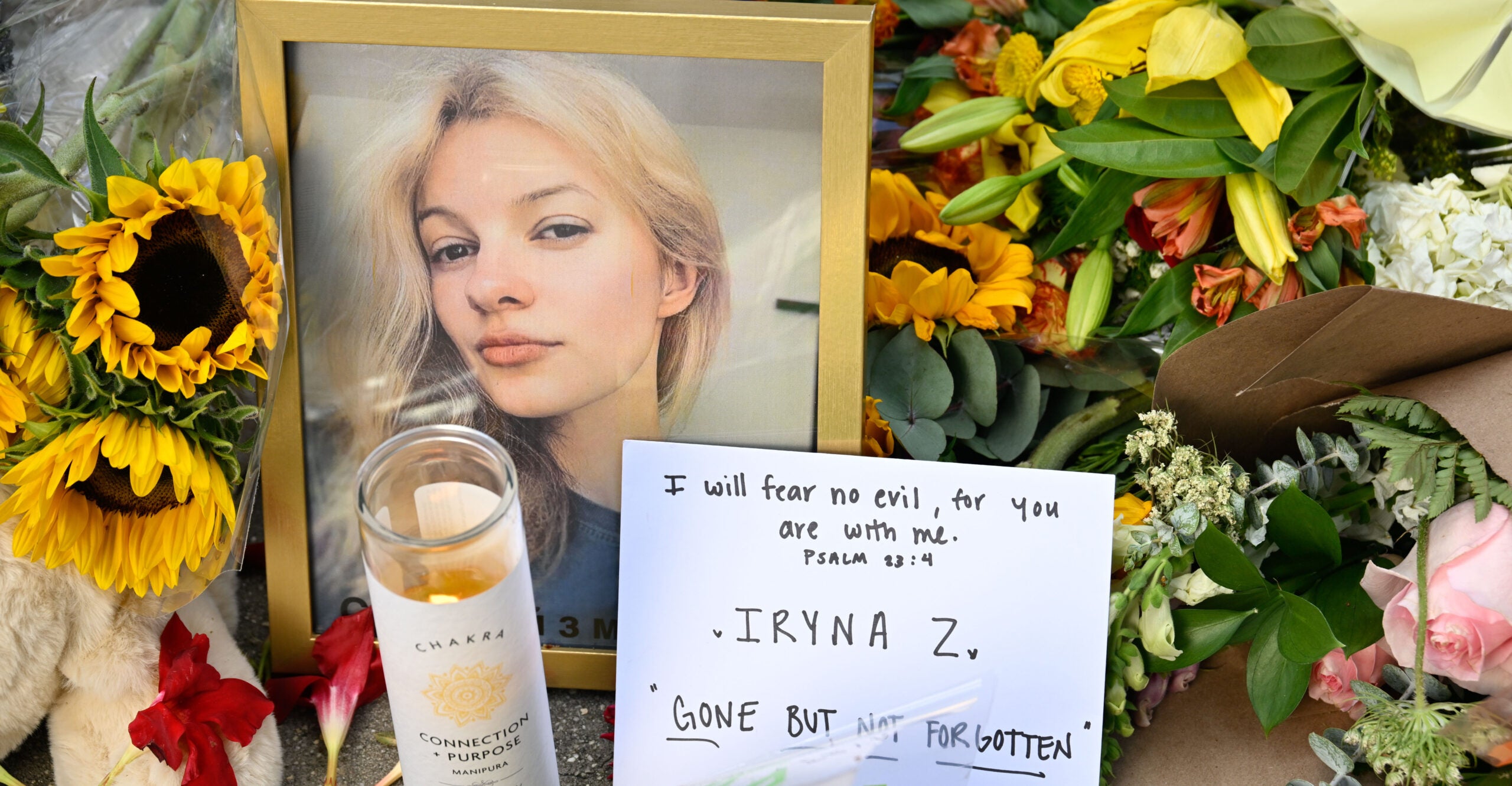
What will it take to get crime under control in our subways and public transit systems?
Live Your Best Retirement
Fun • Funds • Fitness • Freedom
On Monday, news broke of another passenger set on fire in New York City’s subway—though this story wasn’t all it seemed.
The homeless man who at first said he was the victim of an attack turned tight-lipped when police pressed him about what happened.
Had he set his own clothes ablaze to attract attention?
In the wild environment our subways have become, a malicious attack or a madman’s self-inflicted injury are both all too believable.
Most trips on the New York subway or Washington, D.C.’s metro system don’t resemble a clip from “Mad Max,” but sooner or later, anyone who rides the rails of our cities regularly encounters insanity, aggression, and the prospect of violence—or actual violence, including the murderous kind.
The life-changing and very nearly life-ending attack on Bethany MaGee, the woman set aflame on a Chicago Blue Line train last month, was no hoax.
Nor was the assault that killed Iryna Zarutska on a commuter train in Charlotte, North Carolina, this summer.
Nor was the burning alive of Debrina Kawam on the New York subway last December.
None of those women had any reason to fear for her life, yet a commute turned into unspeakable terror.
And it was predictable—not because these victims had anything special to fear but because everyone knows what’s allowed to happen in the tunnels and on the trains.
If a thug with 72 arrests to his name, like the man who tried to immolate the 26-year-old MaGee in Chicago—or with “just” 14 arrests, like Iryna’s murderer—decides this is the day to take an unsuspecting victim, what chance does she have?
Her fate was already decided by judges who chose not to lock up men who were a demonstrated threat to the public.
The killers and would-be killers are only half the problem.
The other half are the judges and lawmakers who put them on the streets in the first place, leaving them free to ambush unsuspecting victims on train cars, where they can’t escape.
(MaGee did try running, but her attacker caught up and torched her.)
Legislators in North Carolina, at least, are trying to stop this murderous chain of events before it begins, by putting men with criminal records like those of Iryna’s killer in prison or mental institutions as soon as they start breaking the law.
“Iryna’s Law” restricts cashless bail, requires judges to order more mental evaluations, and makes it easier to involuntarily commit offenders found to be disturbed.
It also attempts to restore the death penalty in North Carolina, which has been blocked for nearly 20 years by legal challenges.
The law is a good start, and other states need similar reforms to incarcerate and institutionalize more of the people who commit horrors like the subway attacks of recent months.
There’s a federal role in this, too, including rigorous enforcement of immigration law:
Sebastian Zapeta-Calil, the man charged with burning Kawam to death, is an illegal immigrant who should never have been in this country to begin with.
Yet more is needed: Not only zero tolerance toward violent and repeat offenders but zero tolerance in the political process for judges who go easy on them.
Some states elect judges, and voters in those places can make known just how they feel about judges’ culpability for crimes committed by the lawbreakers they set loose.
And states have provisions for impeaching judges, just as the federal government does.
Where judges egregiously endanger the public with their leniency toward criminals, they should be impeached and removed from office.
It wouldn’t take many examples before soft-on-crime judges got the message.
Of course, judges themselves, where they aren’t elected by the public, are appointed by politicians who have to answer to voters—and those pols should feel the heat, too.
Five years ago, progressives were pushing, in all seriousness, to “defund the police” and “abolish bail,” meaning, in the latter instance, simply releasing a wider array of arrestees.
In most of the country, those slogans were not political winners, but advocates for these policies count more on elite sympathy, especially within the legal profession, than they do on ballot-box victories.
Their gamble is that most Americans pay no mind to the inner workings of state courts and legislatures, so what loses in an election can still win where laws and legal precedents are actually made.
This populist moment in national politics arises from the distrust our leaders have engendered among the public.
But leaders in states and cities have betrayed Americans’ trust, too, and their betrayal turns public transportation into scenes of public execution for innocents like Iryna Zarutska.
COPYRIGHT 2025 CREATORS.COM
We publish a variety of perspectives. Nothing written here is to be construed as representing the views of The Daily Signal.
The post ‘Iryna’s Law’ and the Bad Judges Who Make It Necessary appeared first on The Daily Signal.
What's Your Reaction?
 Like
0
Like
0
 Dislike
0
Dislike
0
 Love
0
Love
0
 Funny
0
Funny
0
 Wow
0
Wow
0
 Sad
0
Sad
0
 Angry
0
Angry
0

I am just an average American. My teen years were in the late 70s and I participated in all that that decade offered. Started working young, too young. Then I joined the Army before I graduated High School. I spent 25 years in, mostly in Infantry units. Since then I've worked in information technology positions all at small family owned companies. At this rate I'll never be a tech millionaire. When I was young I rode horses as much as I could. I do believe I should have been a cowboy. I'm getting in the saddle again by taking riding lessons and see where it goes.

















Comments (0)