

Just Who Are The Democratic Socialists Of America?
Premium domains for sale
Freedom Is Back In Style
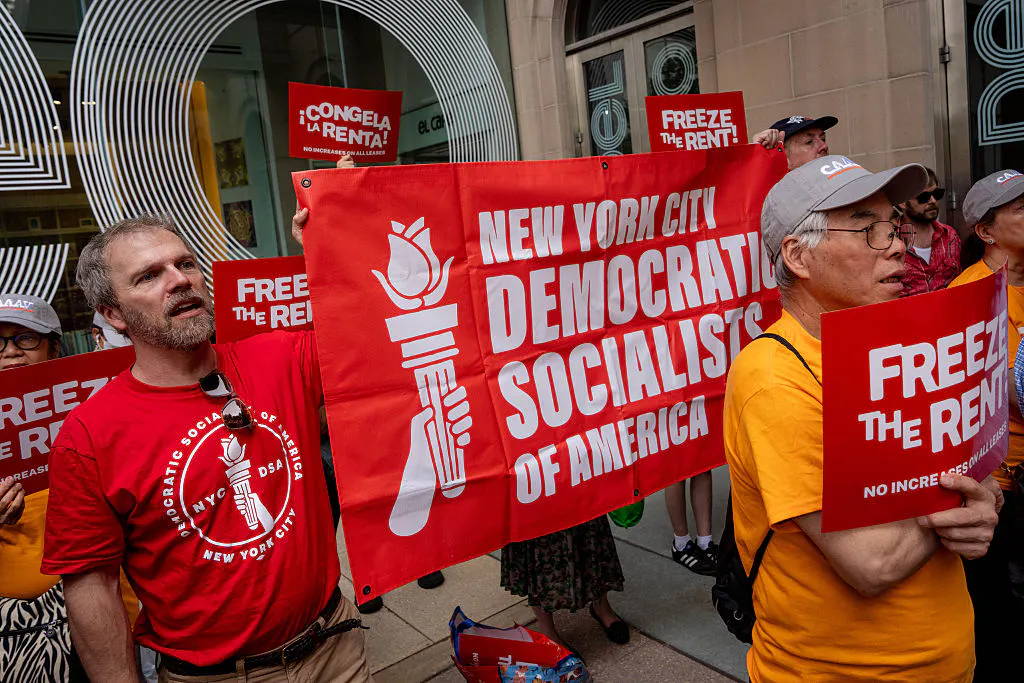
Recent high-profile electoral successes have thrust the Democratic Socialists of America (DSA) back into the national spotlight, but public understanding of the group’s far-left worldview lags considerably behind the understanding of its political influence. It is crucial for Americans to appreciate that the DSA has become a deeply radical organization, with a membership whose politics increasingly roll right off the leftmost edge of the ideological spectrum.
Freedom Is Back
In Style
Premium domains for sale
In its newly updated platform, the DSA calls for (among many other things) the wholesale abolition of capitalism — to be replaced by a centrally planned “classless society” wherein government monopolizes socioeconomic life. It seeks to abolish police, prisons, and immigration enforcement, defund the U.S. military, eliminate the Senate, and remove federal checks-and-balances by making the executive and judicial branches explicitly subordinate to the legislative.
The DSA is organized as a 501(c)(4) nonprofit — not a political party — and it is overwhelmingly funded through membership dues. These accounted for over 87 percent of its total revenue of $6.38 million in 2024 — a budget that is quite modest by national political activist groups’ standards. It also maintains a much smaller 501(c)(3) charitable affiliate called the Democratic Socialists of America Fund, which raised just $399,886 that year. On a dollar-for-dollar basis, it is hard to point to a group that currently commands more attention in Democratic Party politics than the DSA.
This was not always the case. Most of the group’s current influence can be traced to growth that began in earnest following the 2016 election cycle. This increase in membership has been accompanied by steady political radicalization, to the point where the DSA may now be considered an organ of the revolutionary far-left — one which has found common cause with Marxist-Leninist one-party states such as China and Cuba, and attacked the United States as “the heart of a global capitalist empire that has wrought untold suffering on billions of people and the environment.”
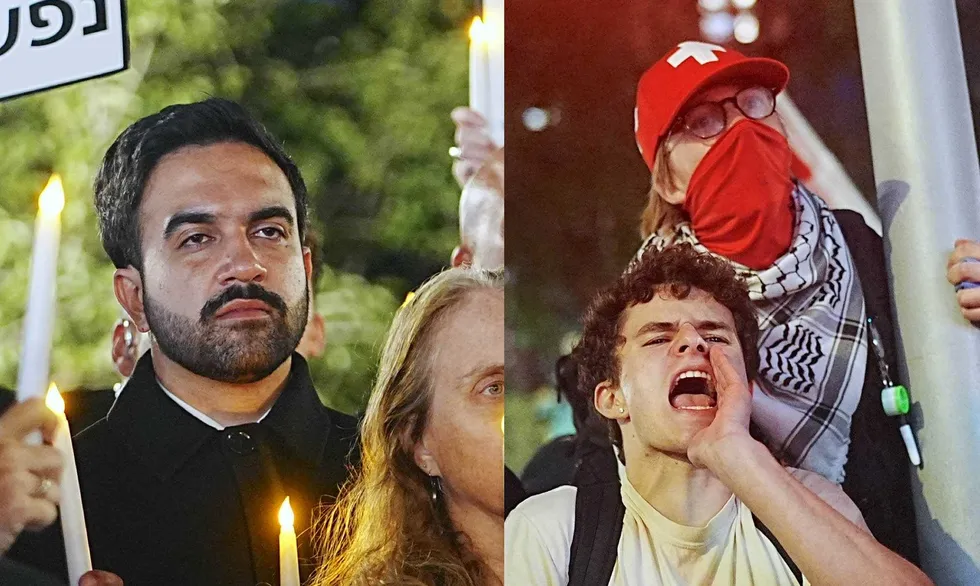
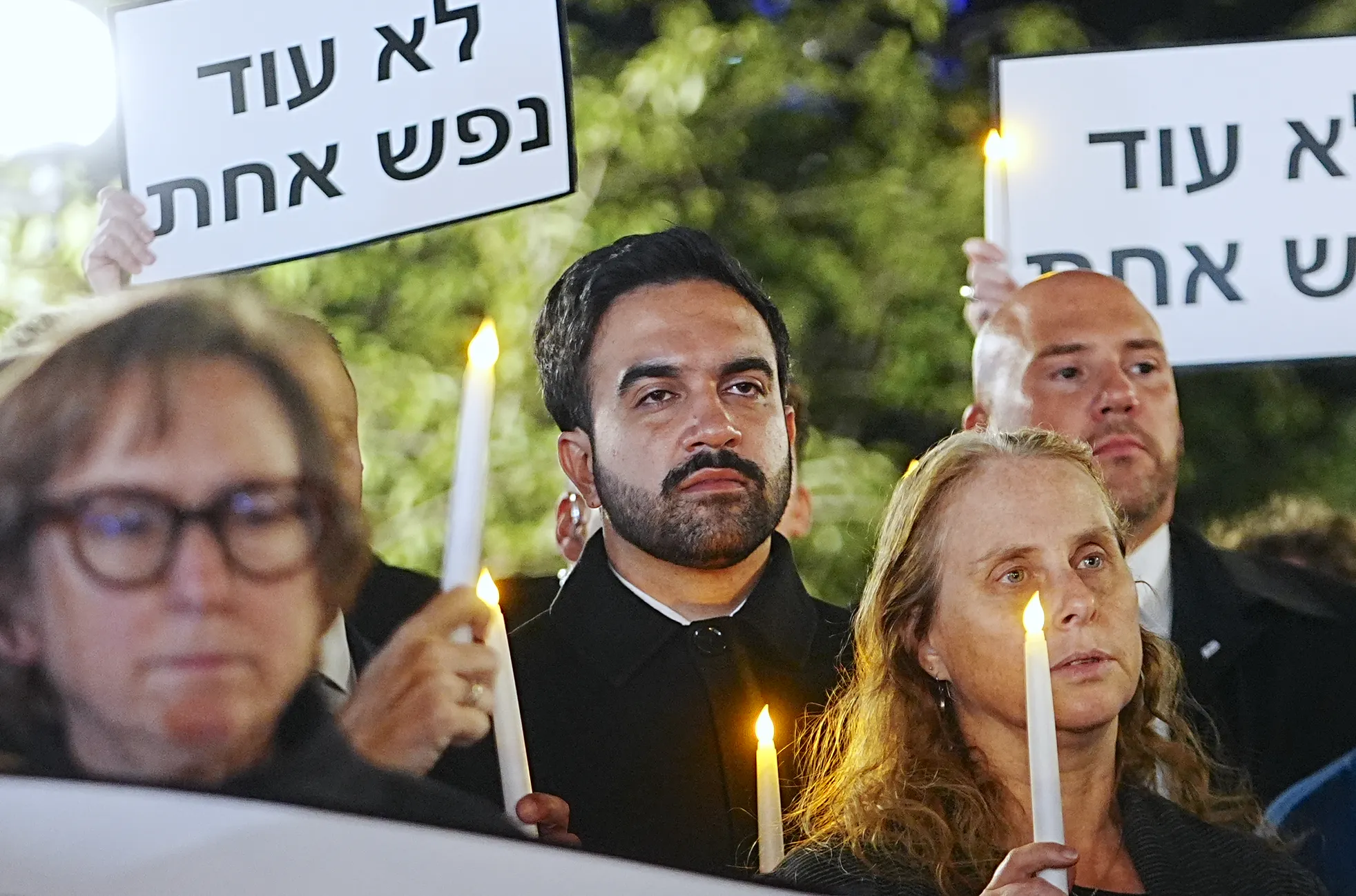
The DSA’s hostility towards Israel is also notoriously virulent, something which infamously manifested itself through declarations of Palestinian solidarity and cries of “long live the resistance!” during the October 7, 2023, Hamas-led terrorist attacks, which the group blamed on the Israeli victims. A resolution approved at the DSA’s 2025 national convention went so far as to make opposition to “the Palestinian cause” — including by uttering the phrase “Israel has a right to defend itself” — an expellable offense.
At that same convention, the DSA elected a new National Political Committee. The ideological affiliations of these committee members illustrate the influence that full-blown revolutionary communism holds over the group’s internal politics. Several committee members (including one of its two co-chairs) are members of the DSA’s Red Star caucus, an association of Marxist-Leninists that aims to foster a revolutionary vanguard “to abolish capitalism and, ultimately, to achieve communism.”
Others were elected from the Marxist Unity Group, whose objective is to “fight to overthrow the Constitution” so that the revolutionary working class can “take power by any means necessary” and institute “a fully liberated classless society: communism.”
Yet another caucus with multiple National Political Committee members is Reform & Revolution, which characterizes its “revolutionary Marxist” politics as being derived from “the Bolshevik Tradition.” All told, the DSA’s internal political “Left” — which is more-or-less tantamount to revolutionary communism — now wields major influence over the organization’s leadership.
This is far from the vision of the DSA’s founding ideological lodestar, Michael Harrington, who died in 1989. Though a dedicated left-wing socialist, Harrington was also fully committed to democracy and explicitly rejected communist totalitarianism. He was said to have been deeply troubled by the Port Huron Statement released by Students for a Democratic Society in 1962, because he felt the language used was insufficiently anti-communist. Harrington was also avowedly pro-Israel. Though the DSA still trades on the once-accurate descriptors of its Harrington-era name, “Democratic Socialists of America” might today be more akin to a Holy Roman Empire-style misnomer, in the sense that the group is neither particularly democratic, nor socialist, nor American.
The American radical left has traditionally demonstrated a propensity for factional infighting, self-marginalization, and organizational implosion. Perhaps this will ultimately be the fate of the DSA in its current iteration. Something of a boom-and-bust cycle has characterized the group’s fortunes over the past decade — it was scarcely two years ago that the DSA appeared on the verge of an existential fiscal crisis brought on by a combination of declining membership and profligate spending. Today, it claims over 120,000 members and appears to be riding higher than ever. For now, the undercurrent of political radicalism that has existed on the American Left since at least the 1960s appears to have found an institutional home within the DSA.
***
Robert Stilson is a senior research analyst at the Capital Research Center.
More from this network:
Domains for Sale · GOTPeople.org · TheDSAPlatform · The Truth About Socialism
What's Your Reaction?
 Like
0
Like
0
 Dislike
0
Dislike
0
 Love
0
Love
0
 Funny
0
Funny
0
 Wow
0
Wow
0
 Sad
0
Sad
0
 Angry
0
Angry
0

I am just an average American. My teen years were in the late 70s and I participated in all that that decade offered. Started working young, too young. Then I joined the Army before I graduated High School. I spent 25 years in, mostly in Infantry units. Since then I've worked in information technology positions all at small family owned companies. At this rate I'll never be a tech millionaire. When I was young I rode horses as much as I could. I do believe I should have been a cowboy. I'm getting in the saddle again by taking riding lessons and see where it goes.
Premium domains for sale














Comments (0)