

Peter Hitchens: Leftist gadfly who found wisdom in fear of God
Premium domains for sale
Freedom Is Back In Style
The late Christopher Hitchens had no shortage of objections to Christianity. But he reserved special contempt for hell — a doctrine he believed reduced faith to fear and the divine to a “celestial dictatorship.” A God willing to resort to such primitive extortion was hardly worthy of man's admiration, let alone worship.
Freedom Is Back
In Style
Premium domains for sale
Hitchens also certainly knew that bringing up eternal damnation was a good way to unsettle his Christian sparring partners, who often seemed vaguely embarrassed by the punitive side of the faith.
'I am no longer shocked by the realization that I may be judged,' he wrote later. 'It has ever after been obvious to me.'
Peter Hitchens had no such compunctions. Although he was every bit the cosmopolitan sophisticate his older brother was, it was precisely fear — base, desperate, and visceral — that led him back to the Anglicanism of his British childhood.
He was well aware of how unfashionable a motivation this was. "No doubt I should be ashamed to confess that fear played a part in my return to religion," he later wrote in his 2010 memoir "The Rage Against God."
The gift of fear
But it was the truth, and he was too rigorously honest to pretend otherwise. Besides, moments in his career as a globe-trotting journalist — crashing a motorcycle, dodging gunfire, confronting an angry mob — had taught him that fear could be a gift, a way of focusing the mind on what was essential to survive. Who was to say that it couldn't produce the same clarity in matters of the soul?
The crucial moment happened not in some far-off danger zone, but on a vacation in Burgundy with his then-girlfriend.
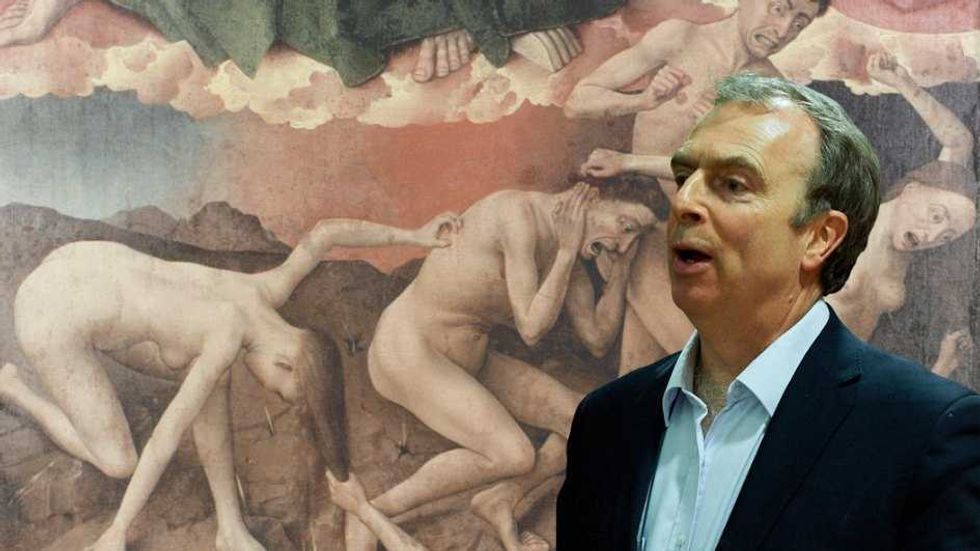
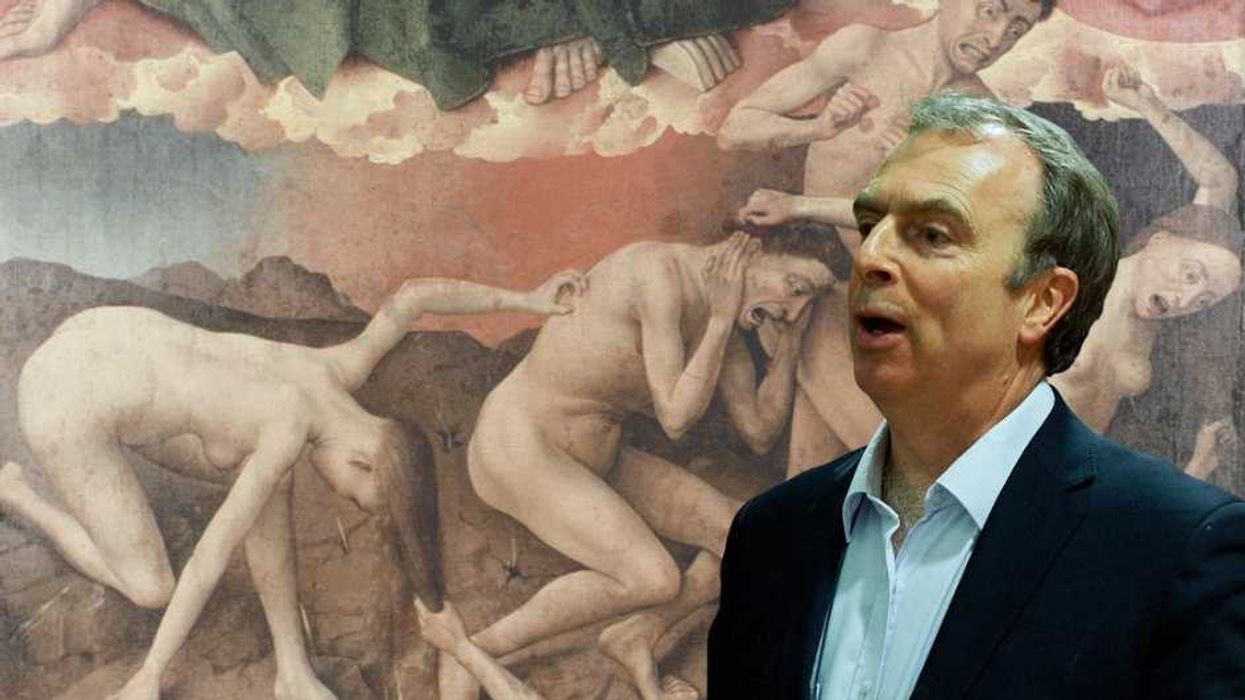
There, seeking a break from fine food and wine, he dutifully made a brief cultural excursion. Standing before the famous Beaune Altarpiece, 15th-century painter Rogier van der Weyden's massive polyptych depicting the Last Judgment, Hitchens initially expected very little.
Instead, he found himself rooted to the spot, mouth agape in terror.
The figures in the painting did not seem distant or medieval. “They were my own generation,” he wrote. Naked and therefore stripped of period detail, they seemed unnervingly modern — recognizable, immediate. “They were me and the people I knew.”
One detail stayed with him: a figure recoiling in terror, “vomiting with shock and fear at the sound of the Last Trump.”
Good and evil
The encounter forced him to confront something he had spent years dismissing — that the Christian account of judgment, of good and evil, might not be a relic of the past but a description of reality.
Raised in the Church of England, Hitchens discovered atheism as a teenager. As the 1960s gave way to the '70s, this adolescent rebellion gave way to an enthusiastic embrace of revolutionary politics with confidence. Reason and progress, Hitchens believed, could create a far more durable moral order than religion ever had. Like many of his generation, he assumed that once Christianity faded, nothing essential would be lost.
Experience had already chipped away at this faith in humanity. His reporting had taken him to societies where ideological systems had already tried to replace older moral frameworks. What he found — especially in the Soviet sphere—was not liberation but repression. Systems that promised a new moral order instead revealed how fragile moral claims become when they rest on nothing beyond power.
Then came that worn yet still vivid tableau, before which the 30-something Hitchens “trembled for the things of which my conscience was afraid.”
RELATED: Chuck Norris: Martial arts legend who submitted to a mother's prayers
 Sunset Boulevard/Getty Images
Inevitable judgment
“I am no longer shocked by the realization that I may be judged,” he wrote later. “It has ever after been obvious to me.”
That recognition did not produce instant conversion. But it changed him. A year later, faced with a private moral decision, he found himself held back — by the same fear of doing wrong. “Without Rogier van der Weyden,” he wrote, “I might have done that thing.”
Hitchens did not return to Christianity for comfort. His account of faith is unsentimental, grounded in the belief that moral reality is not something we create and certainly not something we can escape.
The latter fact can chafe, leading to a rejection of God that is nowhere near as rational as its proponents would like to think. Instead, argues Hitchens, it amounts to a wishful thinking no less deranging than any "pie in the sky" sentimentality.
The most urgent question
That conviction has shaped his public life ever since.
Today, Hitchens defends Christianity not as a private belief or cultural artifact, but as the foundation for any coherent understanding of justice, responsibility, and human worth. Remove it, he argues, and what remains is not freedom but confusion — and, eventually, coercion.
The two brothers — one a leading "New Atheist" and author of "God Is Not Great"; the other the most outspoken defender of Britain's disappearing Christian heritage — may not seem to to have had much in common.
But what they did share is a willingness to challenge a sacred assumption of modern life: that faith is optional, interchangeable, and purely subjective.
To both Peter and Christopher Hitchens, the question could not be more urgent. To ignore it leads to hell — either here on Earth on in eternity. Wherever we think we're headed, the beginning of wisdom is to undertake the journey with our eyes open.
More from this network:
Domains for Sale · GOTPeople.org · TheDSAPlatform · The Truth About Socialism
What's Your Reaction?
 Like
0
Like
0
 Dislike
0
Dislike
0
 Love
0
Love
0
 Funny
0
Funny
0
 Wow
0
Wow
0
 Sad
0
Sad
0
 Angry
0
Angry
0

I am just an average American. My teen years were in the late 70s and I participated in all that that decade offered. Started working young, too young. Then I joined the Army before I graduated High School. I spent 25 years in, mostly in Infantry units. Since then I've worked in information technology positions all at small family owned companies. At this rate I'll never be a tech millionaire. When I was young I rode horses as much as I could. I do believe I should have been a cowboy. I'm getting in the saddle again by taking riding lessons and see where it goes.
Premium domains for sale










Comments (0)