

Putin Makes Rare Admission About Ukraine’s Strikes
Premium domains for sale
Freedom Is Back In Style
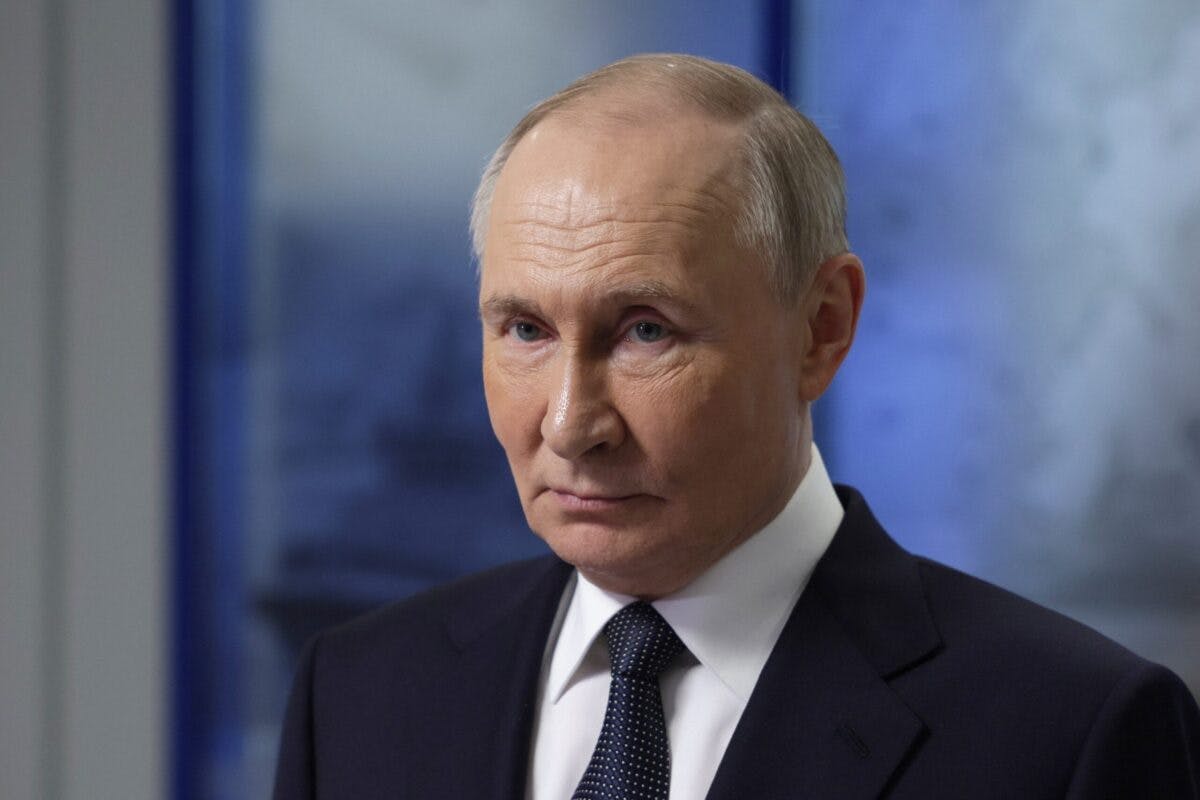
Russian President Vladimir Putin publicly acknowledged Sunday that Ukraine’s escalating campaign against Russia’s oil infrastructure is creating fuel shortages and logistical problems across the country, offering one of his clearest signs yet that Kyiv’s long-range drone strategy is beginning to exact a meaningful cost on Moscow’s war effort.
Freedom Is Back
In Style
Premium domains for sale
Speaking with Russian state television following a meeting with senior government officials, Putin conceded that repeated Ukrainian attacks on refineries and energy infrastructure were affecting Russia’s fuel supply.
“As for strikes against critical infrastructure in general, and energy infrastructure in particular, of course these attacks on our infrastructure facilities create problems, that’s obvious,” Putin said. “Right now we’re observing a certain shortage, but it’s not critical.”
The comments marked the first time Putin has publicly admitted that Ukraine’s sustained deep-strike campaign has disrupted Russia’s fuel network.
Earlier Sunday, Putin also acknowledged broader challenges facing the country while addressing members of the ruling United Russia party.
“We are going through a difficult period,” Putin said. “But this has taught us a great deal, and allowed us to grasp the very essence of what it means to be a Russian citizen.”
The unusually candid remarks come after weeks of increasingly successful Ukrainian attacks targeting Russian oil refineries, fuel depots, logistics hubs, and air defense systems hundreds of miles from the front lines.
Last week alone, Ukraine launched one of its largest drone assaults of the war, striking targets across a dozen Russian regions, including Moscow, St. Petersburg, Crimea, and multiple oil-processing facilities. Ukrainian President Volodymyr Zelensky confirmed over the weekend that Ukrainian forces had struck refineries in Russia’s Krasnodar and Yaroslavl regions as part of what Kyiv describes as a long-term effort to weaken Russia’s ability to sustain the war.
According to the Guardian, Ukraine’s campaign has temporarily knocked out roughly a quarter of Russia’s refining capacity, contributing to fuel shortages that have spread across dozens of Russian regions. Long lines have reportedly formed at gas stations, while some regional governments have introduced fuel rationing or considered restrictions on diesel exports to preserve domestic supplies.
The situation has become especially severe in Russian-occupied Crimea, where authorities declared a state of emergency after repeated Ukrainian strikes disrupted fuel deliveries and logistics routes. Fuel sales to civilians were temporarily halted as officials attempted to stabilize supplies.
Putin said restoring fuel availability and strengthening Russia’s air defenses have become immediate priorities.
“The first task is to quickly and significantly ramp up production of those air defense systems that are most needed,” Putin said, while also pledging to increase fuel deliveries, particularly to Crimea.
Ukraine says the strikes are intended to accomplish more than simply damaging Russian infrastructure. By bringing the war home to ordinary Russians and disrupting military logistics, Kyiv hopes to strengthen its leverage in any future peace negotiations.
“We continue our operations that weaken Russia’s ability to wage this war,” Zelensky wrote on X.
Our warriors began Ukraine’s Constitution Day with great accuracy. Last night, our long-range sanctions reached two oil refineries in Russia. The Slavyansk oil refinery in the Krasnodar region was hit – about 300 kilometers from the frontline. We also reached a refinery in the… pic.twitter.com/MiKOSjszFF
— Volodymyr Zelenskyy / Володимир Зеленський (@ZelenskyyUa) June 28, 2026
Ukrainian Foreign Minister Andriy Sybiha similarly argued that every successful strike increases pressure on the Kremlin to negotiate.
“The longer Putin refuses to accept the reality that he will never achieve any goals on the battlefield, the worse things will get for Russia,” Sybiha said.
That strategy could prove increasingly significant as President Donald Trump continues encouraging both sides to reach a negotiated settlement. If Ukraine can sustain pressure on Russia’s energy infrastructure while slowing Russian battlefield gains, analysts say Kyiv could improve its bargaining position in any eventual peace talks by demonstrating that the economic costs of continuing the war are rising inside Russia itself.
Putin, however, rejected a Ukrainian proposal to mutually halt long-range strikes, arguing that Russian retaliatory attacks inflict greater damage.
“It is clear why this proposal is being made,” Putin said. “Our counterstrikes deep into Ukrainian territory are much stronger, have greater impact and are, frankly, more destructive.”
Despite acknowledging fuel shortages and growing logistical strain, Putin insisted Russia would continue pursuing its military objectives in eastern Ukraine while accelerating repairs to damaged infrastructure and bolstering the country’s air defenses against future Ukrainian attacks.
More from this network:
Domains for Sale · GOTPeople.org · TheDSAPlatform · The Truth About Socialism
What's Your Reaction?
 Like
0
Like
0
 Dislike
0
Dislike
0
 Love
0
Love
0
 Funny
0
Funny
0
 Wow
0
Wow
0
 Sad
0
Sad
0
 Angry
0
Angry
0

I am just an average American. My teen years were in the late 70s and I participated in all that that decade offered. Started working young, too young. Then I joined the Army before I graduated High School. I spent 25 years in, mostly in Infantry units. Since then I've worked in information technology positions all at small family owned companies. At this rate I'll never be a tech millionaire. When I was young I rode horses as much as I could. I do believe I should have been a cowboy. I'm getting in the saddle again by taking riding lessons and see where it goes.
Premium domains for sale















Comments (0)