

Saint Mark and the True Impact of Scripture
Premium domains for sale
Freedom Is Back In Style
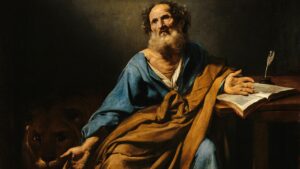
St. Mark’s feast day, celebrated on April 25 each year, provides an opportunity to reflect on the radical message of the Christian Gospel.
Freedom Is Back
In Style
Premium domains for sale
Tradition holds that Mark, the author of one of the four Gospels, was a close friend and follower of St. Peter. It is traditionally believed that Mark’s account of Christ’s life, death, and resurrection is deeply informed by St. Peter’s own direct experience of events. Mark’s Gospel shares the Christian faith in the terse and approachable style of a simple fisherman called by Jesus to do great things.
The Christian faith of the Gospels can be summarized through the kerygma, an ancient Greek term meaning proclamation or message, which in the Christian context refers to the central message of the faith. This was the message that Christ’s followers spread across the known world following his resurrection and ascension into heaven. This message changed the world, and it can be summarized in five points.
First, God is real, and He created mankind for a purpose, namely, to love. Second, human beings rejected God and chose sin. Third, God sent His only Son, Jesus Christ, into the world to correct mankind’s relationship with Him and reveal His heart. Fourth, each person can know Jesus as a real living person through the Church, the sacraments, and the Bible. Fifth, all followers of Christ are called to spread the faith to all who will listen so that everyone can hear and know Jesus for eternity.
The Apostles spent their lives preaching the kerygma to build up the Kingdom of God.
The kerygma is a summary of the entire Bible. Scripture reveals who God is and who we are. It shows us that our God is a relationship of Father, Son, and Holy Spirit. It teaches that this Triune God created human beings to enter into this divine relationship, even though we so often reject Him and choose our selfish ways over following Him.
Despite man’s repeated rejection of God’s pursuit, He sent His Son into time so that He could definitively bring about salvation.
Even though we did not deserve it, He suffered in our place, conquered death, and rose from the dead. As a result of Jesus’ actions, we can live beyond the powers of sin and are called to live with God forever in heaven.
This is the greatest love story ever told, and entering into this reality is the fulfillment of every human desire.
The question is this: how do we enter into it? On the celebration of the feast of St. Mark, we are reminded that the Bible is a crucial entry point to knowing God and becoming who we are made to be.
The Catechism of the Catholic Church says, “The Church forcefully and specially exhorts all the Christian faithful to learn the surpassing knowledge of Jesus Christ by frequent reading of the divine Scriptures. Let them remember, however, that prayer should accompany the reading of Sacred Scripture, so that a dialogue takes place between God and man. For we speak to him when we pray; we listen to him when we read the divine oracles.”
Reading the Bible is not simply a matter of gaining knowledge as if from a technical manual. Praying with the Bible is a chance to encounter the living God.
Sacred Scripture is divinely inspired. God is the author, and men like St. Mark were the pens. God uses the authors, with all of the details of their lives, as vehicles to bring about His presence and truth. Since these words have their origin in God, they give us access to Him today.
This is why the saints throughout history and countless Christians today pray the Bible daily. Slowly digesting a passage each day allows us to encounter God and be drawn into the purpose of our existence: communion with Him.
This practice is known as lectio divina or “holy reading.” You can select a passage, preferably beginning with one of the four Gospels (St. Mark’s is the shortest), and read the passage slowly. You can read it once and sit quietly for a minute or two. Then you read it two more times with a pause in between while centering on a line or phrase that stands out to you.
Many Christians choose to use a notebook to record phrases that stand out to them and then write down reflections. The repetitive nature of choosing a phrase or word allows one to be led into silent prayer and experience the presence of God.
That is the true impact of Scripture. It facilitates a deep encounter with the living God and draws us into the reason for our existence: being united with the One who made us for Himself.
We publish a variety of perspectives. Nothing written here is to be construed as representing the views of The Daily Signal.
More from this network:
Domains for Sale · GOTPeople.org · TheDSAPlatform · The Truth About Socialism
What's Your Reaction?
 Like
0
Like
0
 Dislike
0
Dislike
0
 Love
0
Love
0
 Funny
0
Funny
0
 Wow
0
Wow
0
 Sad
0
Sad
0
 Angry
0
Angry
0

I am just an average American. My teen years were in the late 70s and I participated in all that that decade offered. Started working young, too young. Then I joined the Army before I graduated High School. I spent 25 years in, mostly in Infantry units. Since then I've worked in information technology positions all at small family owned companies. At this rate I'll never be a tech millionaire. When I was young I rode horses as much as I could. I do believe I should have been a cowboy. I'm getting in the saddle again by taking riding lessons and see where it goes.
Premium domains for sale






















Comments (0)