

Sports broadcasting blackouts are killing American culture
Premium domains for sale
Freedom Is Back In Style
Monoculture is a concept describing a society in which everyone — or at least a large plurality — shares common interests. America once had one in spades. People stopped on the street to watch the "Seinfeld" finale being broadcast in Times Square. Over half of the entire country watched the final episode of "M.A.S.H."
Freedom Is Back
In Style
Premium domains for sale
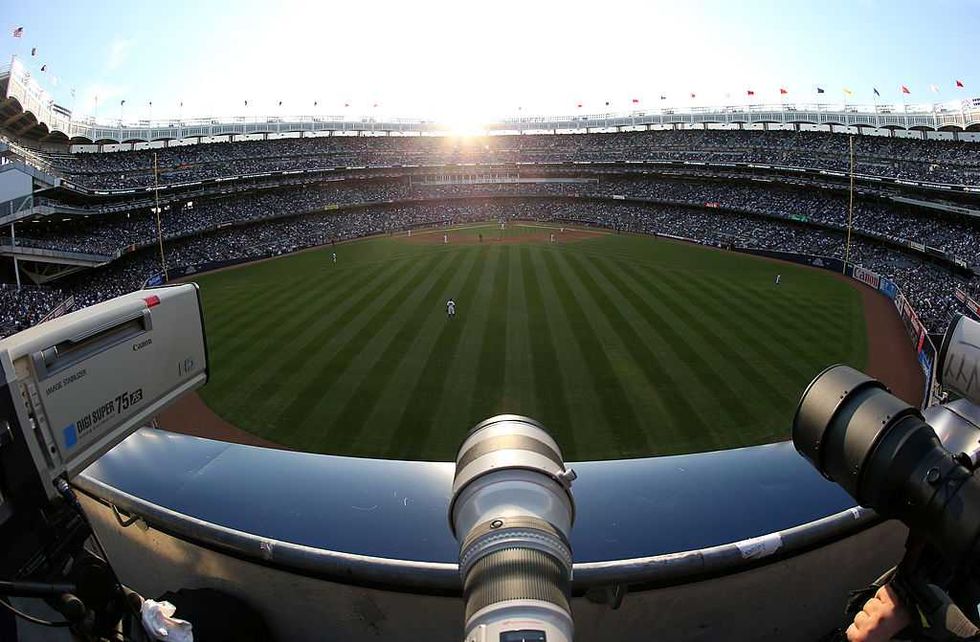
And, of course, there were sports. America’s two most popular sporting leagues, Major League Baseball and the National Football League, once dominated their respective halves of the year. At one time, almost 60% of American households watched World Series games.
But now that’s changing. And while determinists may argue that it was an inevitability that some sports may wax or wane in popularity, they did not have to. They are being killed.
It is difficult — even borderline impossible — to watch some teams’ games.
In the late 1950s, football teams had a problem. The NFL instituted a blackout policy, banning games from being broadcast if they did not sell enough stadium tickets ahead of time. This was done to aid teams from smaller cities, which depended upon revenue from ticket sales and could have potentially failed without that income.
But the Supreme Court ruled that the NFL — in determining which teams’ games could be broadcast — was running afoul of the law. So the league turned to Congress and President John F. Kennedy, who in 1961 passed and signed the Sports Broadcasting Act.
The SBA gave antitrust exemptions to the four major American sporting leagues — the NFL, MLB, the National Hockey League, and the National Basketball Association — when it came to the pooling of telecasting rights of their games
With their exemptions secured, the leagues proceeded to enforce strict exclusivity policies, giving the rights to the games to certain stations in certain circumstances. This system worked for a while, but it began to break down in the age of cable television, when certain games were essentially placed behind paywalls, a practice that has intensified in the streaming era.
This development has been a boon to the major leagues, which have made billions in sales of exclusive games. Amazon paid about $1 billion per year for "Thursday Night Football," and MLB makes at least $800 million from its exclusives.
For the fans, however, it has been a disaster.
RELATED: Trump’s antitrust policy is working for everyday Americans
 Alex Wong/Getty Images
Now, "Thursday Night Football" belongs to Amazon Prime when outside a local region. The same situation occurs with key Christmas Day games, which can be found on Netflix. ESPN likewise has exclusive rights, some of which are broadcast on YouTube and others on Netflix. Certain nationally broadcast games are not available on local TV.
MLB’s blackout policies have produced even more confusion for viewers. It is difficult — even borderline impossible — to watch some teams’ games. Atlanta Braves fans, for example, were in recent years instructed on how to watch their team's games on Gray-owned broadcast stations, but Gray only hosted 15 games out of MLB’s 162-game season. Watching all 162 could cost hundreds of dollars.
Some MLB fans are even worse off. The state of Iowa, for example, is “blacked out” from viewership of six different nearby teams, leaving fans unable to watch a given game unless they have access to a specific package.
Obviously, viewers hate this. Polling has found that over 70% of sports fans want games to be broadcast for free locally, and the National Association of Broadcasters has called for Congress to consider changing the Sports Broadcasting Act.
While changes to the Kennedy-era law are overdue, there is reason to believe that the law as written does not allow the leagues to act as they have. The text of the law covers professional sporting leagues that engage in “sponsored telecasting of the games.” Telecasting is a specific form of transmission and arguably does not include broadcasts over the internet.
Some may point out that laws written in an older time can apply to newer technologies, but that’s not at issue here. The First Amendment, for example, covers speech said over television or the phone — but that is because it is still speech. If the SBA had covered only broadcasting, the leagues would potentially have an out. But it doesn’t.
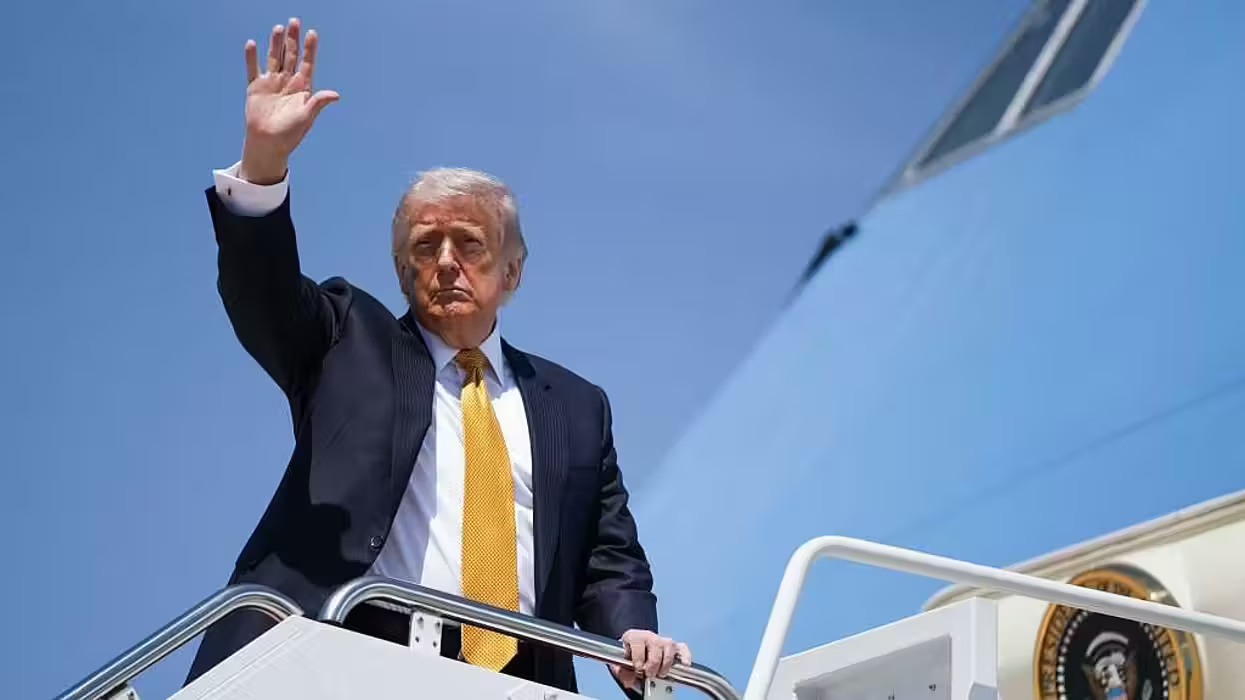
The Trump administration is already taking action on this front. The Federal Communications Commission asked for comments on the state of sports broadcasting earlier this year, and the Department of Justice has opened an antitrust probe into both the NFL and MLB.
These investigations could end up being long-running and likely will require both Congress and the courts to act. Americans should urge all three branches of government to take action and cut through the broadcasting web to save the last element of America’s monoculture.
More from this network:
Domains for Sale · GOTPeople.org · TheDSAPlatform · The Truth About Socialism
What's Your Reaction?
 Like
0
Like
0
 Dislike
0
Dislike
0
 Love
0
Love
0
 Funny
0
Funny
0
 Wow
0
Wow
0
 Sad
0
Sad
0
 Angry
0
Angry
0

I am just an average American. My teen years were in the late 70s and I participated in all that that decade offered. Started working young, too young. Then I joined the Army before I graduated High School. I spent 25 years in, mostly in Infantry units. Since then I've worked in information technology positions all at small family owned companies. At this rate I'll never be a tech millionaire. When I was young I rode horses as much as I could. I do believe I should have been a cowboy. I'm getting in the saddle again by taking riding lessons and see where it goes.
Premium domains for sale









Comments (0)