

Taylor Sheridan Saddles Up For Another Ride Through The American Myth
Premium domains for sale
Freedom Is Back In Style
This article is part of Upstream, The Daily Wire’s new home for culture and lifestyle. Real human insight and human stories — from our featured writers to you.
Freedom Is Back
In Style
Premium domains for sale
***
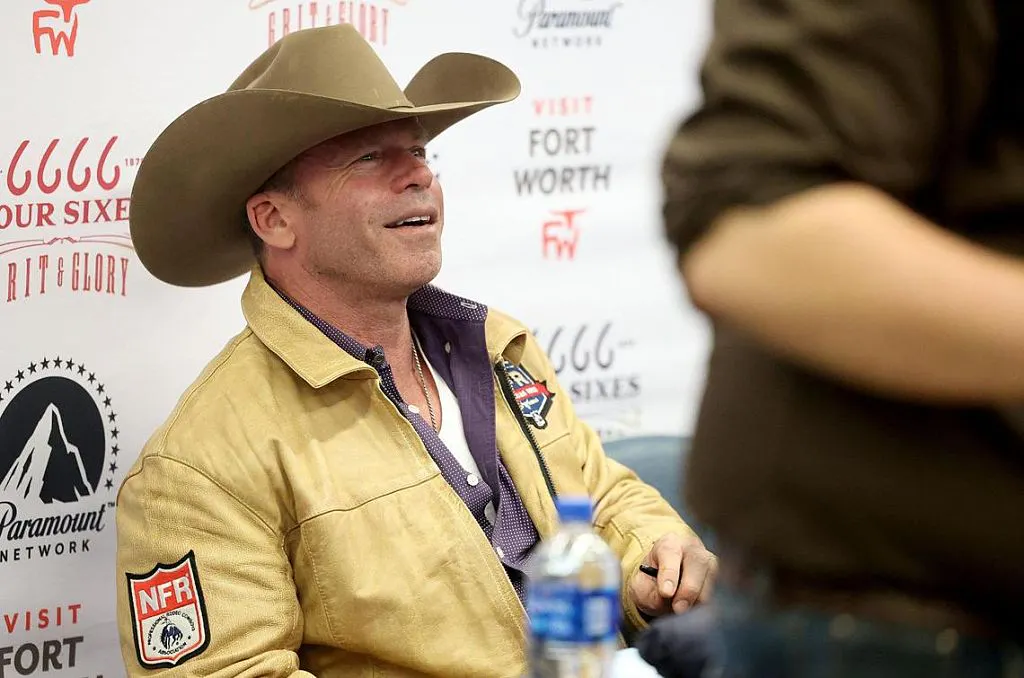
Taylor Sheridan has discovered that his keyboard is a money-printing machine for both himself and Paramount+. From “Yellowstone” to “1883,” “Mayor of Kingstown,” and “Landman,” Sheridan has built a sprawling empire of gritty American archetypes: Montana ranchers, Oklahoma mobsters, Texas oil barons, and anyone else Hollywood might have deemed too working-class and out of touch with its consumer base of working-from-home metropolitans.
His latest work, “Dutton Ranch,” combines many of the best elements of “Yellowstone” without much of the whiny, self-aggrandizing nonsense that hampered the show in its later seasons. We get it, Monica: You are a proud Native American woman and think the loving multimillionaire ranching Dutton family you married into is a bunch of racist colonizers (thankfully, her character has not returned).
Kevin Costner’s gruff, commanding charisma is sorely missed, but the heart and soul of Sheridan’s cowboy universe was always Rip Wheeler (Cole Hauser). I may be a stereotypical yuppie software engineer who has only once tried (unsuccessfully) to ride a horse, but most scenes with Rip leave me compelled to sell the downtown condo, buy a Stetson and a pickup truck, and move to a ranch.
Beth Dutton (Kelly Reilly), meanwhile, returns as formidable as ever, but with a renewed sense of purpose. In the final seasons of “Yellowstone,” Sheridan seemed to lose sight of how to write her, reducing one of television’s more compelling characters to impulsive tirades and alcoholism. Her drinking alone could have kept Tito’s running. Here, she remains profane and ferocious, balancing farm-girl tenacity with Christian Louboutins and investment-banker shrewdness, but her fury is now directed toward securing a new life for herself and her husband.
Following the events that ended “Yellowstone,” Beth and Rip, along with their adopted son Carter, move to Texas to start over. It is a classic American story of settling somewhere unfamiliar, staking a claim, and trying to build something of your own despite hardship and hostility.
And there is no shortage of hardship. At one point, their cattle contract foot-and-mouth disease, threatening the ranch’s survival and forcing Rip into the brutal necessity of rounding up and shooting an entire doomed herd. Beth laments the toll it takes on him: “That man has lost more than he’d ever admit,” she says, adding, “He devoted his life to the Yellowstone. This was supposed to be his time, his ranch.” There is an important and subtly conveyed lesson here, that life is not fair, and no one is owed a reward merely because he has suffered nobly.
Among the most welcome additions to Sheridan’s world is Ed Harris as Everett McKinney, a gregarious, salt-of-the-earth veterinarian. But Sheridan does not write twee HGTV television that is set in the countryside. Problems are not confined to veterinary and agricultural woes; sooner or later, we expect our dose of extortion, corruption, and murder. In contrast to the power Rip and Beth held by association on “Yellowstone,” here in Texas they are newcomers, pitted against the established and crooked Jackson family, led by the ruthless matriarch Beulah Jackson, whose deep pockets seem to reach everywhere from the state cattle industry to the police force.
Though Sheridan is thankfully reluctant to sermonize about politics, his work remains beguiling fodder for conservatives. In this sense, he is the conservative answer to Darren Star. Where Star built fantasies around cosmopolitan women in couture navigating careers, brunch dates, and fleeting romances, Sheridan gives us ranchers, oil workers, and cowboys who grow thick beards, wake up at 3:30 AM, work with their hands, and have no use for LinkedIn or ChatGPT.
Of course, most of us are more comfortable admiring this life from afar. There is a running joke among watch enthusiasts that most people who buy “tool watches” — Rolex Submariners built for diving or Daytonas built for race car drivers timing laps — only ever use them as aesthetic props in office jobs. Many city truck owners rarely haul anything more demanding than groceries or their kids’ hockey equipment. How many Yeti cooler owners have been backcountry camping? Some would call such people posers. But we buy these things because they offer us a connection to worlds we lack the courage, will, or circumstances to enter. Sheridan’s heroes are compelling because they inhabit such lives.
As Beth and Rip fight to establish new roots, a parallel storyline follows Carter (Finn Little), who, for someone raised by Beth and Rip, ought to have more common sense than to cut school in pursuit of a shortcut to cowboying while strutting around after a pretty young blonde. But then again, he is a teenage boy, and in any skirmish between brains and pubescent hormones, the former has little hope.
There is palpable hardship in Carter’s circumstances. With his adoptive parents too busy fighting for the ranch to tend to his teenage angst, he develops a budding friendship with Dwight White (Ray McKinnon), a downtrodden cowboy of questionable judgment who keeps an African leopard on his property. But Dwight offers Carter a job and proffers some much needed counsel. “Growing up fast is highly overrated,” he tells him. Carter may be eager to leapfrog adolescence and become the man he imagines himself to be, but, Dwight warns, “You don’t realize how young you are until you’re old and realize it’s too late.”
Sheridan’s wrangler epics are like “Game of Thrones” with cattle and cowboys. They are action fantasies about the sorts of characters we aspire to be, or at least aspire to have in our lives: loyal, brave, stubborn men of action. If you haven’t yet seen “Yellowstone,” I would recommend watching the first three seasons for Costner’s aura alone. But “Dutton Ranch,” streaming new episodes on Prime through July, can be enjoyed in isolation. Sheridan’s great strength is crafting myths of large personalities against larger landscapes, all in pursuit of the American dream of carving out a life through grit and sacrifice. At its best, “Dutton Ranch” understands why that dream still has power for those of us watching from the comfort of our living rooms, far from the hard and unglamorous work that makes it possible.
***
Harry Khachatrian (@Harry1T6) is a film critic for the Washington Examiner. He is a software engineer, holds a master’s degree from the University of Toronto, and writes about wine at BetweenBottles.com.
More from this network:
Domains for Sale · GOTPeople.org · TheDSAPlatform · The Truth About Socialism
What's Your Reaction?
 Like
0
Like
0
 Dislike
0
Dislike
0
 Love
0
Love
0
 Funny
0
Funny
0
 Wow
0
Wow
0
 Sad
0
Sad
0
 Angry
0
Angry
0

I am just an average American. My teen years were in the late 70s and I participated in all that that decade offered. Started working young, too young. Then I joined the Army before I graduated High School. I spent 25 years in, mostly in Infantry units. Since then I've worked in information technology positions all at small family owned companies. At this rate I'll never be a tech millionaire. When I was young I rode horses as much as I could. I do believe I should have been a cowboy. I'm getting in the saddle again by taking riding lessons and see where it goes.
Premium domains for sale











Comments (0)