

The Abortion Pill Story The Medical Establishment Doesn’t Want To Tell
Premium domains for sale
Freedom Is Back In Style
This article is part of Upstream, The Daily Wire’s new home for culture and lifestyle. Real human insight and human stories — from our featured writers to you.
Freedom Is Back
In Style
Premium domains for sale
***
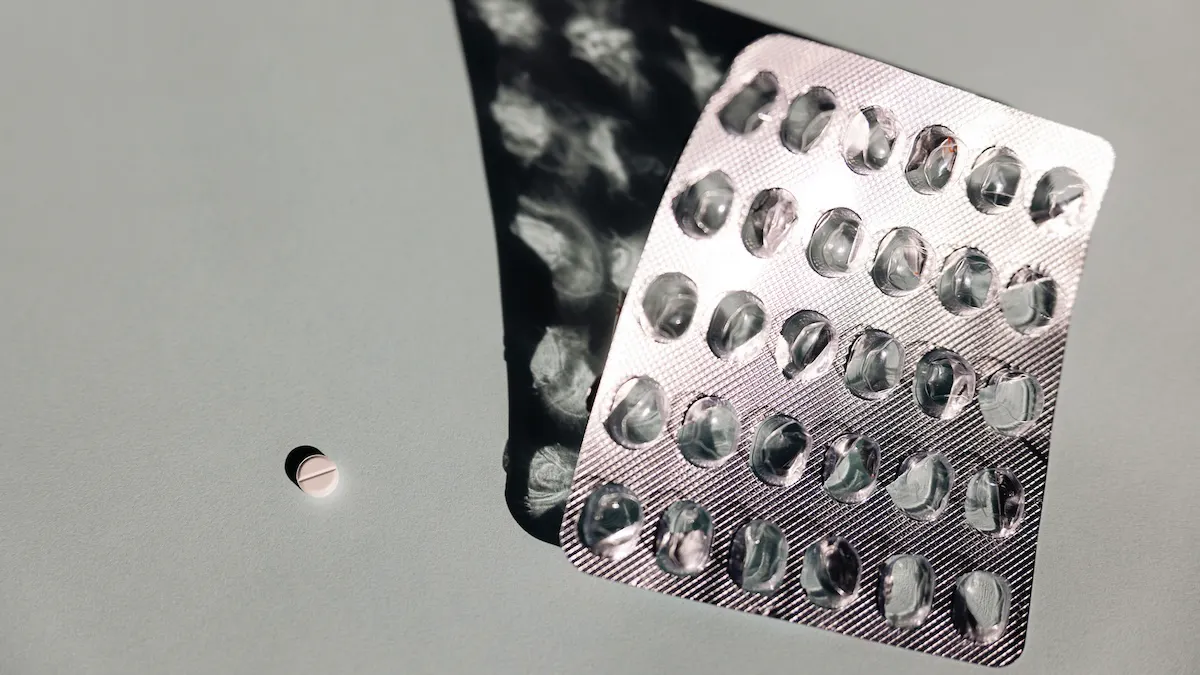
Four years after the Supreme Court’s Dobbs decision seemingly opened the door to saving more lives, abortions are sadly increasing and countless women across America are suffering because of the growth of dangerous mail-order abortion.
The Food and Drug Administration’s rollback of safeguards, which previously ensured women saw a doctor to rule out life-threatening complications before taking abortion drugs, leaves women directly in harm’s way. The lack of safeguards also reinforces the false narrative that the science of mifepristone is settled and that mail-order abortion drugs are safe.
As an ob-gyn and medical director of four pregnancy centers in North Carolina, I regularly see firsthand that nothing could be further from the truth.
Increasingly, women are turning to our centers to get the guidance and medical evaluation they want and know they need when taking abortion drugs. They show up throughout the week with critical questions: Are the drugs they received in the mail real? Can we give them an ultrasound to rule out ectopic pregnancy or verify the gestational age of their pregnancy? Are the side effects they’re experiencing normal?
Women realize the need for ongoing medical care throughout the abortion process, despite the government and abortion advocates’ attempts to convince them they don’t need it. And a growing body of scientific data reflects their concerns about appropriate mifepristone safeguards.
A 2025 report found one in 10 women taking the drug will experience a serious adverse event. The FDA’s own data admits that one out of 25 women taking mifepristone ends up in the emergency room. Other data reveal that mifepristone has four times the complication rate of surgical abortions and that serious adverse events from mifepristone may be up to 22 times higher than previously believed.
Obstetricians and gynecologists across this country treat women who have experienced the negative side effects of mifepristone — hemorrhaging, infections, or even needing a transfusion or emergency surgery. The drug devastates women physically and emotionally. I remember a patient who called and shared how horrible her experience was with chemical abortion in her dorm room. She told me, “I am going to need to see a therapist.”
The larger medical community refuses to acknowledge the growing evidence against mifepristone because it fears this will undermine its avid support for unrestricted abortion. Leading medical groups such as the American College of Obstetricians and Gynecologists continue promoting the lie that a visit to the ER after taking mifepristone isn’t serious or that the science on mifepristone’s safety and effectiveness is “longstanding and settled.”
The women showing up at my clinics aren’t buying these lies. They are rightly concerned that they don’t have medical accompaniment when taking dangerous, high-risk drugs.
And as a medical professional with 28 years of experience working in women’s health, and who completed Ph.D. training in methods of scientific research, I am shocked at this distortion from fellow medical professionals.
The concept of questioning science and challenging assumptions has produced countless discoveries in medicine over the years.
I’ve witnessed many instances where the prevailing scientific consensus was later refined or even overturned after further studies. For example, medical professionals long believed that stress produced stomach ulcers, but further inquiry revealed that a bacteria called Helicobacter pylori was also related to the development of ulcers. Outdated ideas on neuroplasticity crumbled under renewed investigations revealing that contrary to popular belief, adult brains can reorganize and form new neural connections throughout life.
And in the field of obstetrics and gynecology, new studies have challenged prior knowledge and led to improvements in areas such as preventing preterm labor, labor after cesarean sections, and more. Rather than stifling investigation in each of these cases, scientists and medical professionals celebrated them as evidence that scientific discovery was ameliorating our health.
The pro-abortion medical community’s refusal to question or even consider the possibility that women may be harmed by mifepristone is incredibly telling. Our responsibility as physicians is to minimize harm. The refusal to examine evidence honestly, particularly when data and experience reveal that abortion drugs endanger women, is a failure of our duty as healers to protect the women we care for.
The purpose of medicine is health and healing. It is ultimately the responsibility of the physician to protect our patients, not a narrative. Women deserve a medical community that examines evidence with humility and curiosity. In medicine, when complication rates or serious adverse events occur after clinical trials in real-world patients, we carefully reassess their use. Mifepristone should be no exception.
Obstetrics and gynecology is the most unique specialty in medicine because we care for two patients at the same time: a mom and her baby. Dismissing the risks of mifepristone and the plethora of data on its dangers exposes not only a bias but also a failure to care for both patients.
Women deserve rigorous medical guidance grounded in evidence, not politics. Medicine can and must do better.
***
Dr. Susan Bane is a board-certified ob-gyn who serves as the medical director of four pregnancy centers in North Carolina. She is chair of the American Association of Pro-Life Obstetricians and Gynecologists Action.
More from this network:
Domains for Sale · GOTPeople.org · TheDSAPlatform · The Truth About Socialism
What's Your Reaction?
 Like
0
Like
0
 Dislike
0
Dislike
0
 Love
0
Love
0
 Funny
0
Funny
0
 Wow
0
Wow
0
 Sad
0
Sad
0
 Angry
0
Angry
0

I am just an average American. My teen years were in the late 70s and I participated in all that that decade offered. Started working young, too young. Then I joined the Army before I graduated High School. I spent 25 years in, mostly in Infantry units. Since then I've worked in information technology positions all at small family owned companies. At this rate I'll never be a tech millionaire. When I was young I rode horses as much as I could. I do believe I should have been a cowboy. I'm getting in the saddle again by taking riding lessons and see where it goes.
Premium domains for sale





















Comments (0)