

The empire cannot drone-strike its way out of decline
Premium domains for sale
Freedom Is Back In Style
There is a moment in every war, somewhere between the first triumphant press conference and the first encounter with reality, when the slogans begin to turn rancid.
Freedom Is Back
In Style
Premium domains for sale
Television panels flash maps. Talking heads bloviate. Officials insist that everything is proceeding according to plan. But you can’t outrun the truth forever. The central lie on which the war rested begins to collapse under the crushing weight of events.
Thomas Jefferson warned us more than two centuries ago: 'Peace, commerce, and honest friendship with all nations, entangling alliances with none.' That remains the sanest policy available.
No one should sugarcoat what has happened: America has been defeated by a lesser regional power.
I was horrified when the war began. I said then that if the initial strikes failed to decapitate the Iranian government and cause the regime to fall, Iran had already won. I am no deep geopolitical expert and no Nostradamus, but anyone with modest knowledge of the region could see where this was headed.
Because of a geographic accident, a backward theocracy can threaten one of the most important arteries in the world economy. Roughly 20% of global energy supply moves through the Strait of Hormuz. If that flow is disrupted, the result is economic catastrophe. The problem is not just oil. Fertilizer, liquefied natural gas, petrochemicals, and dozens of inputs that make modern life possible move through the same system.
Meanwhile, because Iran has endured decades of sanctions, it is less exposed to some of the pressures now wrecking others. As oil prices spike, Tehran profits.
These facts do not require affection for the Iranian regime. Tehran’s record on political repression, censorship, regional adventurism, and support for militant proxies is horrific. The question was never whether one approves of the regime. The question was whether war would accomplish the objectives announced in its name.
Washington’s understanding of Iran has repeatedly proven shallower than policymakers imagine. Talk to Iranians who are not nostalgic for the shah, and they will often describe a much more complicated country than the bloodthirsty totalitarian caricature presented by much of the media. Many may hate the ayatollahs. But they also fear the alternative: a failed state like Syria or Libya.
Iran is an ancient civilization. Civilizations, unlike a school full of girls, cannot be destroyed from the air.
 BlazeTV
What did victory even mean? Iran has nearly 100 million people, a territory almost three times the size of Texas, some of the most forbidding terrain on earth, and a population with deep nationalist feeling tied to 4,000 years of history. Short of reinstituting the draft and landing half a million soldiers, how exactly did anyone expect Iran simply to surrender?
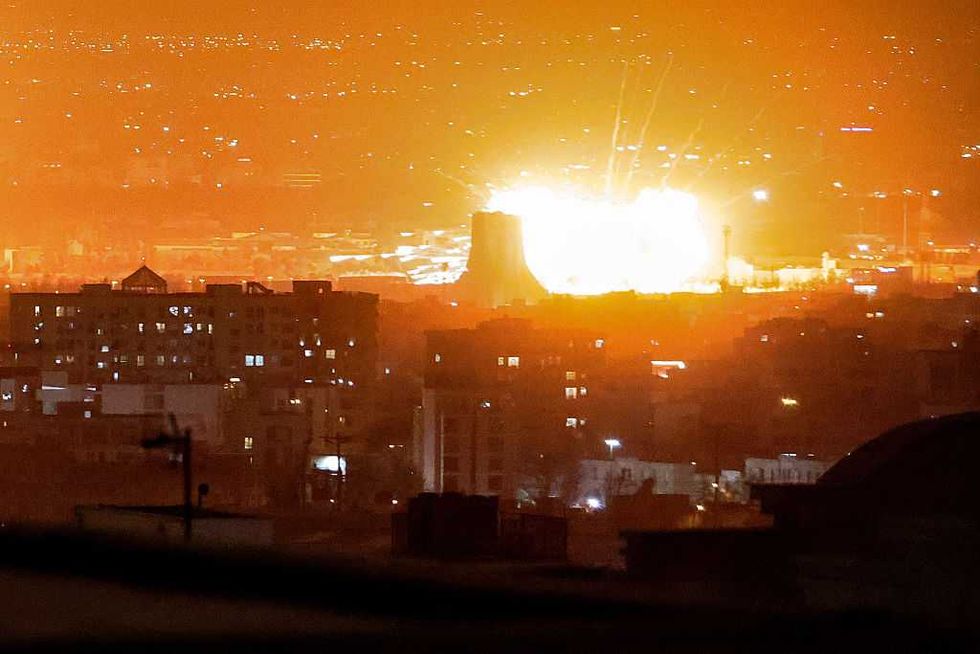
One of the most disconcerting aspects of this war has been the relative failure of the American military when faced with weapons that will define the 21st century: drones and missiles. Reports of damaged bases, lost aircraft and multimillion-dollar drones, evacuated facilities, and strained air defenses should alarm every serious person in Washington.
One of our carriers, the $13 billion Gerald R. Ford, has been knocked out of commission for years because of an unexplained laundry fire that burned for 30 hours and almost sank the ship.
Whatever the final accounting shows, Iran and the war in Ukraine have made one thing clear: The future of warfare does not belong to giant military bases and aircraft carriers alone. It belongs increasingly to cheap, plentiful, highly effective drones.
The Shahed may go down as one of the most important military innovations of our time. It is effectively a low-cost cruise missile with a meaningful payload, long range, and a flight path that can be programmed in advance. It can be stored in a garage, launched from a truck, and produced at a fraction of the cost of the systems designed to stop it. And Iran has nearly 100,000 of them.
The age of drone warfare is here, and America looks flat-footed. Getting into an arrow war with the Persians was a mistake for Rome at Carrhae. We should have remembered the lesson.
Lies and disinformation can survive only so long against reality. We were never going to win this war. The Iranian people were never going to rise up and install a pro-LGBTQ democracy. Iran’s navy was never destroyed in any meaningful strategic sense. And whatever one believes about the nuclear question, airstrikes were never a substitute for a durable political settlement.
Now we are on the verge of a global economic crisis that could endanger some of our most important allies, including Japan and South Korea. Gulf Arab countries that spent the last 15 years stamping out radical Islamic movements and pledging trillions in economic partnerships with the United States have been ravaged by the conflict. When grocery prices explode, when fertilizer costs flow through to food prices, when filling up a car eats through family savings, ordinary Americans will ask obvious questions.
Who started this war? And why?
Iran will end the war bloodied but standing. It will retain enormous leverage over one of the world’s most important commercial arteries. It may enjoy windfall profits as oil prices rise, sanctions loosen, and frozen assets return. It may emerge with more, not less, power on the world stage.
RELATED: Trump showed voters the con behind the curtain
 Anna Moneymaker/Getty Images
That could have been avoided. But you cannot tweet your way to victory.
America has depleted its interceptor missiles. Billions of dollars in regional defense infrastructure will need rebuilding. Bases have been evacuated. Brave Americans have died. Who will pay to rebuild the system? Certainly not Arab states that watched Washington prioritize Israel’s security over theirs.
Iran remains. Its people remain. Its national identity remains. The need for diplomacy remains. The need for political solutions remains.
What has disappeared is the illusion that these realities could be bombed away.
We should have learned that lesson in Vietnam, Afghanistan, and Iraq. We did not. Now we must take the deal, walk away, and admit that the American empire can no longer rule the world by force of will.
Thomas Jefferson warned us more than two centuries ago: “Peace, commerce, and honest friendship with all nations, entangling alliances with none.” That remains the sanest policy available.
More from this network:
Domains for Sale · GOTPeople.org · TheDSAPlatform · The Truth About Socialism
What's Your Reaction?
 Like
0
Like
0
 Dislike
0
Dislike
0
 Love
0
Love
0
 Funny
0
Funny
0
 Wow
0
Wow
0
 Sad
0
Sad
0
 Angry
0
Angry
0

I am just an average American. My teen years were in the late 70s and I participated in all that that decade offered. Started working young, too young. Then I joined the Army before I graduated High School. I spent 25 years in, mostly in Infantry units. Since then I've worked in information technology positions all at small family owned companies. At this rate I'll never be a tech millionaire. When I was young I rode horses as much as I could. I do believe I should have been a cowboy. I'm getting in the saddle again by taking riding lessons and see where it goes.
Premium domains for sale











Comments (0)