

The American ‘WEIRD’ Theory That Explains Everything
Premium domains for sale
Freedom Is Back In Style
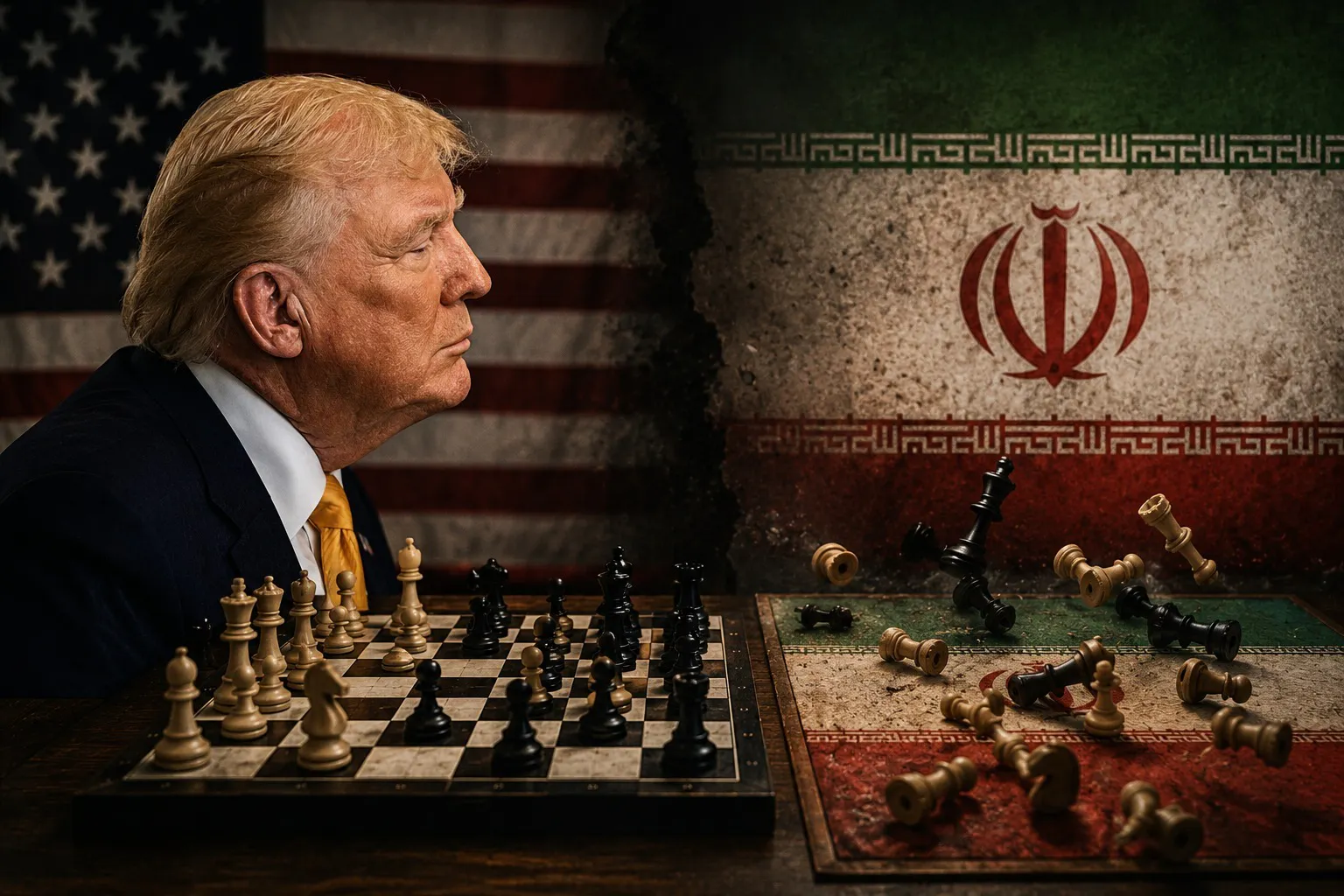
I said on the first day that the Memorandum of Understanding (MOU) with Iran was a mistake and would fail.
Freedom Is Back
In Style
Premium domains for sale
That’s not because I’m smart. That’s because there’s this thing called reality. It doesn’t stop existing just because we wish it didn’t.
Radical Islam exists. We, the West, are not like the Iranian mullahs — and this has consequences.
There was no actual ceasefire, given the fact that Iran has been routinely harassing ships in the Strait of Hormuz. And the United States fired back against Iran for doing precisely that.
Iran has also been warning ships in the Strait of Hormuz, threatening, “This is the last warning. This is the last warning. You are all in danger. Don’t put your life in danger. … Alter course. Do so immediately. … If you disobey, you will be targeted.”
They are in control of the Strait of Hormuz, and they are going to continue to maintain that they are in control of the Strait of Hormuz.
Because of all of that, the United States restored sanctions on Iran.

President Trump said the deal is over:
We attacked very powerfully last night the very dangerous people from Iran. They’re sick. There’s something wrong with them. We said, go and do your funeral stuff. And instead of that, they start shooting rockets at ships yesterday. And so we hit them very hard last night. Very hard, I would say 20… times tougher. And I told him every time you hit we hit. And of course they’re dirty players, so they go after everyone, probably including me. I’ve been number one on their list for years and they’re a bunch of scum, if you want to know the truth. They’re scum.
When a reporter asked whether the ceasefire was over and the MOU dead, Trump responded, “It’s a very interesting question. To me, I think it’s over. I don’t want to deal with them anymore. They’re scum. You know what scum is? They’re scum. They’re sick people. They’re led by sick people and they’re vicious, violent people. And if they had a nuclear weapon, they’d use it. As far as I’m concerned, it’s over.”
We have now swiveled from “They’re very reasonable and rational people” to “they’re very sick people.” He is right now, he was right before, and he was wrong in the middle.
President Trump acknowledged that the Iranians want to assassinate him, saying we have to rid the world of their “cancer.”
“We took out their first set of leaders,” he said. “We took out their second set of leaders. They want to take out the U.S. leader: Me. I’m on every list. I saw this morning I’m on every single one of their lists. And so far, I guess I’ve been a little bit lucky. But that maybe doesn’t last very long because that’s the way it goes. But we have great people. But these are evil, sick people, and we have to rid — They’re cancer, they’re cancer, and you know what you do? You got to cut out cancer early. That’s the way I feel.”
Let’s take a step back. How did we arrive at this particular impasse?
Because we in the West keep making a large-scale mistake: We assume that Islamic actors in the Middle East are just like us. They want the same things for their kids. They want the same ends.
Human flourishing, right? That’s what we want. That’s what they want. We all just have different roads to get there.
Wrong.
If you’re going to sit down and negotiate with somebody, you need to understand them. You need to understand their worldview. You have to be very, very clear-eyed about the differences between their worldview and our worldview.
If you don’t, you’re likely to walk away with a bad agreement that isn’t really an agreement at all — it ends in missiles and tears.
Let us begin with the Western worldview. What is our worldview, the way that we operate in the world?
We here in the West are what Harvard professor Joseph Henrich has referred to as “WEIRD.” It’s an acronym for Western, educated, industrialized, rich, and democratic. We are committed to a different set of values than those of cultures all around the world.
That is not the norm. It’s not what everybody thinks. It is what we think. Those values are naturalistic outgrowths of our Judeo-Christian heritage.
They did not come from nowhere. They originally came from the Old Testament, the New Testament, and then the church. They make us different from other cultures.
What are some of those values that make the West different? Some of those values are actions, such as analytic thinking. This is not rooted in theorizing; this is rooted in actual testable hypotheses about how people in the West think about problems and how people in the Islamic world think about problems.
In the West, we like analytic thinking. We like to break problems down and then strip them of context in order to solve them.
Other cultures see problems holistically. They look at relationships between problems as the key to life.
For example, we may see the closure of the Strait of Hormuz as an isolated problem with an isolated solution; we pay a little bit of a bribe, the Iranians let it go, and everybody goes home happy.
The Iranians don’t see it that way. They see the Strait of Hormuz as a problem that is part of a larger, interwoven series of problems. They see it as part of their global conquest strategy, connected with everything from shooting protesters in the streets of Tehran to the maintenance of the terrorist group in Lebanon to the increased power of the Houthis in Yemen and dominance over the Bab-al-Mandab Strait. All of those things are intertwined, according to the Iranians.
How about individualism? In the West, we are highly individualistic.
We think of ourselves as individuals with individual motivations. We have a hierarchy of needs and wants, and so we are focused on individual flourishing.
Other cultures see themselves and their personal identities as interwoven into networks, religious networks, and kinship networks.
We say things like, “Hey, you guys, you should want to preserve the life and the lives of yourselves and your citizens.”
They say, “We want Islam to win.”
That’s a totally different worldview.
We in the West have something called “impersonal pro-sociality.” We have high levels of trust in the people who surround us. It’s why we don’t require as much government interventionism. It’s why if you drop your wallet on a normal American street, there’s a fairly good shot that somebody will return the wallet to you.
That’s because we don’t predominantly operate in kinship networks, such as your cousins and your friends. We operate as a larger society with larger societal obligations. That also means we tend to think of rules as ways of governing the entire society, not merely as ways of screwing over other people. We are offended by dishonesty.
In many other cultures, that’s not the case. It’s your kin first; it’s your tribe. Literally your tribe. And that means agreements with people like that are not worth the paper they’re printed on, because they’re just ways for them to get something over on you.
In the West, we focus a lot on internal intentions. There are many studies to back this up. Our murder laws, for example, are rooted in “Did you intend to do it? Did you plan to do it or did you do it by accident?”
That’s unusual. There are a lot of other cultures where that isn’t the case, where the cause of accidental death means very little when it comes to the actual punishment. Other cultures have a strict liability system of morality. If you did something I don’t like, I don’t have to analyze your intentions; I don’t have to try to get in your head. You’re bad and you ought to be destroyed.
This means that when we project our frame of mind onto other people, when we try to impute intentions to people who don’t share our intentions, we make a category error.
Finally, self-enhancement. We tend to think of ourselves in the West as competent, as in control, more in control than sometimes we are.
Other cultures tend to think of people as out of control, as weak, as only strong in the collective.
So what does all of that mean in terms of our rules for negotiation? In the West, it means that we tend to focus on incentives and strategies that appeal to people like us. We try to look for win-win solutions where everybody is better off than they were before. And we try to set up incentives like economic prosperity or individual flourishing or safety or health, and we engage in strategies like logical problem-solving, such as “we’ll meet you in the middle” or conciliation. That’s the stuff that the West prizes.
But here’s the thing: We’re WEIRD.
We’re not like other cultures at all, which is why every single major agreement with an Islamic opponent has ended in tears. Unless you have completely defeated and destroyed the possibility of that Islamic opponent coming back and winning, you will not have a durable agreement.
We are certainly not like the Muslim theocracy in Iran.
President Trump calls them crazy, and from our perspective, they are because they don’t share our way of thinking.
But from their perspective, we’re crazy, stupid, and weak because we don’t think as they do, but we assume they think the way we do.
The Islamic Republic of Iran believes that in the absence of the infallible 12th Imam arriving at the eschaton to make the world Muslim, a qualified Islamic jurist possesses the absolute divine authority to rule both the state and society to ensure fidelity to Sharia law.
That is their actual worldview. That is why it is an Islamic regime. It can’t be a democratic regime, because that runs directly in the teeth of the idea that there is a divine authority absolutely invested in an Islamic jurist to rule society. It’s why all of the talk about a moderate wing inside the Iranian government versus the radical wing inside the Iranian government is a bunch of nonsense.
The Iranian regime believes that it is its duty to prepare the entire world for the arrival of the 12th Imam. Their worldview centers on replacing the current Western-led international order with a global system dominated by Islamic values, and this is where they get coalitional with Russia and China, because they agree on the first step, replacing the current Western-led international order, and they disagree on the second step: what replaces it?
Russia wants a Russian world order. China wants a Chinese world order. And Muslim states like Iran want an Islamic world order. They believe that Islam must become the dominant geopolitical and spiritual force on planet Earth, and that secular capitalist Western systems are corrupt and destined to fail.
So what does all that mean in terms of Islamic rules for negotiation if you’re negotiating a deal? It means that lying, taqiya, is totally fine in wartime. It is encouraged if it gets you to where you need to go.
How do you make a deal with people who think like this, whose incentives are different, whose logic is different, whose approach to negotiation is totally different?
The only way to make a successful deal with people who think like this is to totally and completely devastate their capacity to win. You have to crush their hope for victory.
You want to know why there has long been a feasible agreement between Israel and Egypt? It’s not because Egypt is wonderful and moderate. It’s because Egypt knows that if it goes up against Israel, Israel will destroy it. And they know that because they tried it in 1967 and Israel destroyed them, and then Israel destroyed them again in 1973.
Why is it that Oslo failed? Not only was Israel not destroying its opposition, but Israel was also offering them hope and an olive branch, all while they still sought to destroy Israel.
The only way to have a successful agreement in the Middle East is for one side to be so thoroughly devastated that the only way out is to basically give up the ghost and try to play it as a win.
This is why the MOU was bound to fail, because we didn’t do that.
More from this network:
Domains for Sale · GOTPeople.org · TheDSAPlatform · The Truth About Socialism
What's Your Reaction?
 Like
0
Like
0
 Dislike
0
Dislike
0
 Love
0
Love
0
 Funny
0
Funny
0
 Wow
0
Wow
0
 Sad
0
Sad
0
 Angry
0
Angry
0

I am just an average American. My teen years were in the late 70s and I participated in all that that decade offered. Started working young, too young. Then I joined the Army before I graduated High School. I spent 25 years in, mostly in Infantry units. Since then I've worked in information technology positions all at small family owned companies. At this rate I'll never be a tech millionaire. When I was young I rode horses as much as I could. I do believe I should have been a cowboy. I'm getting in the saddle again by taking riding lessons and see where it goes.
Premium domains for sale





Comments (0)