

The Fashion Company Millennials Loved Just Got Bought By America’s Rival
Premium domains for sale
Freedom Is Back In Style
This article is part of Upstream, The Daily Wire’s new home for culture and lifestyle. Real human insight and human stories — from our featured writers to you.
Freedom Is Back
In Style
Premium domains for sale
***
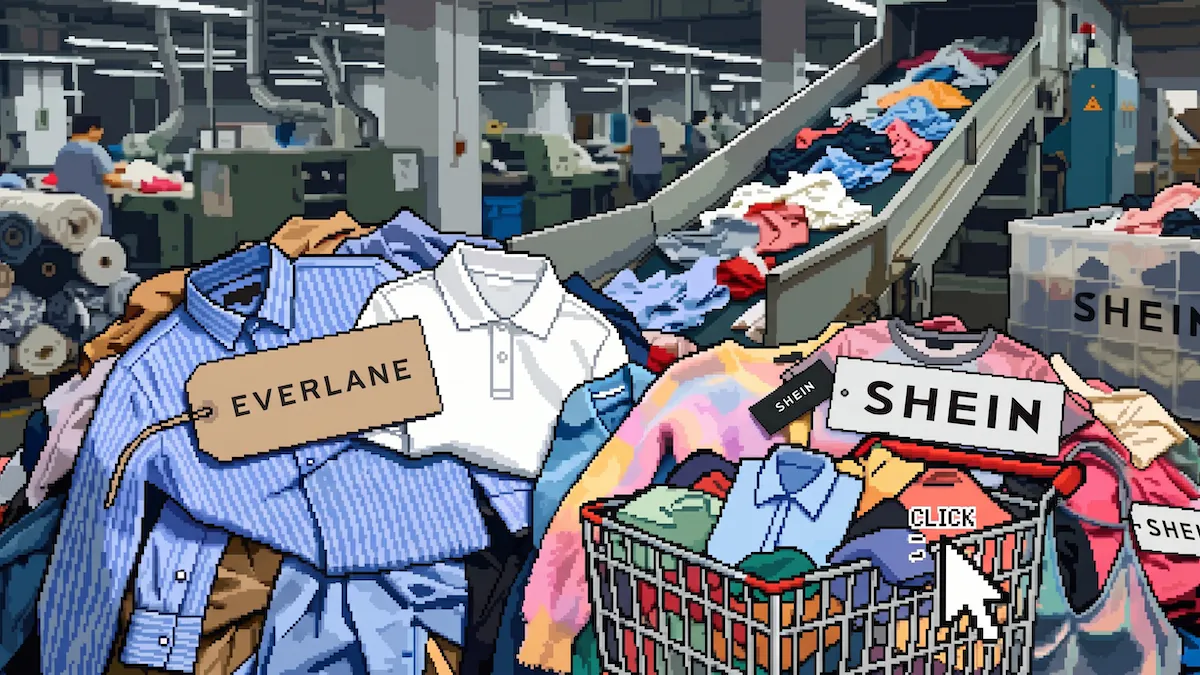
American fashion company Everlane is being sold to Shein, according to a report published Sunday. Millennial darling Everlane was purchased for a reported $100 million after allegedly suffering financial hardships in recent years. The future of Everlane was initially thrown into question after the company’s majority owner began seeking out an interested buyer in recent months. For those who were hoping that the company would maintain its reputation as an ethical, sustainable slow fashion brand, the news that Shein purchased Everlane is disappointing.
Founded in China, Shein is an online retail business that has surged in popularity in the last few years. Valued at $100 billion in 2022, the company is known for placing profits ahead of ethics, as it has allegedly used sweatshops and child labor to keep its costs low. Shein’s acquisition of Everlane likely indicates the end of Everlane’s pro-consumer production methods.
Founded by American business partners Michael Preysman and Jesse Farmer, the San Francisco-based Everlane first marketed itself as a direct-to-consumer menswear retailer. Upon launch, it garnered a huge fan base, as many people praised it for countering the status quo of fast fashion. The company’s website had a unique feature that allowed buyers to view the price points for each of the materials used in a piece of clothing so that they could feel confident about the value of what they were buying.
In an era when fashion brands are increasingly resorting to shady offshoring agreements, Everlane’s vow to offer consumer transparency was a welcome change. In contrast, Shein has gained a reputation for having questionable manufacturing standards and allegedly violating labor laws. Last year, Texas Attorney General Ken Paxton launched an investigation into Shein over its negligent labor practices as well as concerns over the “sale of unsafe consumer products” that contain toxic materials. Investigations have revealed that the company has subjected its employees to 75-hour workweeks, poor wages, and unsafe factory environments, while also employing children in its supply chain.
Shein and Everlane couldn’t be more diametrically opposed. While Everlane focused on working with designers and industry professionals to integrate recycled synthetic fibers into its clothing, Shein has typically resorted to using a blend of cheap, low-quality synthetic fibers. In May 2019, Everlane released DayGlove ReKnit shoes, which received acclaim for being created from recycled plastic bottles. Consumers praised the product for being innovative, stylish, and sustainable.
On the other hand, Shein has been criticized for stealing its designs from smaller, independent designers; manufacturing clothing that is primarily made of cheap polyester; and contributing to freshwater pollution through the overuse of microplastics. The sale of Everlane to Shein shows that American fashion companies are being devoured by foreign megacorporations with different ethical standards.
Many brands that were once based in America have outsourced their production to countries with significantly lower labor costs after facing pressure due to changes in automation and the rapid production schedule of fast fashion. American textile manufacturing was at its peak in the 1970s, but it has since declined by more than 80%. Although the U.S. is one of the largest markets for textiles, about 98% of the apparel consumed in America is actually produced in a foreign country.
Between the high labor costs in America and the rise of cheap Chinese manufacturing practices, it is becoming increasingly doubtful that the American textile industry will have a comeback. This has allowed Shein’s “quantity over quality” business model to consume the clothing industry.
Since its founding in 2008, Shein has become the largest e-commerce fashion retailer in the world. A portion of Shein’s financial success comes from creating its own supply chain in Guangzhou, utilizing a network of hundreds of Chinese suppliers. This allows it to produce massive quantities of products at an extremely rapid pace — quickly enough that it can move in tandem with the micro trends that crop up on social media.
Slow fashion brands don’t have that luxury and often can’t mass-produce affordable products during the short time span when they are in vogue. Shein’s ability to produce cheap, trendy clothing that millennials and Gen Z can afford has given it an edge in the market and a reliable, returning consumer base.
The rapid growth of Shein and the subsequent consolidation of Everlane doesn’t merely have negative economic impacts for America, but it also has negative cultural implications. Shein is the fast food of fashion. It is low-cost, low-quality, and easily disposable. Disposable clothing is representative of a disposable culture. In the past, people would buy well-made, high-quality clothing with the intention of keeping it for decades. If zippers broke or seams tore, people would fix them or stitch them up, preserving the pieces with the hope that they could wear them for years and eventually pass them down to their children.
The materials Shein uses notoriously rip, tear, or simply fall apart after just a few uses. Its products have no hope of lasting for more than a few months, let alone a few years. Everlane was one of the country’s last slow fashion brands, and its buyout is a sad reminder that we can’t restore American culture if it keeps getting sold off.
***
Brooke Brandtjen is a writer and journalist from Wisconsin who focuses primarily on culture, politics, and religion. She is a senior contributor at New Guard Press, a publication she joined while attending Hillsdale College.
More from this network:
Domains for Sale · GOTPeople.org · TheDSAPlatform · The Truth About Socialism
What's Your Reaction?
 Like
0
Like
0
 Dislike
0
Dislike
0
 Love
0
Love
0
 Funny
0
Funny
0
 Wow
0
Wow
0
 Sad
0
Sad
0
 Angry
0
Angry
0

I am just an average American. My teen years were in the late 70s and I participated in all that that decade offered. Started working young, too young. Then I joined the Army before I graduated High School. I spent 25 years in, mostly in Infantry units. Since then I've worked in information technology positions all at small family owned companies. At this rate I'll never be a tech millionaire. When I was young I rode horses as much as I could. I do believe I should have been a cowboy. I'm getting in the saddle again by taking riding lessons and see where it goes.
Premium domains for sale


















Comments (0)