

The Moral Shift Hiding Inside Today’s Hottest Books
Premium domains for sale
Freedom Is Back In Style
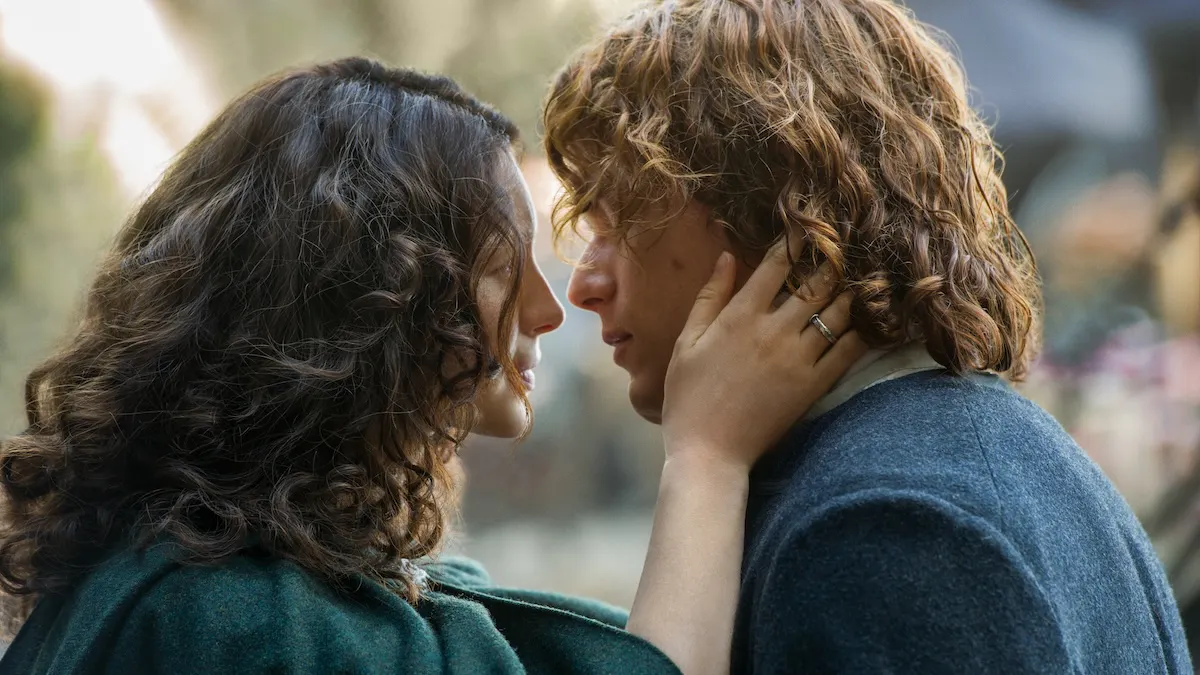
A new bookstore has opened in my Oxford neighborhood. Given the academic reputation of this city of dreaming spires with its medieval colleges and historic libraries, one might think such a bookstore would cater to a highbrow and scholarly readership. But no, it exclusively stocks “romantasy,” a fusion of romance and fantasy literature, and the fastest-growing sector of the global book trade.
Freedom Is Back
In Style
Premium domains for sale
The literary genres of romance and fantasy have been popular for centuries, but their fusion into romantasy is relatively new. Many argue that the 1983 novel by Marion Zimmer Bradley, “The Mists of Avalon,” which upended traditional Arthurian mythology, started the trend. This was followed by Diana Gabaldon’s “Outlander” books, blending historical adventure, time-travel fantasy, and an emotionally central romance. These books established the template: fantasy as a stage for romantic destiny, psychological intimacy, and female-centered moral stakes.
Since the turn of the millennium, the formula has been replicated at scale. Self-published authors began producing romance-fantasy hybrids that traditional publishers had overlooked. According to industry analyses, romantasy has become “the single biggest growth engine in global publishing,” with sales in the U.S. and more recently in the U.K. either tripling or quadrupling over the past five years. Prestige publishing houses remain cautious, but with such astonishing sales figures, one wonders for how long.
The opening weekend of my local romantasy bookstore, Bad Girl Books, reflected that popularity. Even with pre-booked tickets, there was a line down the sidewalk of excited fans, among whom I waited in some trepidation. Once inside, I discovered there are many sub-genres of romantasy, ranging from “Cosy Romantasy,” where characters bake cookies and muffins to woo and enchant each other rather than fighting battles, to the “Reverse Harem” or “Why Choose?” stories, in which the girl ends up with all the guys. (Imagine a gender-swapped “Mormon Wives” and you get the idea.) As one of the more memorable sub-genres, “Monster Smut” (I won’t elaborate) suggests, sex is a big part of the attraction. The degree of explicit content in books is indicated through a “spice” rating, which was illustrated in the bookstore via the relative number of chili pepper icons on shelves, rather like one might find on the menu of a Mexican restaurant to denote how hot a particular dish is.
Fans of the genre are quick to challenge suggestions that the appeal of the books is their “fairy smut,” even if the available merch might suggest precisely that. These books are about self-actualization, their defenders claim, about seeking one’s destiny and achieving empowerment of a predominantly female variety. Yet the sex in modern romantasy stories is vastly different from the way sex was treated in the OG romantasy stories, the Arthurian romances that had a similarly popular appeal throughout medieval Europe.
Arthurian literature is a storytelling tradition built around King Arthur, his knights, and the mythical kingdom of Camelot. It began as an oral Celtic legend in Wales and Brittany and circulated for centuries before being written down. By the late Middle Ages, authors such as Chrétien de Troyes and Sir Thomas Malory had turned these tales into great romances, establishing the themes we still recognize today: the noble quest, the testing of virtue, the tension between love and duty, and the tragic fall of a once-ideal kingdom.
Two of the most famous written versions anchor the tradition. “Sir Gawain and the Green Knight” explores chivalry, temptation, and moral testing through a single knight’s ordeal, while Malory’s “Le Morte d’Arthur” gathers the whole cycle into a sweeping narrative of Arthur’s rise and fall.
In these Arthurian stories, adultery is not just about knights and queens swept up in forbidden passion. Rather, it becomes the place where personal desire collides with the hard work of building an ideal society. When those Arthurian lovers Lancelot and Guinevere or Tristan and Isolde give in to desire, they are not simply breaking a marriage vow but are shaking the foundations of loyalty and duty that hold Camelot together. Lancelot, formerly the most heroic knight of the Round Table, fails in his quest to find the Holy Grail and must slaughter his fellow knights and closest friends to save Guinevere from the punishment her adultery brought down upon her. In contrast to such a tragic story, Sir Gawain manages to reject the seductive advances of the wife of the Green Knight. His reward for staying loyal to his values is moral clarity, public honor, and the respect of his fellow knights.
In medieval struggles between right and wrong, the ultimate battleground is the invisible human soul, where a person wrestles with temptation, pride, and sin. But how do you make a silent, internal, spiritual struggle visible and dramatic for an audience? You externalize it through magic. Magic in Arthurian literature provides the moral framework within which temptation, deception, and testing can occur. Enchantments, shape-shifting, and illusions create the narrative conditions for characters to confront their moral vulnerabilities. Magic is used as the stage for an ethical trial: characters must discern truth from illusion, loyalty from seduction, virtue from glamour.
The modern term glamour comes directly from this medieval positioning of magic; the word originally meant an illusion or enchantment that makes something appear more beautiful or desirable than it truly is. In Arthurian romance, glamour is not decoration but moral danger, and the shimmering surface tests whether a knight’s inner virtue can withstand the world’s deceptions. By using this magical frame, medieval authors could show how sin rarely presents itself as ugly; it presents itself as enchanting, beautiful, and magically justified. The knight’s task was discernment: piercing through the magical illusion to see the objective moral reality underneath.
The celebrated author of the Narnia books, C.S. Lewis, who himself taught medieval literature at Oxford, positioned magic in precisely this way in “The Silver Chair.” The more beautiful and appealing a character was in that story, the more dangerous and dishonest they turned out to be. Undergoing a moral trial like that of the medieval Sir Gawain, the children in the story must resist the temptation to follow a beautiful illusion by choosing to do their duty, however unappealing it feels at the time.
Modern romantasy treats magic differently from the old Arthurian world. In the medieval stories, enchantment was a test. But in romantasy, magic becomes a superpower, a personal strength that expresses identity, desire, and emotional intensity. It is something a heroine “comes into,” something a couple “unlocks together,” something that grows as they grow. That shift matters. Once magic becomes a form of self-actualization rather than a moral hazard, the whole ethical framework of the story has changed.
Alongside that reorientation, sexual consummation becomes the narrative’s highest aspiration, and the surrounding moral world must thin out to make room for it. Duty, sacrifice, and communal responsibility have no logical place now that personal fulfillment is the story’s guiding star. Honor becomes the first casualty of this new storyline; the quest is no longer to uphold a kingdom, but to complete the self.
The move away from the ideals of Arthurian altruism has been a slow and subtle constant across the 20th century, from T.H. White’s “The Once and Future King,” a retelling shaped by his own pacifism during World War II, to the later habit of casting the Kennedy political dynasty as a modern Camelot. Given the uniformly unchivalrous treatment of women by the Kennedy men, the only point of connection with the Arthurian origins seems to have been physical hotness. The mushy 1995 movie “First Knight” even portrayed Sean Connery’s Arthur, on his deathbed, blessing Guinevere and Lancelot’s union.
Romantasy is purely the latest manifestation of a broader cultural shift away from duty and toward self-fulfillment. But has this jettisoning of moral absolutes in favor of expressive individualism made us happier? More fulfilled? More free to be our true selves? The statistical evidence suggests not. Data from long-term scientific studies such as MIDUS and the Dual-Continua Model now show what earlier generations intuited: that when self-expression becomes the highest good, psychological resilience tends to collapse. One recent research paper from the U.K. even “explores the decline in adolescent mental health and the weakening of traditional moral frameworks, positing education in the virtues as protective of mental health due to the intrinsic link between moral/existential wellbeing and psychological health.” Well, yes. Quite.
Modern scientific data simply confirm what the compilers of the original Arthurian romances instinctively knew all along: that a strong sense of duty — committing oneself to a community, a code, or a purpose greater than the self — acts as a psychological buffer against mental health crises. A truism familiar to previous generations was “virtue is its own reward.” This is the neglected message of Arthurian romances and a moral truth that all the chili peppers in the world cannot replace.
***
Bridget Riley studied modern history at Oxford and completed a Ph.D. in medieval history at the University of Reading. She writes on history, culture, and the philosophy of religion.
This article is part of Upstream, The Daily Wire’s new home for culture and lifestyle. Real human insight and human stories — from our featured writers to you.
More from this network:
Domains for Sale · GOTPeople.org · TheDSAPlatform · The Truth About Socialism
What's Your Reaction?
 Like
0
Like
0
 Dislike
0
Dislike
0
 Love
0
Love
0
 Funny
0
Funny
0
 Wow
0
Wow
0
 Sad
0
Sad
0
 Angry
0
Angry
0

I am just an average American. My teen years were in the late 70s and I participated in all that that decade offered. Started working young, too young. Then I joined the Army before I graduated High School. I spent 25 years in, mostly in Infantry units. Since then I've worked in information technology positions all at small family owned companies. At this rate I'll never be a tech millionaire. When I was young I rode horses as much as I could. I do believe I should have been a cowboy. I'm getting in the saddle again by taking riding lessons and see where it goes.
Premium domains for sale























Comments (0)