

'Trans' alleged school shooter in Canada: Did police put politics before public safety?
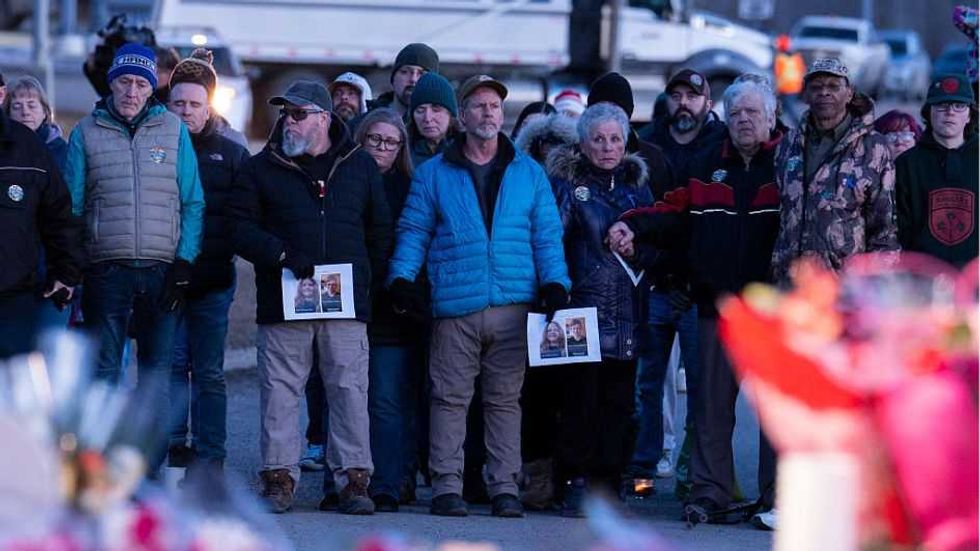

Two weeks ago in tiny Tumbler Ridge, British Columbia, an 18-year-old man allegedly killed his mother and half-brother. He then opened fire at his former secondary school, murdering five students — some as young as 12 — and one teacher, wounding dozens more, before taking his own life.
Live Your Best Retirement
Fun • Funds • Fitness • Freedom
It was one of Canada's deadliest mass shootings ever — and its worst school shooting since the 1989 massacre at École Polytechnique de Montréal.
The RCMP-issued public alert warned of a 'female in a dress with brown hair.'
It was also Canada's first incident of a grim trend plaguing its neighbor to the south: homicidal rampages by clearly mentally ill, transgender-identified perpetrators.
'Female' at large
Why does it matter that alleged shooter Jesse Van Rootselaar considered himself "trans"?
Even if you're not convinced that the desire to change or ignore biological sex is in itself a sign of psychological disturbance or that the drugs, hormones, and surgeries used to "transition" people don't exacerbate or even trigger mental illness, it seems clear that Van Rootselaar's "trans" identity affected how police responded to the shooting.
Van Rootselaar was “transitioning” from male to female, and that’s precisely how he appeared: like a young man trying to look like a young woman. Yet while he was still at large, the Royal Canadian Mounted Police in Tumbler Ridge seemingly put woke politics and Canada’s obsession with “misgendering” ahead of public safety.
The RCMP-issued public alert warned of a "female in a dress with brown hair."
British Columbia RCMP commanding officer Dwayne McDonald reinforced this narrative at the first news conference, announcing that the suspect was “an 18-year-old female.” It was only after prodding from a reporter that he admitted that Van Rootselaar was a biological male.
We've sadly come to expect this kind of obsfucation from the media — Canada's state broadcaster refers to Van Rootselaar as "she" without qualification — but such deception from the police poses even greater risks.
Could the ideologically motivated refusal to identify Van Rootselaar accurately have led to even more deaths? It's certainly possible.
Mental health concerns
Moreover, gender ideology may have hampered the police's ability to prevent this tragedy.
McDonald confirmed that Van Rootselaar had previously been apprehended under British Columbia’s Mental Health Act on multiple occasions and had been hospitalized “in some circumstances.”
Under the Mental Health Act, individuals who pose a risk to themselves or others can be involuntarily detained and treated, with no fixed limit on the duration so long as medical certifications are renewed. Mental health officials have acknowledged that repeated cycles of admission and discharge — without a durable treatment plan — are not uncommon.
It is fair to ask whether institutional caution — including heightened sensitivity around gender identity issues — contributed to a reluctance to take firmer, longer-term measures when warning signs were evident.
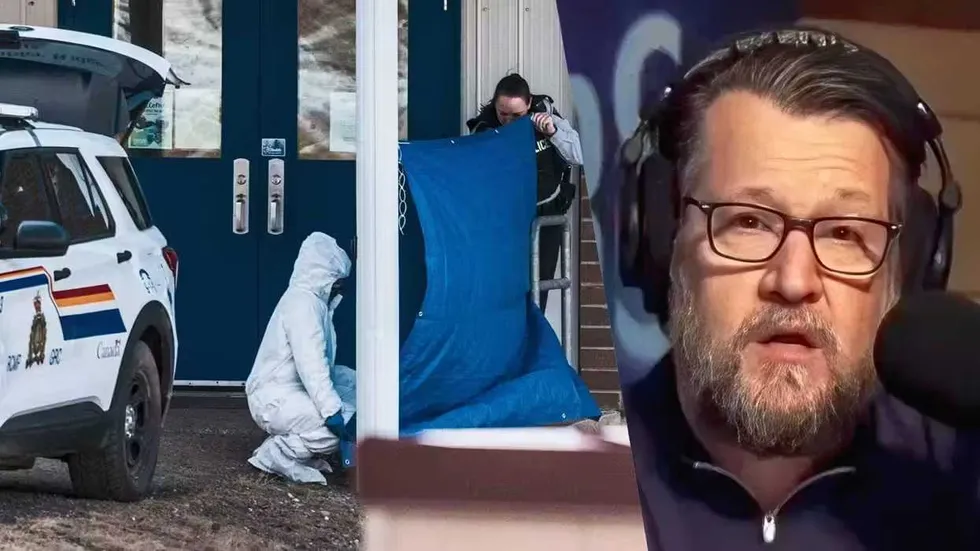 Eagle Vision Agency/AFP via Getty Images
Armed and dangerous
Then there are the multiple firearms recovered at the school, along with additional weapons at the suspect’s residence. Police have not yet provided detailed clarification about how the firearms were obtained or whether they were legally registered.
Canada has some of the most restrictive gun laws in the developed world. In recent years, the federal government has expanded prohibitions and launched new confiscation initiatives largely affecting rural gun owners and farmers. Those measures have been defended as necessary for public safety.
Yet this case raises an unavoidable question: How did an 18-year-old with documented mental health concerns gain access to multiple firearms?
If Canada’s regulatory regime is as robust as its advocates claim, the breakdown here demands explanation. Was this a licensing failure? A background-check gap? A failure to flag mental health risk? Or unlawful access that went undetected?
And to what extent were any of these failures enabled by the RCMP's established practice of putting the Liberal government and its pet causes ahead of the public good?
What's Your Reaction?
 Like
0
Like
0
 Dislike
0
Dislike
0
 Love
0
Love
0
 Funny
0
Funny
0
 Wow
0
Wow
0
 Sad
0
Sad
0
 Angry
0
Angry
0

I am just an average American. My teen years were in the late 70s and I participated in all that that decade offered. Started working young, too young. Then I joined the Army before I graduated High School. I spent 25 years in, mostly in Infantry units. Since then I've worked in information technology positions all at small family owned companies. At this rate I'll never be a tech millionaire. When I was young I rode horses as much as I could. I do believe I should have been a cowboy. I'm getting in the saddle again by taking riding lessons and see where it goes.











Comments (0)