

What Does ‘Election Day’ Mean? The Supreme Court Is Being Asked to Decide This Consequential Question
Premium domains for sale
Freedom Is Back In Style
Under our Constitution, state legislatures retain primary authority for setting the rules and procedures governing elections—even federal ones. This is true for both congressional and presidential elections.
Freedom Is Back
In Style
Premium domains for sale
Freedom Is Back
In Style
Premium domains for sale
But Congress can step in and alter those default state-level rules. And it has chosen to do so in several important ways. For example, it has fixed by federal statute “the Tuesday next after the 1st Monday in November” as “the day for the election” of members of Congress and the date presidential electors are chosen.
This uniform “election day” seems straightforward. But in Watson v. Republican National Committee, the Supreme Court is being asked to decide what exactly these federal “election day” statutes mean.
Do these statutes—mandating a uniform federal election day—preempt and prohibit laws like Mississippi’s that allow ballots to be received by election officials and counted after the end of election day? The Mississippi law allows ballots to be counted as long as they are postmarked and received within five business days after election day. The Republican National Committee, the Libertarian Party of Mississippi, and other challengers say yes. Mississippi officials say no.
The justices raised various questions and concerns during Monday’s oral argument.
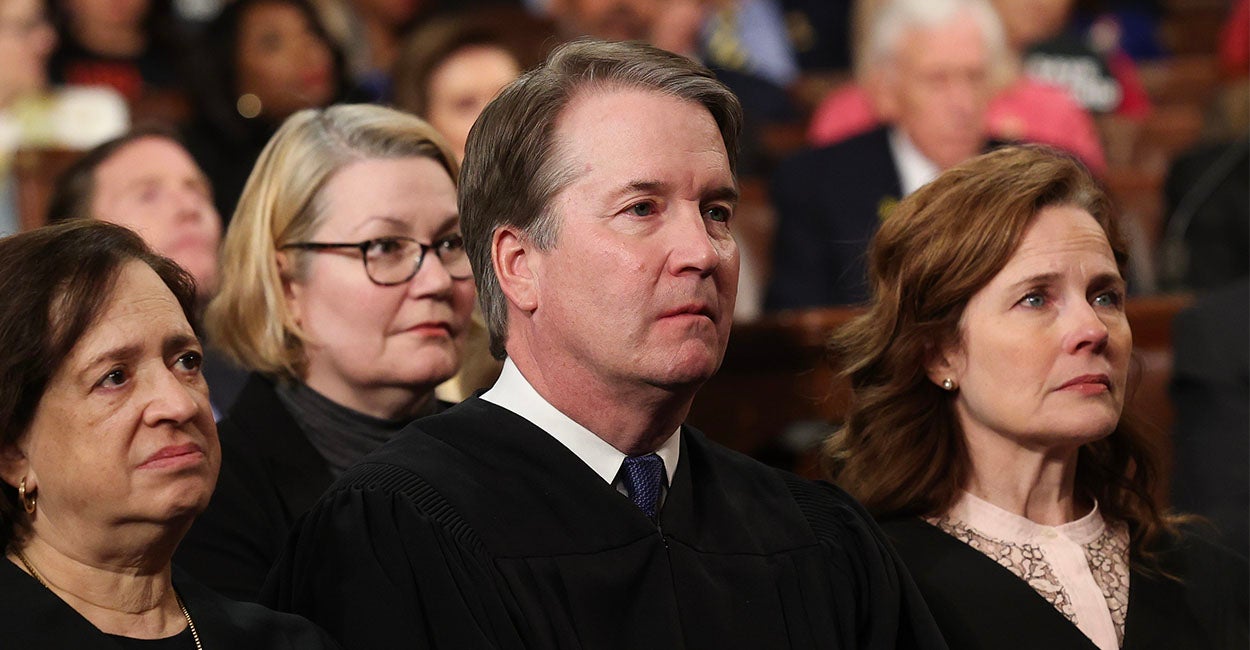
While discussing the phrase “Election Day,” Justice Samuel Alito pointed out, “We have lots of phrases that involve two words, the last of which, the second of which is day, Labor Day, Memorial Day, George Washington’s birthday, Independence Day, birthday, Election Day … And they’re all particular days.”
Justice Clarence Thomas asked what Justices should make of early voting if federal law sets an “election day.” Paul Clement, arguing for the challengers, said that “early voting is permissible largely because it has a different history [than counting after-election-day ballots] and because of [the] idea that the Election Day is the date where the election is consummated”—that is, completed.
Justice Kentanji Brown Jackson suggested that there are “federal statutes that suggest that Congress was aware of post-Election Day ballot deadlines, that the states had enacted and, in fact, incorporated those in several circumstances.” Clement explained why different federal statutes dealing with military voting and “force majeure events” were different than the federal statutes at issue in this case. And he called a statement by Justice Sonia Sotomayor about Florida counting military votes after Election Day in 2000 “the reddest of red herrings” based on the unique procedural history of that case and the federal and state laws at issue there.
Justice Brett Kavanaugh asked whether a ruling for the challengers would present any Purcell problems—would it cause undue confusion or present administrability problems—for the states with the election potentially coming only four months or so after a decision.
The United States filed an amicus brief supporting the challengers’ position, noting its interest “in safeguarding the integrity of federal elections, which is undermined by state laws that continue to count mail-in ballots received days or weeks after election day.”
This case addresses the substantive question underlying, but not directly at issue in the Bost v. Illinois State Board of Elections decision from earlier this year. There, the court simply had to decide the threshold issue of whether the challenger in that case had standing—or the legal ability—to bring a lawsuit. The court said he did but did not reach the underlying challenge to Illinois’ post-election ballot deadline being challenged. It will decide that issue in this case.
Whatever the Supreme Court decides, its decision will not only impact Mississippi but Illinois and many other states too in the upcoming midterm elections and beyond.
The post What Does ‘Election Day’ Mean? The Supreme Court Is Being Asked to Decide This Consequential Question appeared first on The Daily Signal.
More from this network:
Domains for Sale · GOTPeople.org · TheDSAPlatform · The Truth About Socialism
What's Your Reaction?
 Like
0
Like
0
 Dislike
0
Dislike
0
 Love
0
Love
0
 Funny
0
Funny
0
 Wow
0
Wow
0
 Sad
0
Sad
0
 Angry
0
Angry
0

I am just an average American. My teen years were in the late 70s and I participated in all that that decade offered. Started working young, too young. Then I joined the Army before I graduated High School. I spent 25 years in, mostly in Infantry units. Since then I've worked in information technology positions all at small family owned companies. At this rate I'll never be a tech millionaire. When I was young I rode horses as much as I could. I do believe I should have been a cowboy. I'm getting in the saddle again by taking riding lessons and see where it goes.
Premium domains for sale










Comments (0)