

Why College Can Be The Biggest Financial Gamble You’ll Ever Make
Premium domains for sale
Freedom Is Back In Style
Introduction
Freedom Is Back
In Style
Premium domains for sale
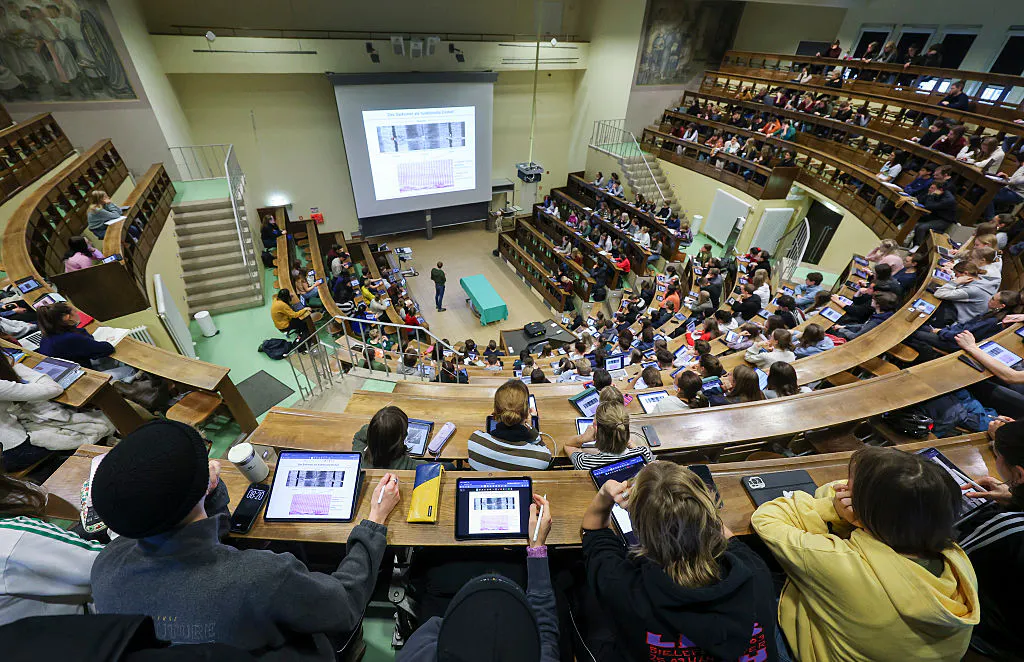
For generations, Americans assumed that sending a child to college was the safest financial decision a family could make. Today, that assumption deserves far more scrutiny. For many students, college remains an excellent investment. For others, it may become the biggest financial mistake of their lives.
In Parts I and II of “Why America’s Colleges Are Far More Fragile Than They Appear,” we were descriptive, outlining the mounting financial pressures facing colleges and universities, pressures that have reshaped the economics of higher education in ways families can no longer ignore.
This article is prescriptive. Rather than diagnosing higher education’s structural problems, we want to help families make better decisions before investing tens — or even hundreds — of thousands of dollars in pursuit of a college degree. College deserves the same level of scrutiny as buying a home or starting a business. Yet many families conduct almost no financial analysis before making this six-figure investment. They focus on dreams, traditions, prestige, and acceptance letters while overlooking financial risk.
Increasingly, that is a costly mistake that could haunt them for decades.
The premise that all students are “above average” and ready for college is fiction. According to the National Center for Education Statistics, 43% of students who enter postsecondary education complete no credential after six years. Most of those dropouts — roughly 60-70% — have student loan debt when they leave. Federal student loan balances now exceed $1.8 trillion, or about $40,000 per borrower, not including another $40,000 on average for parents using Parent PLUS loans.
The fastest-growing cohort of student loan debtors is seniors aged 60+ — not because so many elderly are going back to school, but because they are turning 60 while still carrying old debt, or borrowing for their younger relatives. This group has grown sixfold since 2004, and their debt has grown 19-fold.
Employers think today’s college graduates are less prepared for jobs. A 2026 Lumina-Gallup report found that 58% of employers believe the class of 2026 is less prepared than graduates a decade ago. Another study found 75% of HR managers believe most college educations are not preparing people for their jobs, and 91% say onboarding recent graduates costs more because they lack readiness. The same study found that 85% of graduates themselves say they wish their college had better prepared them for the workplace.
One likely contributor is that so many of them weren’t prepared to enter college at the outset. According to a new analysis of scores from ACT college-admissions tests, only one in five high schoolers in the class of 2023 graduated ready to succeed in their core introductory college classes.
Many graduates also struggle to find jobs aligned with their credentials. For years, 40–45% of college graduates have worked in roles that do not require a degree. Nearly half of master’s degree programs leave students financially worse off.
A college degree still provides value for many students — but the value of a diploma now varies widely depending on the institution, its cost, the student’s likelihood of graduating, and the chosen field of study.
Meanwhile, many institutions have expanded recruitment far beyond the traditional college‑bound population. Financial pressures have pushed schools to pursue enrollment growth aggressively, including among students who may not be academically or financially prepared for the challenges ahead. As we previously outlined, many institutions now target these groups specifically — often including underrepresented students who face greater risks.
Of course, some students attend college for reasons unrelated to economics. Wealthy families, or students seeking the educational or social experience, may not prioritize cost‑value analysis. But for everyone else — the overwhelming majority of the market — a far more critical assessment is essential. That assessment begins with this fundamental question: Does college make economic sense for me? Answering that question should involve an unbiased financial analysis.
Assessing the Odds and Risk
With the cost of a degree at a top‑tier university often exceeding $300,000, a non‑wealthy family would be unwise not to evaluate the likely economic costs and rewards. Historically, many families avoided such analysis — confident that the economic payoff would exceed the cost, or citing a student’s “passion” as justification. Few parents would buy their teenager a $300,000 Ferrari simply because he was passionate about sports cars. Yet many spend comparable sums on degrees without demanding any evidence that the investment will pay off. The financial stakes — and potential damage — are similar even at less expensive schools if the family cannot truly afford the investment.
Return on Investment (ROI)
Colleges often highlight “the college premium,” noting that graduates tend to earn more than non‑graduates. Schools, and even the federal government, frequently imply this is a causal relationship — a classic error of conflating correlation with causation. This is like claiming gym memberships cause longer lifespans. In reality, the correlation reflects underlying factors: higher incomes, healthier lifestyles, better diets, and lower smoking rates.
Additionally, college ROI projections often rely on one or more flawed assumptions:
Assumption #1: The student graduates.
Only 61% of first‑time, full‑time undergraduates finish within six years. Underprepared students have even lower graduation rates and are a growing portion of the overall student population. Some 60—70% of those who leave college without a degree take student loan debt with them, and they are five to six times more likely to default on those loans than graduates.
Assumption #2: College takes four years.
The average time to graduate is five to six years, with only 44% finishing in four. Additional years mean more tuition, room and board, fees, and living expenses. With college inflation at 3–4%, years five and six cost 16% and 20% more than year one. ROI calculations rarely include this.
Assumption #3: The major never changes.
Up to 70% of students change their major at least once, often to less rigorous and less lucrative majors — especially true between STEM and non‑STEM fields, and with women disproportionately making this switch. Only 10-15% of students who begin as “pre‑med” matriculate into medical school. The earnings expectations vary greatly across these majors, making huge differences in long-term ROI projections.
Assumption #4: Opportunity costs don’t matter.
Two major opportunity costs are often overlooked:
- Alternative uses of the money
Assume that a family is considering spending $35,000 per year to fund a student’s education. Alternatively, investing $35,000 per year in an S&P 500 index fund for five years at a conservative 9% annual return would yield $228,000 after five years — and $1.97 million after 25 more years with no additional contributions. Might that be a better investment — especially for one of the four out of five students whom ACT identifies as unprepared for college?
- Lost earnings during college
The median annual wage for non‑college graduates is $47,500. Four or five years of earnings — and savings — must be included in any realistic ROI analysis.
Assumption #5: Wage premiums stay high.
The wage premium for college rose sharply from the 1980s through the early 2000s, but since the mid-2010s, the premium has been largely flat or slightly down. More recently, a number of bachelor’s programs have been projected to have negative ROIs.
Conclusion
Families should approach the college decision with the same discipline they would apply to any major investment: understand the risks, weigh the expected return, and make decisions based on evidence rather than emotion. Doing so will not eliminate risk, but it can greatly improve the odds that a college education, if chosen, becomes a sound investment rather than a costly mistake.
Our purpose is not to discourage students from attending college. Rather, it is to encourage informed decision-making based on evidence instead of flawed assumptions. College remains one of America’s greatest institutions when the right student chooses the right school and the right course of study at the right price. But it is not a one-size-fits-all path to prosperity, and the downside risks are far greater for some than others.
College is neither a guaranteed ticket to prosperity nor a decision that should be made on faith or passion. It is an investment. Like any investment, it should be evaluated on expected return, probability of success, and financial risk. Families who approach college with that discipline will make better decisions — and avoid turning one of life’s biggest possible opportunities into one of its biggest financial mistakes.
***
Greg Salsbury, Ph.D., serves on the Board of Advisors for STARRS.US and is the former president of Western Colorado University. He earned his Ph.D. from the University of Southern California, an M.A. from the University of Illinois, and an M.A. from the Annenberg School for Communication and Journalism at USC.
John Kawauchi, MBA, is a former VP of Enrollment Management and Marketing at Western Colorado University and Lake Superior State University, after spending most of his career in Retirement Planning and Product Marketing in the Financial Services industry. He earned his MBA from the University of Chicago and a B.S. from Cornell University.
More from this network:
Domains for Sale · GOTPeople.org · TheDSAPlatform · The Truth About Socialism
What's Your Reaction?
 Like
0
Like
0
 Dislike
0
Dislike
0
 Love
0
Love
0
 Funny
0
Funny
0
 Wow
0
Wow
0
 Sad
0
Sad
0
 Angry
0
Angry
0

I am just an average American. My teen years were in the late 70s and I participated in all that that decade offered. Started working young, too young. Then I joined the Army before I graduated High School. I spent 25 years in, mostly in Infantry units. Since then I've worked in information technology positions all at small family owned companies. At this rate I'll never be a tech millionaire. When I was young I rode horses as much as I could. I do believe I should have been a cowboy. I'm getting in the saddle again by taking riding lessons and see where it goes.
Premium domains for sale





















Comments (0)