

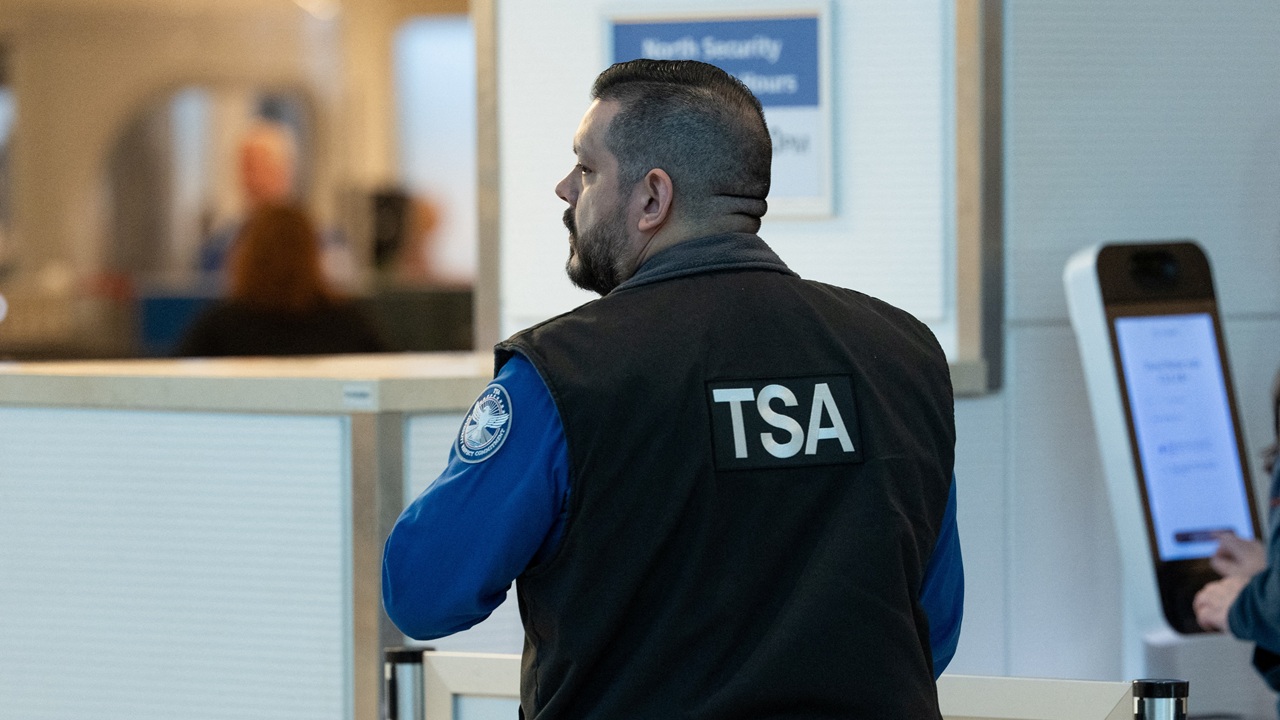
Why Do TSA Employees Spend so Much Time on Union Business?
Premium domains for sale
Freedom Is Back In Style
Twenty-five years after the 9/11 attacks, we hardly need reminding that aviation security can never be taken for granted. But we got one anyway.
Freedom Is Back
In Style
Premium domains for sale
On Sept. 30, a Flydubai flight carrying 174 passengers from Dubai to Tel Aviv made an emergency landing in Saudi Arabia after the co-pilot stabbed the captain and, according to Israeli officials, attempted to crash the aircraft.
The details are extraordinary, and the lesson is simple. Threats can emerge without warning, and aviation security depends on trained people being ready to respond.
That is why Americans should pay attention to a newly filed Transportation Security Administration record detailing the operational burden of the agency’s 2024 collective bargaining agreement. The federal government is now appealing a court injunction keeping that agreement in force.
Americans for Fair Treatment, of which I am CEO, has been fighting this battle for years. Congress never expressly granted collective bargaining rights to TSA screeners. The current union system began with a 2011 decision by Obama-era TSA Administrator John Pistole.
The legal questions belong to the courts, but TSA’s own record raises a broader question: How much union bureaucracy should a national security agency be expected to absorb?
In fiscal year 2024, TSA employees used 277,033.5 hours of taxpayer-funded “official time” for union representational activity, according to the agency’s administrative record. TSA estimated the salary cost alone at more than $7.3 million.
That is more than 34,600 eight-hour workdays devoted to union activity rather than employees’ regular TSA duties.
The consequences are not confined to paperwork.
Under the agreement, union representatives assigned to 100% official time perform no screening duties or technical proficiency assessments. Their certifications can lapse, requiring additional training and testing before they return to regular screening.
Airport managers told TSA what that can mean in practice. At Miami International Airport, managers reported that pulling certified personnel away during peak travel periods can delay the opening of screening lanes and the deployment of specialized equipment. Other managers described schedule reshuffling and potential staffing shortages at passenger checkpoints and baggage-screening operations.
TSA itself warned that reduced staffing can mean fewer open lanes, longer security lines, airport congestion, and missed flights.
Official time represents only part of the burden documented by TSA.
Negotiating the 2024 agreement consumed 20,200 combined hours from TSA and American Federation of Government Employees participants and approximately $1.35 million in personnel and travel costs.
TSA also identified 428 arbitration matters resolved since 2010 and estimated that routine cases consumed approximately 7,207 attorney hours and 2,365 witness hours. Some involved serious disciplinary issues. Others were far more routine, including disputes over break timing, whether employees should be paid for one to seven minutes of work after a shift, and how much notice employees should receive before a 30-minute schedule change.
One airport hub estimated that it spends more than 1,000 hours every month addressing union-related matters. It also reported approximately 80 hours each week away from screening functions, the equivalent of two full-time officers.
TSA’s attendance figures add another data point. The nationwide unscheduled absence rate was 4.75% with the agreement in force, fell to 3.93% while it was suspended, and rose to 4.35% after it was reinstated.
Union plaintiffs argue that the collective bargaining agreement protects officers’ working conditions, employment rights, and access to grievance procedures. The district court has kept the agreement in effect while litigation proceeds, and the 9th Circuit will now consider the government’s appeal.
TSA employees deserve fair treatment and a meaningful way to address legitimate workplace concerns. But passengers deserve something too. They deserve a security agency with the flexibility to put trained officers where they are needed, open lanes when passenger volume surges, and respond immediately when a threat emerges.
Congress created TSA after 9/11 to protect the nation’s transportation system. Twenty-five years later, that mission remains its core responsibility.
At TSA, every labor policy should strengthen security, preserve readiness, and keep trained officers where they are needed most.
Americans for Fair Treatment participated as amicus curiae in the district court litigation.
We publish a variety of perspectives. Nothing written here is to be construed as representing the views of The Daily Signal.
More from this network:
Domains for Sale · GOTPeople.org · TheDSAPlatform · The Truth About Socialism
What's Your Reaction?
 Like
0
Like
0
 Dislike
0
Dislike
0
 Love
0
Love
0
 Funny
0
Funny
0
 Wow
0
Wow
0
 Sad
0
Sad
0
 Angry
0
Angry
0

I am just an average American. My teen years were in the late 70s and I participated in all that that decade offered. Started working young, too young. Then I joined the Army before I graduated High School. I spent 25 years in, mostly in Infantry units. Since then I've worked in information technology positions all at small family owned companies. At this rate I'll never be a tech millionaire. When I was young I rode horses as much as I could. I do believe I should have been a cowboy. I'm getting in the saddle again by taking riding lessons and see where it goes.
Premium domains for sale








Comments (0)