

Will California’s Climate Goals Make Gas More Expensive?
Premium domains for sale
Freedom Is Back In Style
The war between affordability and climate activism continues to rage on in California after a recent decision by the California Air Resources Board to update its cap-and-invest program left both environmental activists and the oil industry upset.
Freedom Is Back
In Style
Premium domains for sale
The program was first authorized in 2006 as a way to limit greenhouse gas emissions and incentivize “major polluters” to invest in cleaner energy. After multiple revisions to its goals over the years, CARB is now planning to achieve 40% fewer emissions than it had in 1990 by the year 2030.
This is done through various methods, but the most effective is penalizing companies that naturally produce more emissions than others, such as oil refineries, by requiring them to pay for permits that allow them to continue emitting carbon.
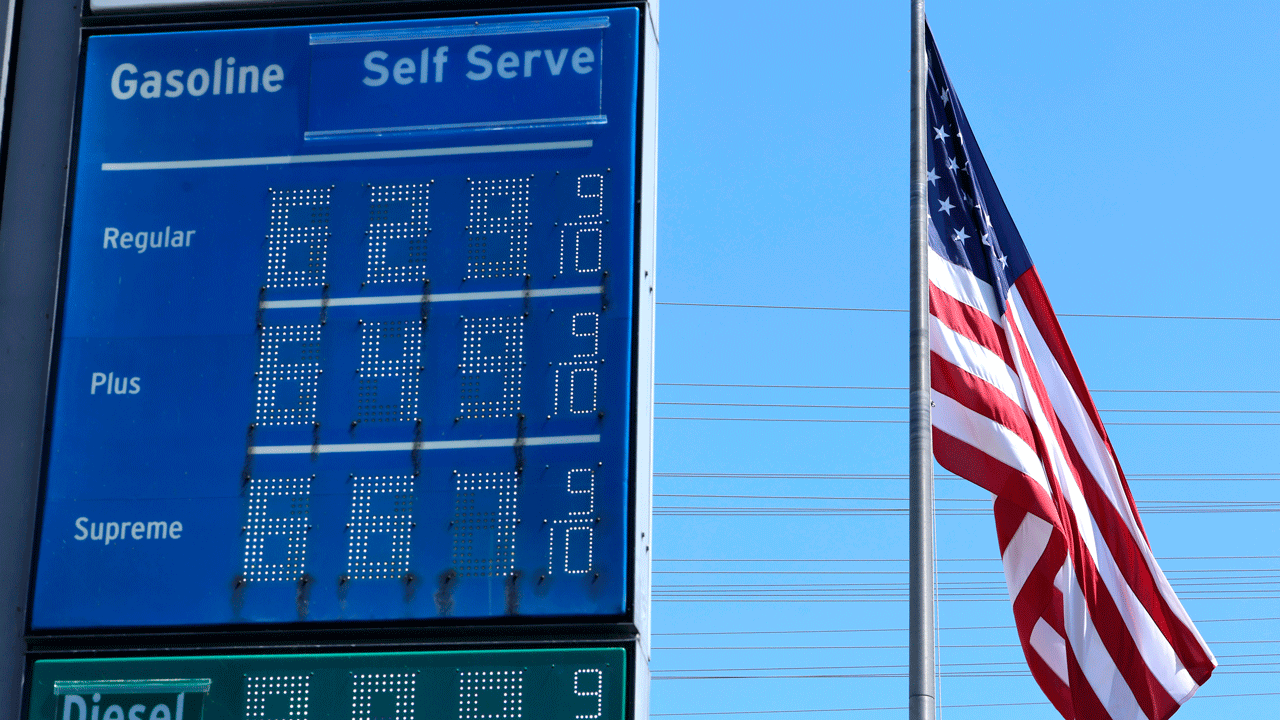
However, CARB had to rethink its goals after two major oil refineries shut down in the state, and officials are warning that war in the Middle East could leave Californians without much of the oil they depend on, making gasoline at the pump, and even air travel, unaffordable.
Chevron was particularly outspoken on the subject, sending a letter to CARB warning that if the cap-and-invest program were made any stricter, it would raise gas prices for consumers and possibly force more California oil refineries to shut down.
After extended deliberation, CARB released its new decision.
In an attempt to soften the blow to refineries, manufacturers, and various other industries facing rising compliance costs, CARB doubled the Manufacturing Decarbonization Incentive Fund from $2 billion to $4 billion and created $800 million in additional compliance support to help businesses deal with those rising costs.
The board also agreed to slow the rollout of emission permit reductions so businesses aren’t shocked with the new costs all at once.
CARB has long said its program is the best way to reach California’s climate goals while still maintaining affordability for Californians.
“The program is the most cost-effective way for California to achieve its statutorily mandated climate goals,” CARB said in an April 2026 update.
Gov. Gavin Newsom released a statement after the decision, saying, “California’s nation-leading Cap-and-Invest program has proven that we can cut pollution, create jobs, and invest in a cleaner future at the same time.”
Newsom went on to criticize President Donald Trump for what he views as “ongoing chaos and uncertainty” regarding how war in the Middle East could impact gas prices.
However, critics say this decision by CARB was not enough and still prioritizes the agendas of climate activists over everyday Californians.
In an article by News from the States, Zach Leary, a lobbyist for the petroleum association, said California needs to lock in a higher level of free permits permanently.
“The state is acknowledging that affordability and ambition are not getting along very well right now.”
In an article by Edward Ring, director of water and energy policy at the California Policy Center, he argues that this decision by CARB is too little, too late, and that unless a more major change is made, further refinery shutdowns are inevitable.
“You can’t siphon tens of billions out of an industry that operates on thin margins and not expect their plants to accumulate a deferred maintenance debt and backlog of unfulfilled upgrades that has by now put them on a potentially irreversible trajectory toward permanent shutdown,” Ring wrote.
The debate over cap-and-invest is ultimately about more than emissions targets—it’s about whether California can pursue its climate ambitions without making everyday life more expensive for the people who live there.
More from this network:
Domains for Sale · GOTPeople.org · TheDSAPlatform · The Truth About Socialism
What's Your Reaction?
 Like
0
Like
0
 Dislike
0
Dislike
0
 Love
0
Love
0
 Funny
0
Funny
0
 Wow
0
Wow
0
 Sad
0
Sad
0
 Angry
0
Angry
0

I am just an average American. My teen years were in the late 70s and I participated in all that that decade offered. Started working young, too young. Then I joined the Army before I graduated High School. I spent 25 years in, mostly in Infantry units. Since then I've worked in information technology positions all at small family owned companies. At this rate I'll never be a tech millionaire. When I was young I rode horses as much as I could. I do believe I should have been a cowboy. I'm getting in the saddle again by taking riding lessons and see where it goes.
Premium domains for sale




















Comments (0)