

Your smart home devices are vulnerable to cyberattack — protect yourself with these tips
Premium domains for sale
Freedom Is Back In Style
Everything is connected to the internet these days. Devices that you wouldn’t expect to have a Wi-Fi signal latch onto your router to provide connected features. Unfortunately, as AI pokes holes in our legacy cybersecurity infrastructure, these devices are now vulnerable to attacks. Here’s what to look for and what you can do about it.
Freedom Is Back
In Style
Premium domains for sale
Smart devices come in all shapes and sizes. Every day, you reach for your phone, tablet, laptop, maybe a wearable. But what about the other gadgets strewn throughout your house? There’s an entire category of smart home devices — dubbed broadly as the internet of things — that connect to your Wi-Fi, giving rogue AI bots and threat actors a direct route to the systems that run your humble abode.
Even if only one or two of these smart devices are connected to your home network, you could be providing hackers with a pathway to access all of your devices and take down your digital life.
The worst part is that many IOT devices aren’t safe and secure by design. With a few exceptions, most of them lack account authentication or encryption, and their software isn’t maintained for maximum security. These devices are sitting ducks, waiting for even the most inept hacker to come along and exploit them.
Once inside, a hacker could cause all kinds of trouble in your home. He could spy on you through the security camera in your living room, eavesdrop on conversations through microphones embedded in smart thermostats, or, as Europe recently found out, spoil the food in your fridge with an unauthorized temperature change. Even worse, hackers can use one IOT device to hack into other devices and compromise your entire Wi-Fi network.
The internet of things is a huge market spanning tons of different products. We couldn’t possibly list all of them, but we rounded up some of the biggest ones to look for in your home.
Kitchen appliances
Smart kitchen appliances are all largely built around convenience.
Smart fridges, like those made by Samsung, use AI to track which items come in and out of your fridge to help you put together meal plans and know when to replenish your food stock.
Smart ovens, like the June Oven, use an internal camera to scan the food put inside to generate an optimal cooking plan, complete with timing, temperatures, and more.
Virtually every appliance these days offers smart options — toasters with touch screens, dishwashers with voice assistant support to start and stop a cleaning cycle, smart washers and dryers that do the same. There are even coffee makers that can schedule your morning cup of brew.
All of these are convenient, yet a single compromise can cause a fire, invite water damage, or spoil your food, all of which would take thousands of dollars to fix.
RELATED: How to protect yourself and your data during the PHP web meltdown
 amgun/Getty Images
Home security
Another huge segment of the IOT industry is home security. We like to think that security devices — including indoor cameras, doorbell cameras, and smart locks — are all safe, but these can provide a treasure trove of data and opportunities for hackers.
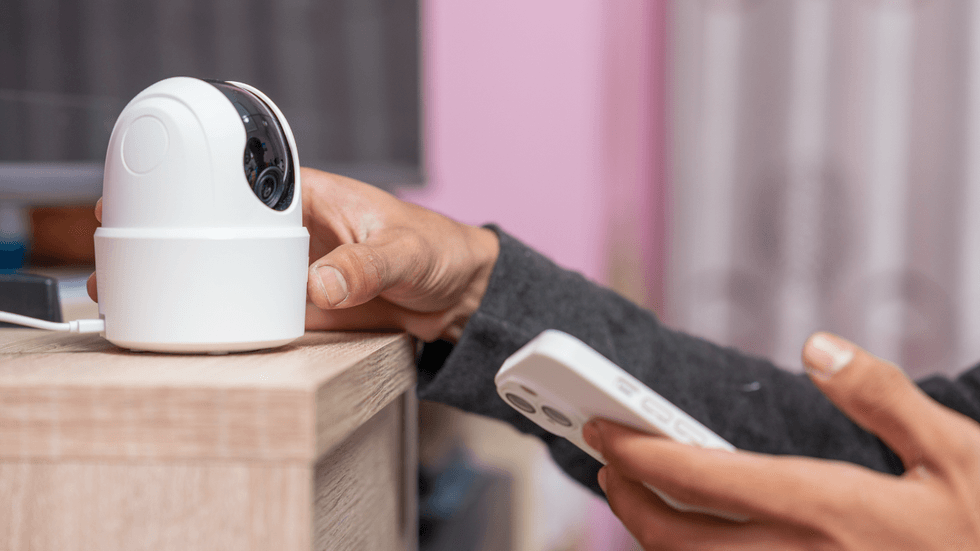
Indoor cameras from companies like Ring, Nest, and more capture everything that happens in your home. All it takes is a sophisticated hacker to break in and steal private footage of you and your living room, bedroom, or wherever you have a camera set up. If any of the footage is compromising, you could be made a victim of blackmail or extortion.
Smart locks, on the other hand, are the gateway to your home. Hackers could easily unlock your front door so that anyone can come inside — or lock your home to keep you trapped within. Pair this with a fire hazard caused by a hack on your oven or toaster, and you could ultimately lose your life in a tragic incident.
Lighting, cleaning, climate, and comfort
How much do you value the convenience of changing the temperature in your house from your smartphone, or flipping on a light without getting up, or cleaning the floors without touching a vacuum?
Modern innovations like smart thermostats, smart lights, and robot vacuums remove the hassle of maintaining a home, freeing you up to do other things with your time. Unfortunately, if any of these systems are compromised, they could cause some serious trouble.
For instance, a hacked thermostat could lock your temperature at an uncomfortable setting, either so hot or so cold that it drives you out of your home, leaving it vacant and unprotected. A hacked smart light can prevent bulbs from turning on or cause them to flicker. Many robot vacuums today come equipped with cameras and microphones that can record video and audio of you in your home.
Even seemingly innocuous smart devices, like air purifiers, toothbrushes, and smart weight scales, can all provide pathways to hack other devices on your network.
Smart accessories
There are other smart items in your home that you could easily forget are smart at all — electrical plugs, phone chargers, Bluetooth speakers, home hubs, and displays. All of these are susceptible to attacks.
How to tell if you have smart devices in your home
At this point, you might wonder how many smart devices you actually have in your house. If it’s been a while since you set them up, you may not remember which appliances have connected features and which ones don’t.
Luckily, there are a couple of telltale signs to look for.
First, if you regularly use any of your home appliances or accessories through an app on your phone, those devices are likely connected to your Wi-Fi. Even if the devices only provide limited functionality, they’re still part of your system, and you should treat them as potential vulnerabilities.
Second, the companion app to your Wi-Fi router can show a list of all the devices connected to your network. If you know how to view this list, you can quickly identify your IOT devices and even block them from network access.
Finally, if you’re still not sure which devices are connected to your Wi-Fi, you can take the nuclear option by changing the password to your Wi-Fi router. This will kick all of your devices off of your network, and the only way to reconnect them is to set up the devices with the new password.
RELATED: Another major AI attack hits the internet — this time targeting the backbone of American capitalism
 Black_Kira/Getty Images
What you can do
Even if only one or two of the smart devices above are connected to your home network, you could be providing hackers with a pathway to access all of your devices and take down your digital life. Take steps now to make sure that doesn’t happen.
First and foremost, when you choose an IOT device and connect it to your network, make sure you only buy products from established, trusted companies that take security seriously. These include the Big Tech giants like Apple, Google, and Amazon.
Second, update your IOT devices often to make sure they have the latest security patches in place. Consider setting a monthly reminder to check all of your IOT devices via their apps for new software.
Some Wi-Fi networks allow you to create a guest network aside from your main home network. If this is an option for you, it’s a good idea to set up IOT devices on the guest network to ensure that hackers can’t reach your main system during a device attack.
The settings that control your Wi-Fi network may be accessible to third parties on the web. Disable remote management now to ensure that only people inside your home can adjust your router’s settings.
Unplug any IOT devices that aren’t currently in use or that you rarely use. This way, they’re disconnected and offline most of the time so that hackers have less of an opportunity to break in.
Finally, if you’d prefer the nuclear option, the safest thing you can do to protect your home is to turn your IOT devices back into dumb devices. Disconnect them from your Wi-Fi network, forget the network entirely, and use them as simple gadgets. This way, hackers have fewer targets to access your Wi-Fi. Unfortunately, this may break the functionality of some of your IOT devices, but it’s better to be safe than sorry in the age of AI-compromised cybersecurity.
Like Blaze News? Bypass the censors, sign up for our newsletters, and get stories like this direct to your inbox. Sign up here!
More from this network:
Domains for Sale · GOTPeople.org · TheDSAPlatform · The Truth About Socialism
What's Your Reaction?
 Like
0
 Dislike
0
 Love
0
 Funny
0
 Wow
0
 Sad
0
 Angry
0

I am just an average American. My teen years were in the late 70s and I participated in all that that decade offered. Started working young, too young. Then I joined the Army before I graduated High School. I spent 25 years in, mostly in Infantry units. Since then I've worked in information technology positions all at small family owned companies. At this rate I'll never be a tech millionaire. When I was young I rode horses as much as I could. I do believe I should have been a cowboy. I'm getting in the saddle again by taking riding lessons and see where it goes.
Premium domains for sale
























Comments (0)