

As Iranian Mullahs Panic And Flee To Safe Haven, Biden’s Bagram Betrayal Haunts U.S. Response
Premium domains for sale
Freedom Is Back In Style
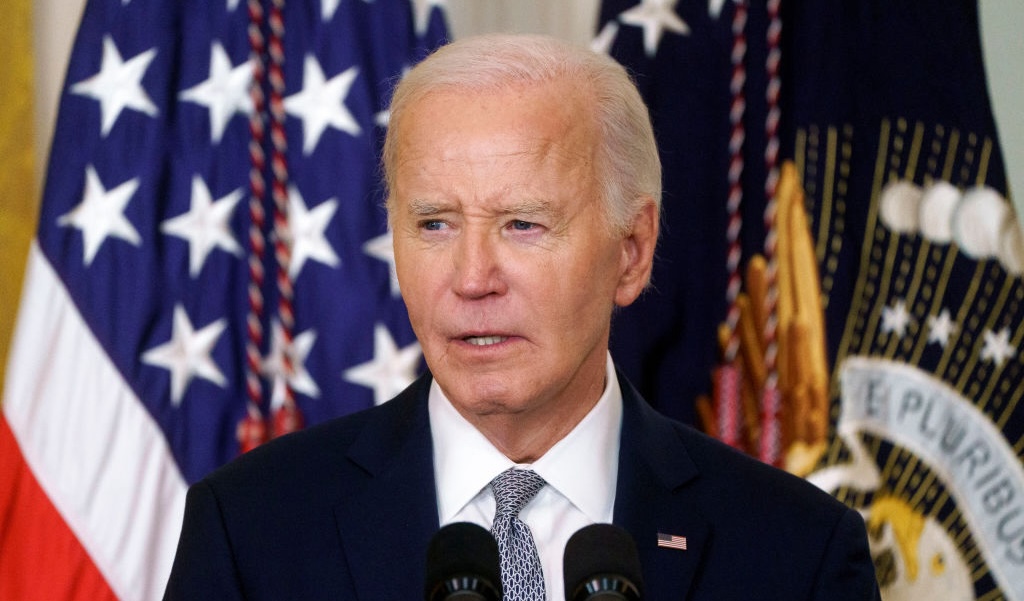
As the world watches the Iranian regime scramble to find a spider hole in the face of escalating regional pressure, a stark reality has emerged: former President Joe Biden’s catastrophic decision to abandon Bagram Airbase in Afghanistan has left the United States with its hands tied behind its back.
Freedom Is Back
In Style
Premium domains for sale
Freedom Is Back
In Style
Premium domains for sale
Reports are now flooding in that the Iranian “top brass,” sensing the walls closing in on Tehran, have decamped to the distant city of Mashhad.
A major mystery over the past few days has been the exact location where regime officials are giving interviews to state TV.
The Iranian account @Merida2NAJ accurately identified the site as the Mashhad branch of the regime's Foreign Ministry ???? pic.twitter.com/xCapy73uWa
— Dr. Eli David (@DrEliDavid) March 11, 2026
This isn’t just a change of scenery; it’s a strategic retreat. As was noted on X, the regime has abandoned the capital for a site “as far away from US bases and carriers—and from Israel—as you can get without actually fleeing to Afghanistan.”
The regime's top brass seems to have decamped to the distant city of Mashhad, as far away from the US bases and carriers—and from Israel—as you can get without actually fleeing to Afghanistan. They have abandoned the capital. https://t.co/xkXk2KHe23 pic.twitter.com/tcIExBPCGs
— Saul Sadka (@Saul_Sadka) March 11, 2026
Mashhad, now identified as the site where many say regime officials are conducting state TV interviews from a branch of the Foreign Ministry, sits roughly 575 miles from Bagram Airbase. In military terms, that is a stone’s throw for a modern air force. But thanks to the Biden administration’s 2021 surrender of that strategic crown jewel, that distance might as well be a million miles.
U.S. Ambassador to the UN Mike Waltz summed up the frustration of the military community in five words: “If only we still had Bagram Airbase…”
If only we still had Bagram Airbase…. https://t.co/54S0E09EZQ
— Ambassador Mike Waltz (@michaelgwaltz) March 12, 2026
The loss of Bagram — one of the largest U.S. military facilities in Afghanistan, hosting roughly 40,000 personnel — wasn’t a defeat on the battlefield; it was a self-inflicted wound by a commander-in-chief who prioritized a political calendar over tactical reality. In July 2021, Biden oversaw a “midnight departure” so poorly coordinated that the Afghan commander didn’t even know the Americans were gone until two hours after the last plane cleared the runway. By cutting the power and slipping away in the dark, the Biden administration didn’t just leave a base — they left a vacuum that was immediately filled by looters and, eventually, the Taliban.
Biden’s defenders, including Secretary Lloyd Austin and General Mark Milley, tried to hand-wave the decision, citing manpower constraints. They claimed they couldn’t spare 5,000 troops to secure the $1 billion infrastructure. Instead, Biden chose to funnel everything through the vulnerable Hamid Karzai International Airport in Kabul, setting the stage for the chaotic collapse that followed.
The consequences of this retreat are staggering. When Bagram fell on August 15, 2021, the Taliban didn’t just get a runway; they got the keys to the Parwan Detention Facility, releasing thousands of Al-Qaeda and ISIS-K terrorists back into the wild. They also inherited a “gift” from the American taxpayer: a portion of the $7.1 billion in tactical equipment left behind across the country, including Black Hawks, MRAPs, and advanced night-vision tech.
Today, while the Taliban uses Bagram to hold military parades showcasing refurbished U.S. gear, the Iranian mullahs are using the base’s absence to their advantage. Had Biden maintained the American presence at Bagram, the move to Mashhad would have placed the Iranian leadership directly under the nose of U.S. airpower. Instead, Biden’s retreat has provided the world’s leading state sponsor of terrorism exactly what they needed: a safe haven just out of reach.
As Donald Trump and other critics have noted, Bagram was a vital strategic asset—not just for Afghanistan, but for monitoring China and holding Iran accountable. By abandoning it, Joe Biden didn’t just end a war; he disarmed the United States in a region that is now more volatile than ever.
What's Your Reaction?
 Like
0
Like
0
 Dislike
0
Dislike
0
 Love
0
Love
0
 Funny
0
Funny
0
 Wow
0
Wow
0
 Sad
0
Sad
0
 Angry
0
Angry
0

I am just an average American. My teen years were in the late 70s and I participated in all that that decade offered. Started working young, too young. Then I joined the Army before I graduated High School. I spent 25 years in, mostly in Infantry units. Since then I've worked in information technology positions all at small family owned companies. At this rate I'll never be a tech millionaire. When I was young I rode horses as much as I could. I do believe I should have been a cowboy. I'm getting in the saddle again by taking riding lessons and see where it goes.
Premium domains for sale











Comments (0)