

Hollywood Makes A Story Where Doing The Right Thing Still Matters
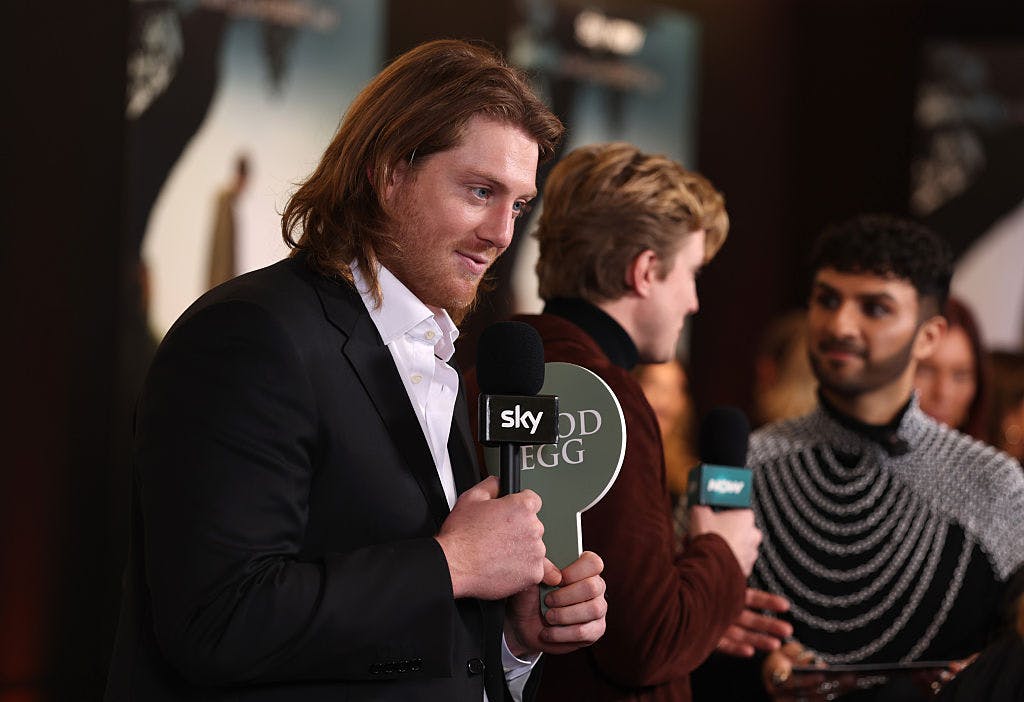
This article is part of Upstream, The Daily Wire’s new home for culture and lifestyle. Real human insight and human stories — from our featured writers to you.
Live Your Best Retirement
Fun • Funds • Fitness • Freedom
***
“A Knight of the Seven Kingdoms,” which aired the final episode of its first season on Sunday, has become incredibly popular, even among many conservatives who are otherwise critical of George R.R. Martin’s “Game of Thrones” universe. Movie reviewer The Critical Drinker called it “probably the best show on TV right now.”
Many on the Right have long accused “Game of Thrones” of being dark and nihilistic and subverting traditional notions of heroism. Prequel “A Knight of the Seven Kingdoms” lacks those flaws: Its protagonist, Dunk, is a clearly good person who sets out on a hero’s journey. While he’s not perfect, he’s strong and good-hearted. As he travels throughout the world, he meets compelling side characters, overcomes adversity and danger, and becomes a better, wiser person in the process.
As is typical for HBO, the series is brilliantly shot, acted, scored, and so forth. The story is well written, and you get a real sense of the characters even when they have limited screen time. Some of the more childish humor doesn’t land well, but my primary critique of “A Knight of the Seven Kingdoms” is a good one to have: It was too short. The show is excellent, and its message is a lot more complex than it may seem. (Warning: This article contains spoilers for Season 1 of “A Knight of the Seven Kingdoms.”)
After the death of Dunk’s mentor and surrogate father, Arlan of Pennytree, Dunk decides to compete in a tournament. On his way, he meets a boy with a shaved head who calls himself Egg. Egg, innocent but suspiciously well-informed about the world, wants to squire for Dunk. Dunk, however, encounters a problem: None of the lords remember who Arlan was, let alone will vouch for Dunk’s claim to be a knight — nobody, except for Prince Baelor Targaryen, the wise, even-tempered, and honorable heir apparent to the Iron Throne. With that settled, Dunk prepares to compete.
When Baelor’s nephew Aerion attacks a puppeteer over a play, Dunk leaps to her defense. Aerion’s guards subdue Dunk, but before they can do him any harm, Egg reveals himself to be Aerion’s younger brother Aegon. Dunk now has to fight for his very life: He must find six champions to fight in a trial by combat against Aerion and his six. Unexpectedly, Baelor takes Dunk’s side over that of the rest of his family because, despite the political considerations, he’s convinced of the righteousness of Dunk’s cause. Dunk prevails, only for Baelor to be accidentally slain by a blow to the head from his own brother, Maekar, the father of Aerion and Egg. In the aftermath, Dunk agrees to take Egg on as his squire, and the two head out on the road together to future adventures.
What complicates things is that Dunk’s story may all be built on a lie. The show strongly hints Dunk was never knighted by Arlan. That means that he had no right to take Egg on as a squire, no right to compete in the tournament, and no right to demand a trial by combat. Had he not told that lie, none of the events surrounding the tournament would have happened, and Baelor and the others who died in his defense would still be alive. I did not like this theory at first because I felt it besmirched Dunk’s character and the righteousness of his cause. And in one sense, it does. But in another sense, it makes the character all the more compelling.
It shows that heroism is not the sole province of the morally unblemished. If Dunk did lie, he did the wrong thing — yet it was his moral courage that got him into trouble. Regardless of whether he was one or not, Dunk still did what any true knight should have done by defending a woman from Aerion’s cruelty. Egg did the right thing by standing by Dunk and rallying men to his side. And Baelor did the right thing by putting his life on the line to defend Dunk against Baelor’s own family.
The prince’s demise is a blow to the royal family and to the whole realm, and Dunk personally feels guilt for his part in depriving the Seven Kingdoms of what would have been a great king. And yet, Dunk doesn’t take the understandable path of wallowing in his own culpability. He does the only thing he can do: try to live his life in a way that makes Baelor’s sacrifice worth it. And the best way he can do that is to shape Baelor’s good-natured but impressionable nephew Aegon into a virtuous man.
The message of “A Knight of the Seven Kingdoms“ is this: A hero is not a perfect person. A hero is an imperfect person who chooses to do the right thing anyway. In the short term, heroes are not always rewarded, no matter if you’re Baelor Targaryen or Ned Stark of “Game of Thrones.” But even so, it’s still important to do the right thing — both for its own sake and because it inspires the people watching you to follow in your footsteps. In our own fallen, imperfect world, that’s a lesson that’s both aspirational and applicable.
While George R.R. Martin is no conservative, his writing speaks to timeless human principles and nature that conservatives accept and liberals reject. “A Knight of the Seven Kingdoms” is doubtless a more traditional story than is typical for Martin. And yet, it still explores what he describes as the key theme of his work: the human heart, in conflict with itself. On that topic Dunk the Lunk, thick as a castle wall though he is, has a lot to teach us.
* * *
Stephan Kapustka is a writer at the American Spectator. Follow him on X @SteveKapustka.
The views expressed in this piece are those of the author and do not necessarily represent those of The Daily Wire.
What's Your Reaction?
 Like
0
Like
0
 Dislike
0
Dislike
0
 Love
0
Love
0
 Funny
0
Funny
0
 Wow
0
Wow
0
 Sad
0
Sad
0
 Angry
0
Angry
0

I am just an average American. My teen years were in the late 70s and I participated in all that that decade offered. Started working young, too young. Then I joined the Army before I graduated High School. I spent 25 years in, mostly in Infantry units. Since then I've worked in information technology positions all at small family owned companies. At this rate I'll never be a tech millionaire. When I was young I rode horses as much as I could. I do believe I should have been a cowboy. I'm getting in the saddle again by taking riding lessons and see where it goes.












Comments (0)