

How A New HHS Initiative Can Help Reclaim Real-Life Childhood
Premium domains for sale
Freedom Is Back In Style
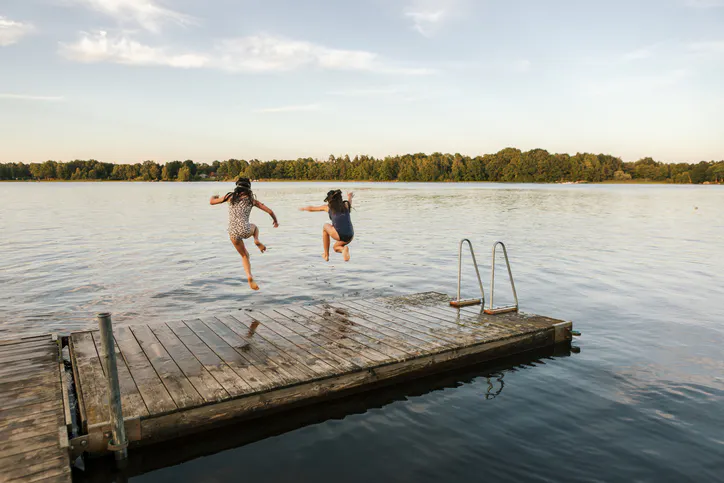
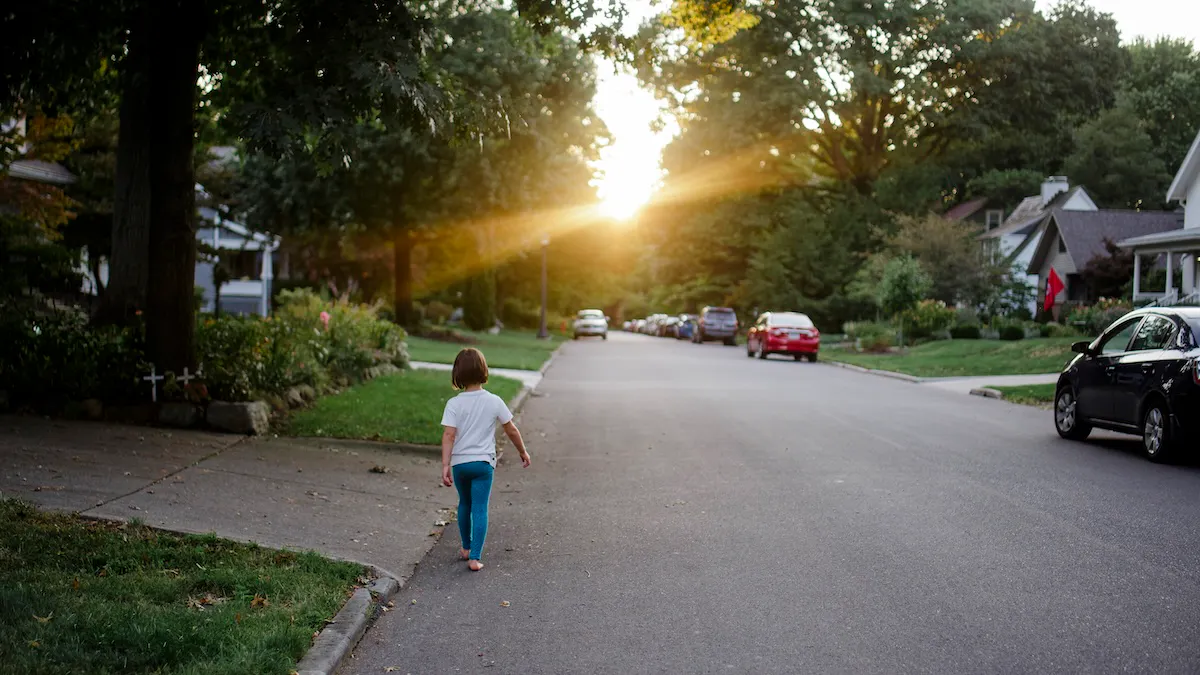
Think back to your happiest memories of childhood. I am not a gambler, but I would wager it did not involve a screen – or if it did, the happy memory probably had more to do with who you were with than the particulars of what you were watching. I think back to my own childhood, and I remember overturning rocks in the creek bed in search of crawfish or catching minnows and tadpoles; learning needlepoint from my grandmother and fishing with my grandfather; riding bikes and spontaneous games of kick-the-can or hide-and-seek with neighborhood kids.
Freedom Is Back
In Style
Premium domains for sale
What memories will this generation of children have to look back on? Because according to most available data, they are not spending their time outdoors or with family or friends. They are largely living their lives on screens.
This is why the U.S. Department of Health and Human Services’ new “Live Real Life” initiative is both timely and necessary. Screens are here to stay, for better or for worse. But we need to restore them to their rightful place as a tool to be used occasionally, rather than ordering our lives, or more critically, the lives of our children, around them.
Much of the national conversation around children and screens up to now has focused on content and risk, and that is completely understandable because the risks are considerable and the potential for exposure to harmful and explicit content is so great. Even in recent weeks, Meta has settled a multi-state lawsuit focused on addictive design, and Roblox is under investigation for explicit content present on the platform and its connection to real-life child sex abuse.
Too many parents consider it a “win” if their child is watching Mark Rober on YouTube rather than “Skibidi Toilet” brain rot. But the deeper problem is not merely what children encounter on screens. It is what screens are replacing.
Nearly everyone today is familiar with Maslow’s hierarchy of needs. At the bottom of the pyramid are physiological needs: sleep, food, shelter — those things that are essential for survival. At the apex of the pyramid is self-actualization. Human beings cannot flourish at the top if the foundations underneath are crumbling.
The data now shows that screens attack a child’s well-being at every level: crowding out sleep and nutrition, which are necessary underpinnings for learning; threatening their safety through cyberbullying and content that encourages disordered eating or fosters suicidal ideation; crippling their connection to friends and family and displacing real relationships; undermining their self-esteem, and ultimately, their ability to thrive as adults.
But the point is not merely to subtract screens. It is to restore what children require to grow into their full humanity.
When children are outdoors, they move their bodies, test their strength, invent games, negotiate rules, resolve conflict, advocate for themselves, solve problems, and encounter the physical world as something more challenging and demanding — but also more rewarding — than anything they might encounter online.
Outdoor time is associated with better physical and mental health, higher activity levels, reduced sedentary behavior, and even protection against myopia (just two hours a day outdoors can help delay or prevent nearsightedness). Regular physical activity brings its own benefits. The CDC recommends at least 60 minutes a day for school-age children and links it to stronger bones and muscles, lower body fat, better heart and metabolic health, improved attention and memory, stronger academic performance, and reduced symptoms of depression. Reading, too, gives children something screens cannot: sustained attention, language, imagination, moral understanding, and the capacity to enter another person’s experience. Literacy research connects childhood reading not only to academic and economic outcomes, but also to long-term health, emotional awareness, and social connection.
The same is true of all the ordinary, embodied activities that make a child more fully human: eating dinner with family, talking with friends face to face, playing sports, serving in church or community programs, caring for younger siblings, helping a neighbor, or volunteering for a cause beyond the self. These experiences teach children patience, responsibility, empathy, and resilience. Recent research has linked civic engagement and volunteering programs to improved youth mental health outcomes, including reduced anxiety and sadness, increased resilience, a stronger sense of belonging, and better interpersonal and leadership skills. In other words, real life is not empty space left over after screen time is reduced. It is the developmental ecosystem children need.
That is also why this cannot be solved family by family, one exhausted parent at a time. Screens have become a collective-action problem. Even parents who see the harms often feel trapped: if every class assignment, social plan, team update, and friendship circle runs through a device, opting out can mean social isolation for the child and constant conflict for the parent. A serious “Live Real Life” movement will require commitment from families, schools, churches, pediatricians, policymakers, coaches, and communities to rebuild screen-free norms together.
***
Melissa Henson is the Senior Policy Advisor for Media and Culture for Concerned Women for America, the nation’s public policy women’s organization, dedicated to promoting biblical values and constitutional principles in public policy. On X: @CWforA
More from this network:
Domains for Sale · GOTPeople.org · TheDSAPlatform · The Truth About Socialism
Originally Published at Daily Wire, Daily Signal, The Blaze, or Fox News
What's Your Reaction?
 Like
0
Like
0
 Dislike
0
Dislike
0
 Love
0
Love
0
 Funny
0
Funny
0
 Wow
0
Wow
0
 Sad
0
Sad
0
 Angry
0
Angry
0

I am just an average American. My teen years were in the late 70s and I participated in all that that decade offered. Started working young, too young. Then I joined the Army before I graduated High School. I spent 25 years in, mostly in Infantry units. Since then I've worked in information technology positions all at small family owned companies. At this rate I'll never be a tech millionaire. When I was young I rode horses as much as I could. I do believe I should have been a cowboy. I'm getting in the saddle again by taking riding lessons and see where it goes.
Premium domains for sale






















Comments (0)