

How We Taught Women To Fear Motherhood
Premium domains for sale
Freedom Is Back In Style
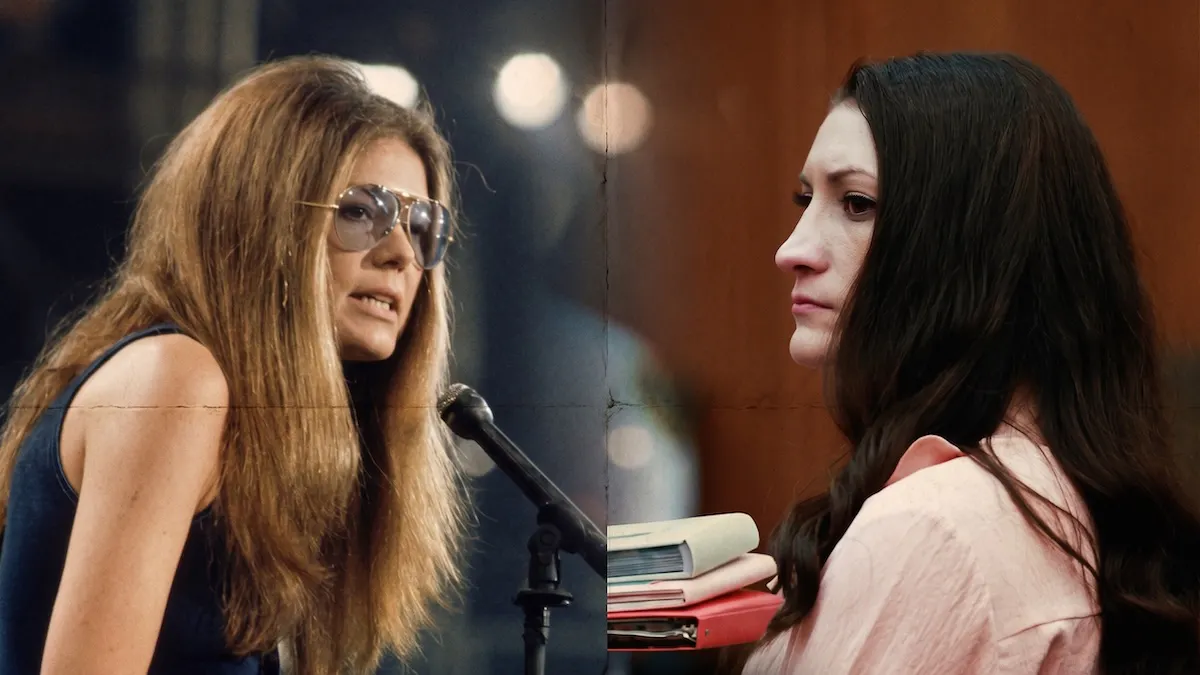
When she was 22 years old, Gloria Steinem had an abortion. Looking back, she said that moment was pivotal in her life. The young Ms. Steinem believed that bearing a child – and getting married – would have radically narrowed the possibilities of her life. Earlier this year, she told an interviewer that at the time she saw marriage and children “not as a beginning but as an end.” When she wrote her memoir in 2015, Steinem dedicated it to the doctor who performed the abortion, writing what he had asked of her: “You must promise me two things. First, you will not tell anyone my name. Second, you will do what you want to do with your life.” For Ms. Steinem, children were constricting, incompatible with the life of freedom she desired.
Freedom Is Back
In Style
Premium domains for sale
Although almost 70 years have passed since Steinem turned her back on motherhood in 1957, many American women continue to believe that motherhood in the United States is unfairly burdensome. Simultaneous with Steinem’s death, newspaper headlines have been focused on a murder trial in Massachusetts, in which Lindsay Clancy has been charged with killing her three young children. While the main issue in the trial is whether Clancy’s mental state was so impaired that she cannot be held criminally responsible for their deaths, debate over the case has turned into a flashpoint on social media for how American mothers perceive pregnancy, the postpartum period, and the task of raising young children. Without weighing in on the outcome in the Clancy trial, it is clear that part of the reason the case has struck such a nerve is that many mothers in the United States feel isolated and unsupported after the birth of a child.
Is it inevitable that motherhood be popularly viewed as limiting or constricting, preventing a woman from fully living the life she chooses? In the seven decades between when Steinem made her choice to end her pregnancy and today, why has there been so little cultural movement on how we popularly perceive motherhood?
Understanding and answering that question is vital as America stares down a historically low fertility rate and a population structure that is skewing ever older. When Steinem began her push for “women’s lib” in the 1970s, population decline and declining rates of motherhood were viewed as a positive. In a famous essay, “What It Would Be Like If Women Win,” Steinem wrote approvingly that the “population explosion dictates that childbearing be kept to a minimum.” She would later worry in public about the connection between overpopulation and environmental degradation.
Sixty years later, it is hard to be so sanguine about dramatic population decline. From other countries with even more catastrophic population decline than the U.S., we know that it may result in loss of economic productivity, as well as what journalist David Martin Davies calls “the erosion of communities and cultural continuity.”
For Steinem, and many of her second-wave feminist contemporaries, motherhood itself was often viewed as a method of oppression. Radical feminist theorist Shulamith Firestone famously wrote in her 1970 book, “The Dialectic of Sex,” “The heart of woman’s oppression is her childbearing and childrearing roles.”
As some of the fervor around the Clancy trial shows, there is a through line from that line of thinking popularized in the ’70s to discussion around motherhood today. And indeed, it isn’t limited to those headlines. The “childfree” Reddit group has 1.6 million subscribers, with countless posts lauding the freedom of living without children and the sacrifice inherent to parenting.
In 2020, Steinem was asked if she regretted not having children. “Not for a millisecond,” she replied. To be clear, there are indeed many ways to live a vibrant, flourishing life without being married or having children. However, the fact that we did not manage, over the course of Steinem’s lifetime, to shift the narrative much around motherhood, women’s independence, and freedom is its own form of national tragedy.
It is not inevitable that motherhood be understood primarily in terms of the resulting burdens and sacrifice. Having and raising babies does, of course, require significant commitment and indeed sometimes requires significant personal sacrifice. However, it can also throw open many doors. To list just a few: Having children can provide a tangible link to both past and future generations and provides a clear mechanism to pass something real on into the future. Pregnancy and babies can also expand your focus in life away from work and toward your family and community, and also keep you connected through old age with younger generations.
Popular perceptions about how motherhood can actually expand your horizons (not solely limit them) would probably be dramatically boosted if there was more social, cultural, and political commitment to decreasing the burdens of young moms. Putting aside the terrible tragedy of the Clancy case, it is an indisputable fact that many new moms in America feel isolated and alone and are in desperate need of more support from their extended families, neighbors, religious institutions, and local governments.
In short, both Steinem’s passing and the furor over the Clancy trial should serve as a reminder that we still have significant work to do around how motherhood is perceived in the United States. In the 1970s, women rightfully resented not being able to own personal bank accounts, receive mortgages from many banks, or work without facing serious sexual harassment and a host of other injustices. Somehow, however, many of those rightfully dedicated to fixing those issues successfully tore down our positive vision of motherhood as well — a problem still not fixed today. We have much work in front of us to build a vision of being a mom that shows it opens doors, not just closes them.
***
Ivana Greco has several jobs, but her favorite is being a homeschooling mom of four.
This article is part of Upstream, The Daily Wire’s new home for culture and lifestyle. Real human insight and human stories — from our featured writers to you.
More from this network:
Domains for Sale · GOTPeople.org · TheDSAPlatform · The Truth About Socialism
What's Your Reaction?
 Like
0
Like
0
 Dislike
0
Dislike
0
 Love
0
Love
0
 Funny
0
Funny
0
 Wow
0
Wow
0
 Sad
0
Sad
0
 Angry
0
Angry
0

I am just an average American. My teen years were in the late 70s and I participated in all that that decade offered. Started working young, too young. Then I joined the Army before I graduated High School. I spent 25 years in, mostly in Infantry units. Since then I've worked in information technology positions all at small family owned companies. At this rate I'll never be a tech millionaire. When I was young I rode horses as much as I could. I do believe I should have been a cowboy. I'm getting in the saddle again by taking riding lessons and see where it goes.
Premium domains for sale
















Comments (0)