

Out of order: Courts shouldn’t rule based on ‘trust us’ science

Premium domains for sale
Freedom Is Back In Style
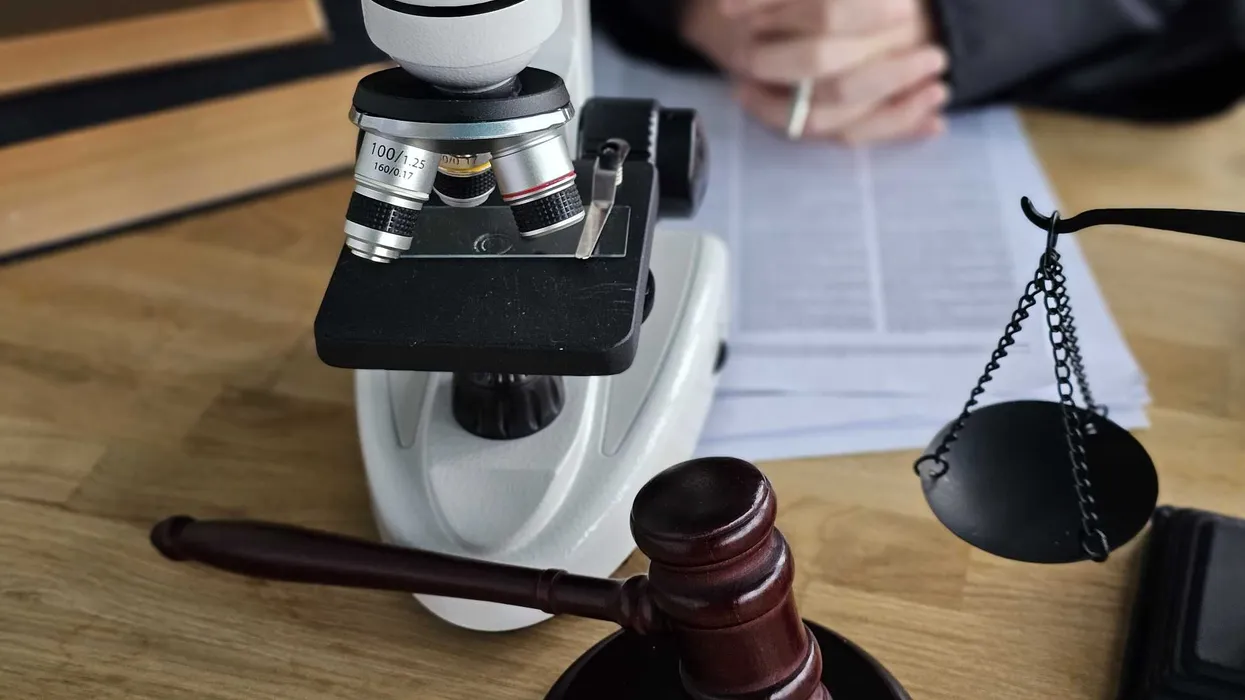
A training manual for federal judges just ditched its biased chapter on climate change. Good. But the same manual still peddles quackery about how science works — and it risks teaching the judiciary to treat models and “consensus” as proof.
Freedom Is Back
In Style
Premium domains for sale
Freedom Is Back
In Style
Premium domains for sale
The “How Science Works” chapter in the “Reference Manual on Scientific Evidence” invites judges to overvalue computer models built on unproven assumptions and to accept “consensus” as evidence even when empirical testing cuts the other way. That is not science. It is a distortion of the scientific method, which demands observation, experimentation, and results that can be challenged and falsified in the real world.
This is the posture of pseudoscience: conclusions protected by authority and repetition rather than disciplined testing against reality.
The problem runs deeper than emphasis. In defining hypothesis, theory, and scientific law, the writers omit testing, observation, and experimentation. They also fail to acknowledge that all three can be disproven — even though demonstrating falseness has long been central to scientific progress. Science advances not by protecting favored conclusions but by trying — relentlessly — to break them.
The chapter even claims that science cannot “disprove hypotheses.” That is historically indefensible. Science has disproven hypotheses repeatedly, and entire revolutions have turned on that process.
Geocentrism gave way to Copernicus’ heliocentric model. Phrenology, eugenics, spontaneous generation, and miasma theory all enjoyed “consensus” before evidence refuted them. Alfred Wegener’s plate tectonics also met decades of rejection before the evidence won. Consensus delayed the truth. It did not deliver it.
The chapter also stumbles over prediction. It says prediction is a logical consequence of a hypothesis, “not necessarily what will happen in the future.” That drains prediction of its most important feature: testable claims about what should occur under specified conditions. A hypothesis can be tested against the past as well, but the logic stays the same — it must match reality.
Then the chapter offers reassurance that reveals the posture: “The fact that there is room for improvement in the process of science does not necessitate distrust of hypotheses that have gained widespread acceptance in the scientific community and about which consensus has been achieved.” In practice, that treats consensus as a shield against contrary evidence — a common ploy among climate alarmists.
RELATED: Win for kids! Major surgeon group reverses course, comes out against child genital mutilation
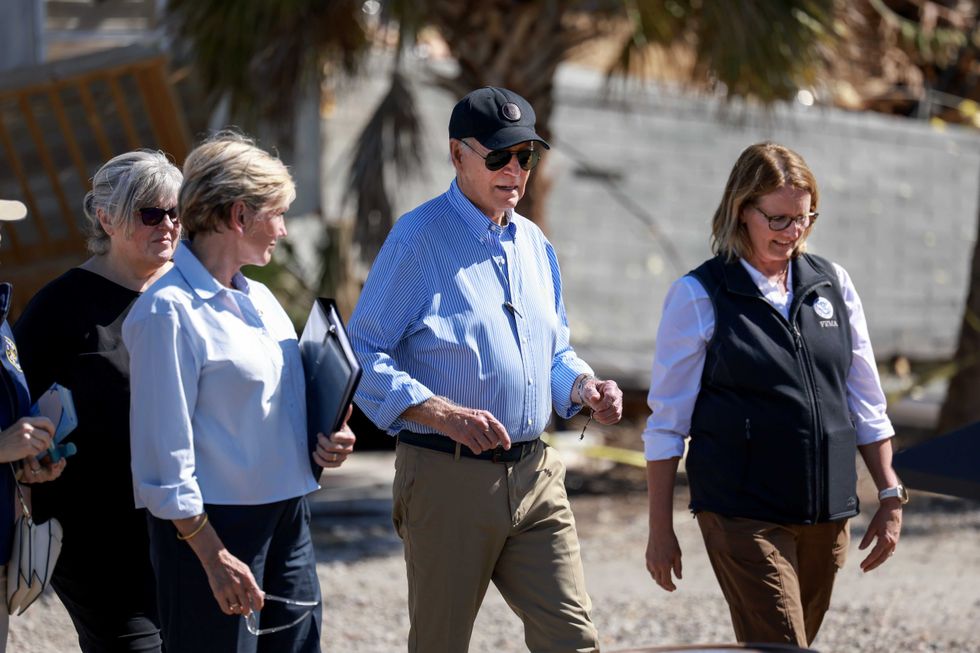
 Photo by Jessica Rinaldi/Boston Globe via Getty Images
In places, the chapter contradicts itself, sometimes gesturing at rigor, elsewhere diminishing falsification and redefining key terms. The result is confusion. Its length and muddled definitions do not clarify how science works; they blur it. Worse, they introduce judges to wrongheaded practices — overuse of models and consensus — as if they can settle disputed scientific questions.
That is not the empirical tradition of Isaac Newton or Marie Curie. It is the posture of pseudoscience: conclusions protected by authority and repetition rather than disciplined testing against reality.
U.S. District Judge Robin Rosenberg removed the manual’s climate chapter after objections from state attorneys general and others. The National Academies of Sciences, Engineering, and Medicine still hosts the manual — including “How Science Works” — on its website.
Rosenberg, as head of the Federal Judicial Center, should take the next step and remove this chapter as well. Federal judges and the public they serve deserve a guide to science that prizes evidence over consensus and observation over simulation.
What's Your Reaction?
 Like
0
Like
0
 Dislike
0
Dislike
0
 Love
0
Love
0
 Funny
0
Funny
0
 Wow
0
Wow
0
 Sad
0
Sad
0
 Angry
0
Angry
0

I am just an average American. My teen years were in the late 70s and I participated in all that that decade offered. Started working young, too young. Then I joined the Army before I graduated High School. I spent 25 years in, mostly in Infantry units. Since then I've worked in information technology positions all at small family owned companies. At this rate I'll never be a tech millionaire. When I was young I rode horses as much as I could. I do believe I should have been a cowboy. I'm getting in the saddle again by taking riding lessons and see where it goes.
Premium domains for sale















Comments (0)