

Per-mile driving taxes: The latest way to punish those who drive the most?
Premium domains for sale
Freedom Is Back In Style

A growing number of states are considering a new way to tax drivers: charging you for every mile you travel.
Freedom Is Back
In Style
Premium domains for sale
Freedom Is Back
In Style
Premium domains for sale
The idea is called a per-mile driving tax, and if it moves forward, the cost of simply using your car could rise dramatically.
To tax driving by the mile, governments need to know exactly how far a vehicle travels. That raises immediate questions about monitoring and data collection.
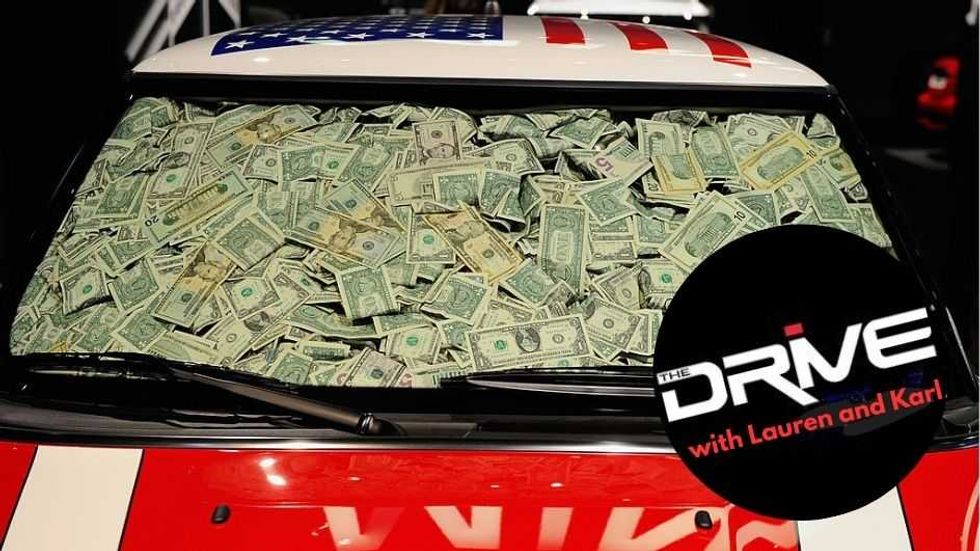
On a recent episode of "The Drive with Lauren and Karl," Karl Brauer and I discussed how these proposals are spreading — and why they could mean both higher costs and more government monitoring of drivers.
Pay as you go?
States such as California and Massachusetts are exploring mileage-based road charges as a replacement or supplement to traditional fuel taxes. The idea is simple on paper: Instead of paying taxes at the pump, drivers pay based on how many miles they drive.
But in practice, that means a new bill tied directly to your mobility.
Estimates from California state Rep. Carl DeMaio (R) suggest the impact could be substantial. Under proposals being discussed in California, drivers could be charged six to nine cents per mile they travel.
For a typical driver covering about 15,000 miles a year, that translates to roughly $900 to $1,200 annually in new taxes. DeMaio notes that when those charges are layered on top of existing gas taxes and vehicle taxes, the total burden for a two-car household could exceed $4,200 per year just for the privilege of driving.
That’s not a minor adjustment. For many families, it would function like another recurring household bill — tied directly to how much they drive.
And unlike discretionary spending, driving often isn’t optional. Millions of Americans rely on their vehicles to get to work, transport children, care for relatives, and handle everyday errands.
Commuter looter
One of the biggest problems with per-mile taxes is who ends up paying the highest price.
The drivers most likely to rack up mileage are often the ones who can least afford it. In expensive states like California, many workers commute long distances because housing near job centers is out of reach. Living farther out keeps rent or mortgage payments manageable — but it also means driving more miles.
A mileage tax effectively punishes those drivers for circumstances they can’t control.
Karl points out the obvious math: The longer your commute, the higher your tax bill. That means lower-income workers who travel farther to reach their jobs could end up paying more than wealthier drivers who live closer to work.
I spy
There’s another practical issue: How would states measure those miles?
To tax driving by the mile, governments need to know exactly how far a vehicle travels. That raises immediate questions about monitoring and data collection.
Modern cars already gather significant amounts of information through connected systems, insurance telematics, and onboard software. But a statewide mileage tax would likely require even more precise tracking.
Older vehicles without built-in connectivity present another challenge. Any mileage-tax program would still have to account for them, which could mean external tracking devices, reporting systems, or other work-arounds.
However the system is built, the bottom line is that taxing miles requires knowing how many miles you drive — and that opens the door to broader monitoring of driver behavior.
Kill switch 2.0
During the episode, we also talk about how this issue overlaps with new driver-monitoring technology already appearing in modern vehicles.
Under provisions in the 2021 infrastructure law, new vehicles will eventually include systems designed to detect impaired driving. The concept is often described as a safety feature, but the broader concern is how much control these systems could exert over the vehicle itself.
If software determines that a driver is impaired or unsafe, it could prevent the car from operating.
Karl and I agree that no one wants impaired drivers on the road. But once vehicles are equipped with systems capable of monitoring behavior and controlling vehicle operation, the question becomes how those systems might be used — and who ultimately controls them.
For drivers, that raises an uncomfortable possibility: a vehicle that can track, interpret, and potentially restrict how you use it.
RELATED: Salvage title cars are showing up at dealerships. Should you buy one?
 Mike Simons/Getty Images
Engine trouble
Even without mileage taxes, the cost of owning and operating a vehicle has been climbing.
Vehicle prices remain high. Insurance premiums have increased significantly in many states. Repairs are more expensive as cars become more technologically complex. Fuel prices remain volatile.
Layering a per-mile tax on top of those costs would make daily transportation even more expensive.
Take California, where drivers already pay the highest fuel taxes in the country. A mileage-based charge might not replace those taxes — it could simply add another layer on top of them.
A broader trend
Mileage taxes also fit into a larger pattern in transportation policy.
Governments are experimenting with new ways to regulate emissions, reshape travel behavior, and generate revenue from road usage. But the people who feel the impact most directly are ordinary drivers.
Policies that make driving more expensive or more restricted don’t affect abstract “vehicle usage.” They affect real people who rely on their cars every day.
That includes workers commuting to jobs, parents transporting children, caregivers helping elderly relatives, and small-business owners who depend on vehicles for their livelihoods.
The bottom line
For most Americans, a car isn’t a luxury — it’s a necessity.
That’s why proposals like per-mile driving taxes deserve close scrutiny. They could dramatically increase transportation costs while expanding the amount of information collected about how drivers use their vehicles.
If states move forward with mileage-based taxes, drivers will be the ones paying the bill — both financially and in terms of how their mobility is monitored.
Listen to the full episode of “The Drive with Lauren and Karl” below:
What's Your Reaction?
 Like
0
Like
0
 Dislike
0
Dislike
0
 Love
0
Love
0
 Funny
0
Funny
0
 Wow
0
Wow
0
 Sad
0
Sad
0
 Angry
0
Angry
0

I am just an average American. My teen years were in the late 70s and I participated in all that that decade offered. Started working young, too young. Then I joined the Army before I graduated High School. I spent 25 years in, mostly in Infantry units. Since then I've worked in information technology positions all at small family owned companies. At this rate I'll never be a tech millionaire. When I was young I rode horses as much as I could. I do believe I should have been a cowboy. I'm getting in the saddle again by taking riding lessons and see where it goes.
Premium domains for sale






















Comments (0)