

SIGNAL SITDOWN With Nick Freitas
Premium domains for sale
Freedom Is Back In Style
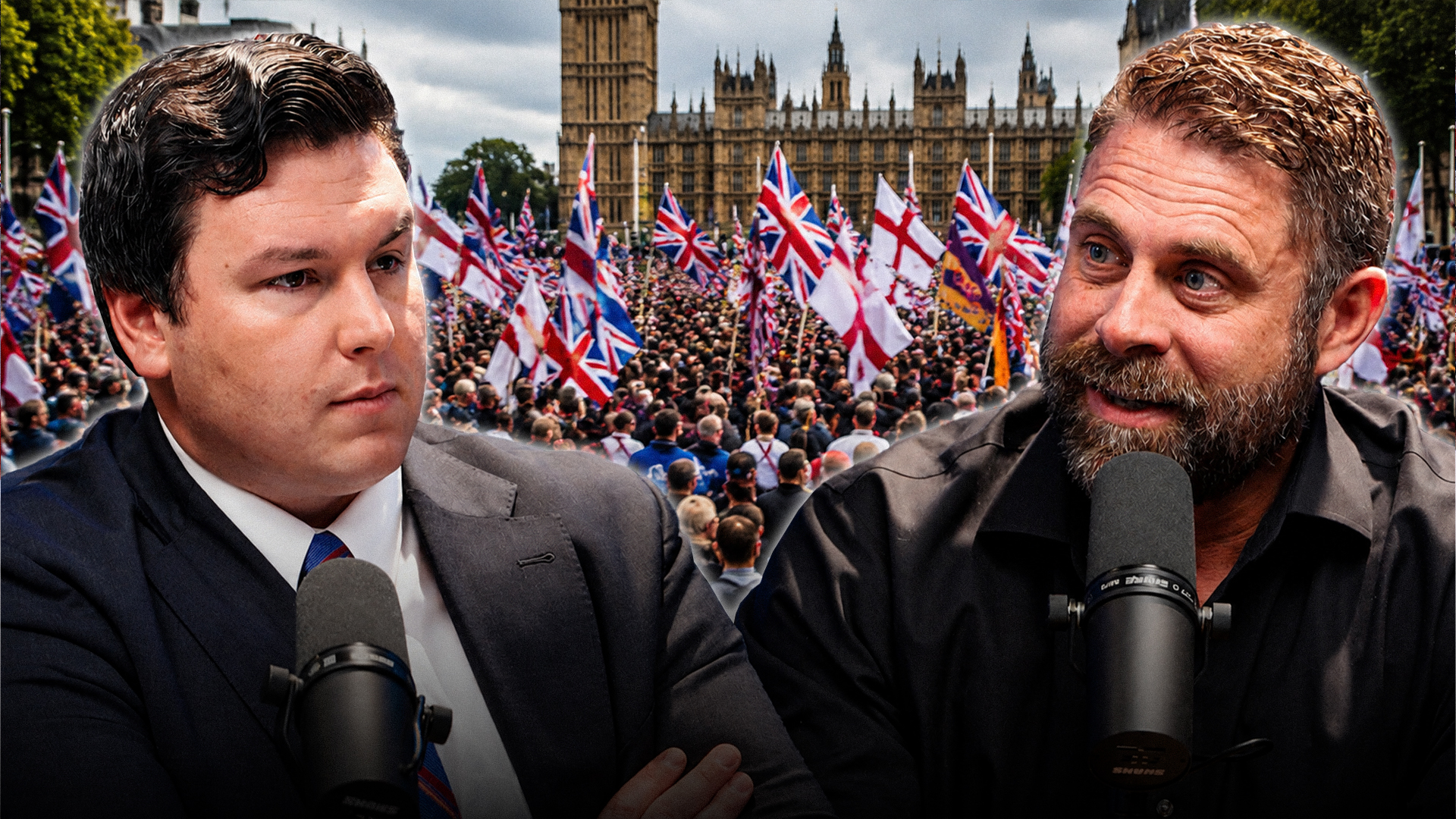
As America approaches the 250th anniversary of its divorce from England, Nick Freitas joins the Signal Sitdown podcast to discuss the state of the United Kingdom.
This transcript has been slightly edited for clarity.
Freedom Is Back
In Style
Premium domains for sale
Bradley Devlin: You were just in the United Kingdom.
Nick Freitas: Yes, I was.
Bradley Devlin: On our 250th birthday, you were in the United Kingdom. What were you doing there? Are you some sort of traitor?
Nick Freitas: I was spying out what we do next.
I’m not content with our current territorial boundaries. I’m gonna… We need… Well, we might have to go back to take the U.K. so that we remind them that, hey, you guys are actually pretty cool, except when you’re burning down our Capitol. We actually kinda like you guys. But no, it, it was a great experience.
I mean, the history, the heritage is, is absolutely incredible, but they’re obviously dealing with some pretty tumultuous times over there right now, and it’s amazing to watch people with well over a 1,000‑year history having to fight to preserve their heritage and culture.
Bradley Devlin: So what did you see there?
Because I am shocked every time I go abroad now. It just feels like things are moving so quickly.
Nick Freitas: It was interesting because I first visited the UK in 1998, which was one year after Tony Blair kind of started this whole mass immigration into the U.K. And most people don’t understand that for, like, 1,000 years of British history, they had very small, manageable amounts of immigration.
And then they’ve had more immigration in the last, oh gosh, couple of years than they had in the previous thousand years. That is mass immigration on a scale that we can’t even appreciate in the United States.
So I visited in ’98, and England and London looked exactly the way you would think it did in all of kind of like the iconic ways.
And, and we went to all the places, Buckingham Palace and the Tower of London, Westminster Abbey. And I went back there this time, and, and a lot of those areas are very similar to what you’d expect.
But then you walk a few blocks away, and I have the unique experience of having not only been to the U.K., but having been to Bangladesh. you walk a few blocks away from the Tower of London, and I felt like I was in Bangladesh.
And what’s fascinating to me is that a country that you would think with 1,000 years of cultural shaping, you’d think they’d be in a position to uniquely defend their country, and it’s their own government facilitating this.
And by the way, it was both left‑wing and right‑wing governments that helped facilitate this for a variety of different reasons. But I think what was encouraging to see is that the British people at this point are saying like, Look, the whole, you know, just calling us, flippantly calling us racists or Islamophobes is not gonna work anymore. The country is changing significantly. I think the U.K. boasts the most Sharia courts outside of the Islamic world in a country. And so they’re recognizing that this isn’t your standard immigration because immigration is one thing; balkanization is another.
Their left‑wing government, and again, under Boris Johnson it happened as well, is actually facilitating the balkanization of the U.K. And they’re treating U.K. citizens in many cases like second‑tier citizens, and .they are absolutely fed up and tired of it.
And again, it was also frustrating to watch them all just blatantly referred to as, Oh, they’re racist. They’re far right‑wing, which by, over there what they mean is Nazis.
That’s their polite way of saying Nazis. And then you’re talking to someone who’s just a grandmother who came in that said, I just wanted to be here because I care about my country, and I feel like we’re losing it.
Or you talk to a family that came to London that, again, just wanted to defend their culture and be proud of their culture. And they feel like theirs is the only culture they’re not allowed to be proud of.
And so I’m both worried for them, but I’m also encouraged that they really are… They’re trying to find good, peaceful ways to, to push back and take a stand.
Bradley Devlin: So you’re referencing this movement that has hit British politics like a freight train. This anti‑immigration movement. It stands for so much more than just the immigration numbers.
…
Bradley Devlin: It’s really reached a breaking point. Is it the raw numbers that are pulling people out into the streets? What is it particularly that’s making this happen now? Because as you said, it’s decades of broken promises.
Nick Freitas: It’s not just the raw numbers. It’s the type of immigration that is taking place.
And again, the easy leftist narrative is, Well, you’re just racist. You just don’t like people that don’t look like you.
No, that’s not it.
You imported people from cultures that are not only significantly different from British culture. You imported people with cultures that are diametrically opposed to British culture.
You imported people in large groups that do not desire to assimilate and become British. They want to bring whatever country they came from, whatever religion they came from, to Britain, and they want to supplant British culture. They want to subjugate British culture.
And then they get away with things that you would never allow English citizens to get away with.
For instance, you would never let English citizens get away with a decades‑long rape‑gang problem. And yet that did happen, is currently happening in the UK.
…
Nick Freitas: This is the part where the British people are like— It’s true.
This isn’t just about, you know, your typical cultural differences.
And this is something, too, which… And again, that is the distinction that everyone was making that I was talking to, is it’s like, look, we, we can see individuals as individuals.
And when individuals come from a place, even if it’s a place that’s very different, even if it’s a place that had diametrically opposed social, political, economic, and theological traditions, individuals can sometimes not only effectively integrate, but become some of your proudest and most patriotic citizens.
But if you’re bringing people over en masse, especially when you look at these small boats that are crossing over from Calais over to Dover, where now we’re talking about en masse and it’s all young men.
It’s not the women and children huddled away because they’re terrified of war. We’ve got a bunch of young men that are coming into the country and then being dispersed out into rural areas of the [country]. They’re not there to assimilate, and there’s no reason for them to, because the government will tell them that they should definitely be proud of their culture and their way of life and here’s more ways that we can assist you at taxpayer expense.
And again, the British people are very honestly asking the question, why?
And not only that, legal immigrants to the UK are asking, why?
This isn’t just this idea that this is all just, you know, white English people that have a problem with this. No.
There’s all kinds of people that immigrated to the U.K. over the years from India, Sikhs, from different places within the former Commonwealth countries, who are saying, Wait, we did this right, and we actually appreciate what British culture has to offer, and we want to defend it, too.
And how are we supposed to do this when you’re mass‑immigrating people that don’t want to defend it, and in fact want to subjugate it?
And that’s, that’s the main source.
And I think, again, people are past the whole idea of just being blanketly called racism and that being enough to shut them up.
Because when you see not only the typical social and economic problems from mass immigration, but when you see the crime‑related problems, and then when you see certain gangs that are deliberately targeting white English girls for just atrocious crimes and not being fully prosecuted to the full extent of the law, that’s the part where it’s like, I’m done.
I’m done with the name‑calling that the Left likes to throw out there. This is a very real problem.
We’re not gonna turn a blind eye to it. You can either fix it, or we can replace you with people who will.
And that’s what you see happening, because for the first time in over 100 years, I don’t think the political future of the U.K. is gonna be decided by the Tories or Labour.
It’s gonna be Reform on the right, and then you’ve even got the Restore Party that’s starting to emerge, and it’s the Greens on the left.
And the way I tell Americans to think about the Greens is imagine if AOC, Rashida Tlaib, and Ilhan Omar started their own political party. That’s the Greens in the UK.
So we’ll see what happens. But the reason why I think it’s relevant to Americans is because if you look at the type of immigration that has started to cause these problems in the U.K., that’s the new type of immigration that we’ve started to see in the United States.
And again, if we don’t do something about it now, gonna run into some of the same problems that they’re seeing in the UK.
More from this network:
Domains for Sale · GOTPeople.org · TheDSAPlatform · The Truth About Socialism
What's Your Reaction?
 Like
0
Like
0
 Dislike
0
Dislike
0
 Love
0
Love
0
 Funny
0
Funny
0
 Wow
0
Wow
0
 Sad
0
Sad
0
 Angry
0
Angry
0

I am just an average American. My teen years were in the late 70s and I participated in all that that decade offered. Started working young, too young. Then I joined the Army before I graduated High School. I spent 25 years in, mostly in Infantry units. Since then I've worked in information technology positions all at small family owned companies. At this rate I'll never be a tech millionaire. When I was young I rode horses as much as I could. I do believe I should have been a cowboy. I'm getting in the saddle again by taking riding lessons and see where it goes.
Premium domains for sale











Comments (0)