

Spirit’s Collapse Shows Why Bigger Companies Aren’t Always a Bad Thing
Premium domains for sale
Freedom Is Back In Style
This piece is part of MI x DW, a collaboration that brings Daily Wire readers exclusive commentary and research from the Manhattan Institute’s world-class team of scholars.
Freedom Is Back
In Style
Premium domains for sale
In this piece, Manhattan Institute legal policy fellow Jarrett Dieterle identifies a root cause of Spirit Airlines’ recent collapse: American antitrust policy. According to Dieterle, the Spirit saga underscores why sometimes it’s good to let companies merge — and why even “big” companies don’t necessarily guarantee price increases.
***
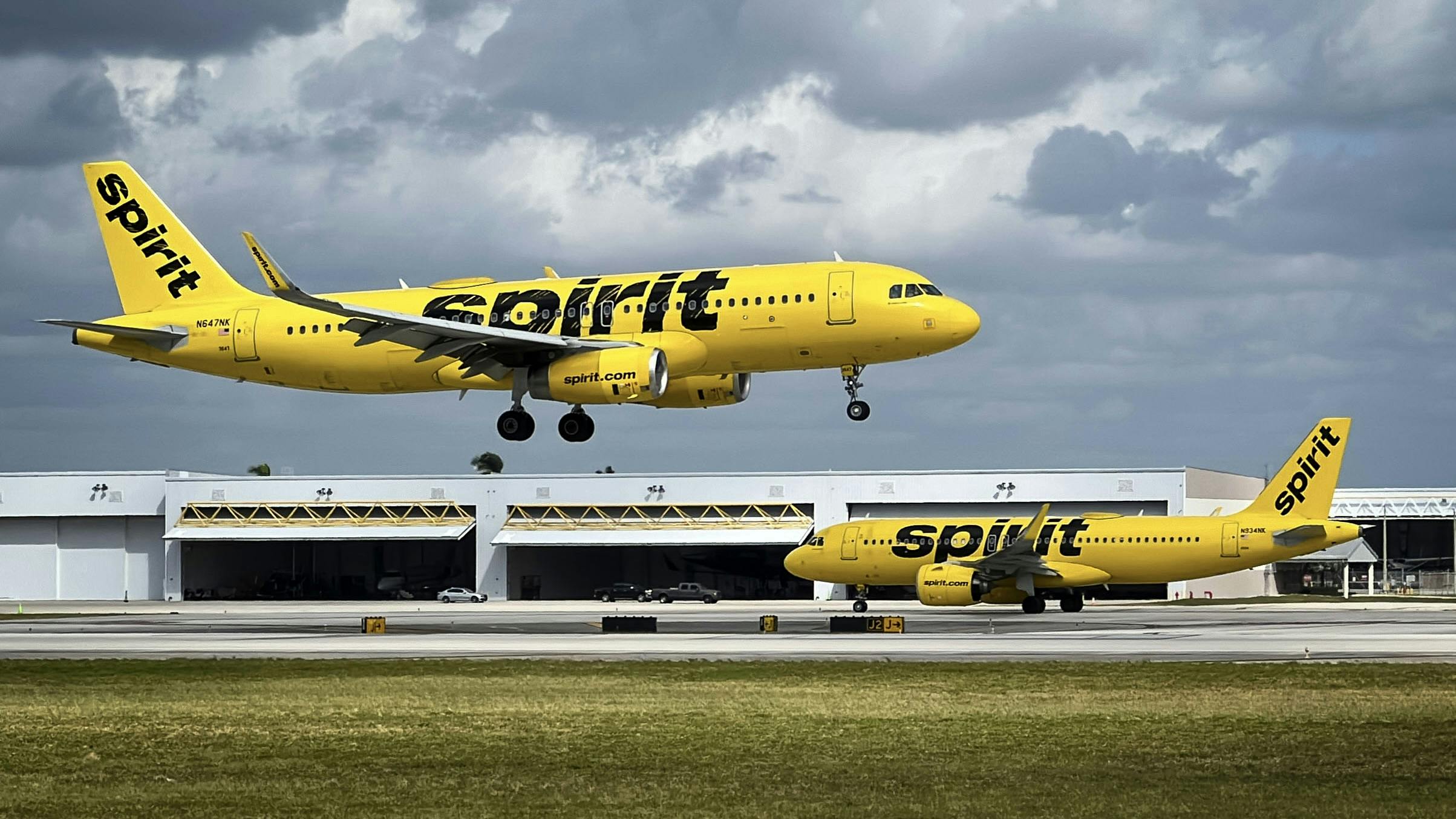
Spirit Airlines’ sudden announcement that it would cease operations left tens of thousands of passengers without flights and some 17,000 employees without jobs.
Political wrangling has since begun as to who or what was responsible for the airline’s collapse. And while pinning the blame solely on one cause is far too simplistic, Spirit’s demise shows how misguided antitrust policy can exacerbate America’s affordability crisis.
The straw that broke the camel’s back for Spirit appears to have been the recent spike in jet fuel prices, a result of the war in Iran. This unexpected price shock pushed the company, which had been struggling for years, over the solvency cliff.
But the road to Spirit’s collapse begins long before this.
The company failed to turn a profit since 2019 and had pursued several merger opportunities over the years as a lifeline. In 2022, Spirit entered a merger agreement with fellow ultra-low-cost carrier Frontier. Later that year, Spirit ended its merger agreement with Frontier in order to pursue a merger with JetBlue.
But the $3.8 billion merger with JetBlue ran into headwinds when the Biden administration sought to block it in 2023. The merger would have resulted in the country’s fifth-largest airline, with around a 10% share of the market. The administration argued that the deal would have led to “higher fares and fewer options” for flyers.
The administration was particularly concerned that losing Spirit as an independent airline would mean eliminating its longtime role as a disruptor in the increasingly consolidated airline industry. Ultimately, a federal judge sided with the administration, blocking the deal from taking place. But many observers are now questioning the administration’s opposition to the merger, as well as the judge’s holding.
That’s because a combined Spirit-JetBlue company, as the fifth-largest carrier, may have posed more of a competitive threat to the nation’s “Big Four” airlines: Delta, United, American, and Southwest. Those airlines control around 75% of the market, which means a Spirit-JetBlue merger could have increased, rather than decreased, competition by putting another (relative) heavyweight into the ring.
As UC Irvine economist Jan Brueckner put it to Slate: “A merger of those two carriers could have helped both of them and helped the traveling public, because what the merger would’ve done is create a larger low-cost carrier.” In his view, Spirit’s precarious financial footing argued in favor of greenlighting the deal, since doing so would have at least had the potential of saving the company.
Click here for more Manhattan Institute content.
In other words, in terms of creating competition in the industry, a slightly-less-cheap-but-still-existing Spirit-JetBlue combo airline is better than a super-cheaper-but-no-longer-existing solo version of Spirit.
As an example, Brueckner noted that what might have been an $89 fare on Spirit may have turned into a $110 fare with the merger. But even though this is a higher fare, it would likely have been a more affordable ticket option than what Americans are left with now that Spirit has collapsed.
The episode is reminiscent of other misguided antitrust enforcement efforts during the Biden administration. In the grocery industry, Kroger and Albertsons (the parent company of chains like Safeway and Acme) pursued their own merger back in 2022. Again, the Biden administration opposed it, and again, it did so on the grounds that the merged company would have been too big and led to a less competitive grocery industry. The deal was ultimately halted as a result.
But the administration’s analysis had it backward. Yes, on paper, a combined Albertsons-Kroger would have been the third-largest brick-and-mortar grocery store chain in the nation. But the Biden administration ignored the presence of online grocery retailers and club stores.
In reality, a Kroger-Albertsons combo would have still trailed the true behemoths in the American grocery sector — Walmart, Amazon, and Costco — and only have comprised 9% of overall grocery sales. So instead of Kroger-Albertsons being a potentially worrisome monopoly, a merged company could have become a more formidable competitor to the real giants of the industry.
As these examples show, larger companies are not always a bad thing. Two slightly-less-dominant companies — those that rank fourth or fifth on the list of industry players — can sometimes combine to create more significant competition for those higher up the totem pole. When such mergers are blocked, the result can be a less competitive and less affordable marketplace.
The reasons behind Spirit’s collapse are multifaceted. But one lesson can be learned for sure: It’s time to put to bed the progressive antitrust fixation that larger companies are always bad.
Jarrett Dieterle is a legal policy fellow at the Manhattan Institute.
More from this network:
Domains for Sale · GOTPeople.org · TheDSAPlatform · The Truth About Socialism
What's Your Reaction?
 Like
0
Like
0
 Dislike
0
Dislike
0
 Love
0
Love
0
 Funny
0
Funny
0
 Wow
0
Wow
0
 Sad
0
Sad
0
 Angry
0
Angry
0

I am just an average American. My teen years were in the late 70s and I participated in all that that decade offered. Started working young, too young. Then I joined the Army before I graduated High School. I spent 25 years in, mostly in Infantry units. Since then I've worked in information technology positions all at small family owned companies. At this rate I'll never be a tech millionaire. When I was young I rode horses as much as I could. I do believe I should have been a cowboy. I'm getting in the saddle again by taking riding lessons and see where it goes.
Premium domains for sale











Comments (0)