

The Biggest Lie About China Just Fell Apart In Public
Premium domains for sale
Freedom Is Back In Style
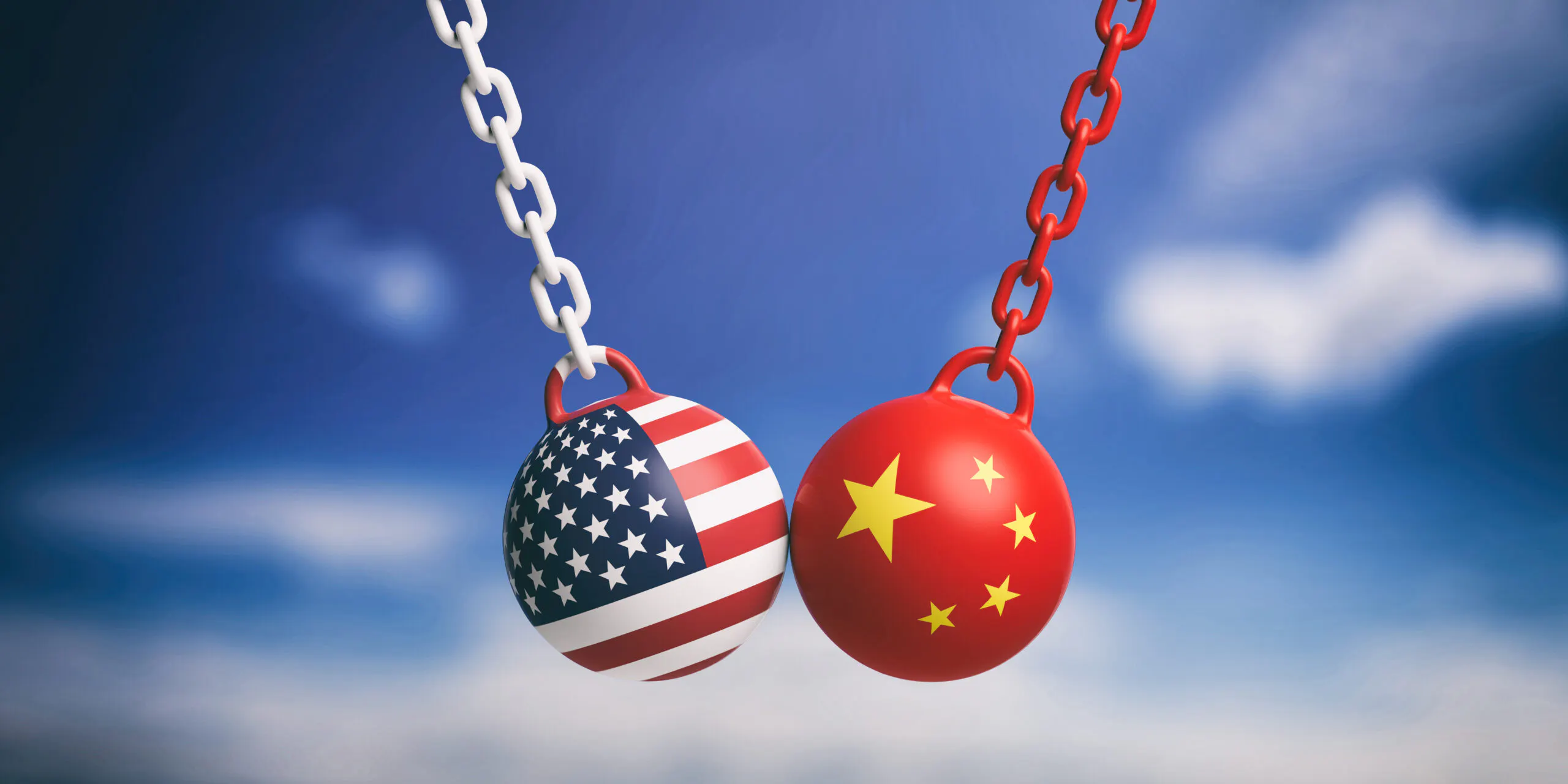
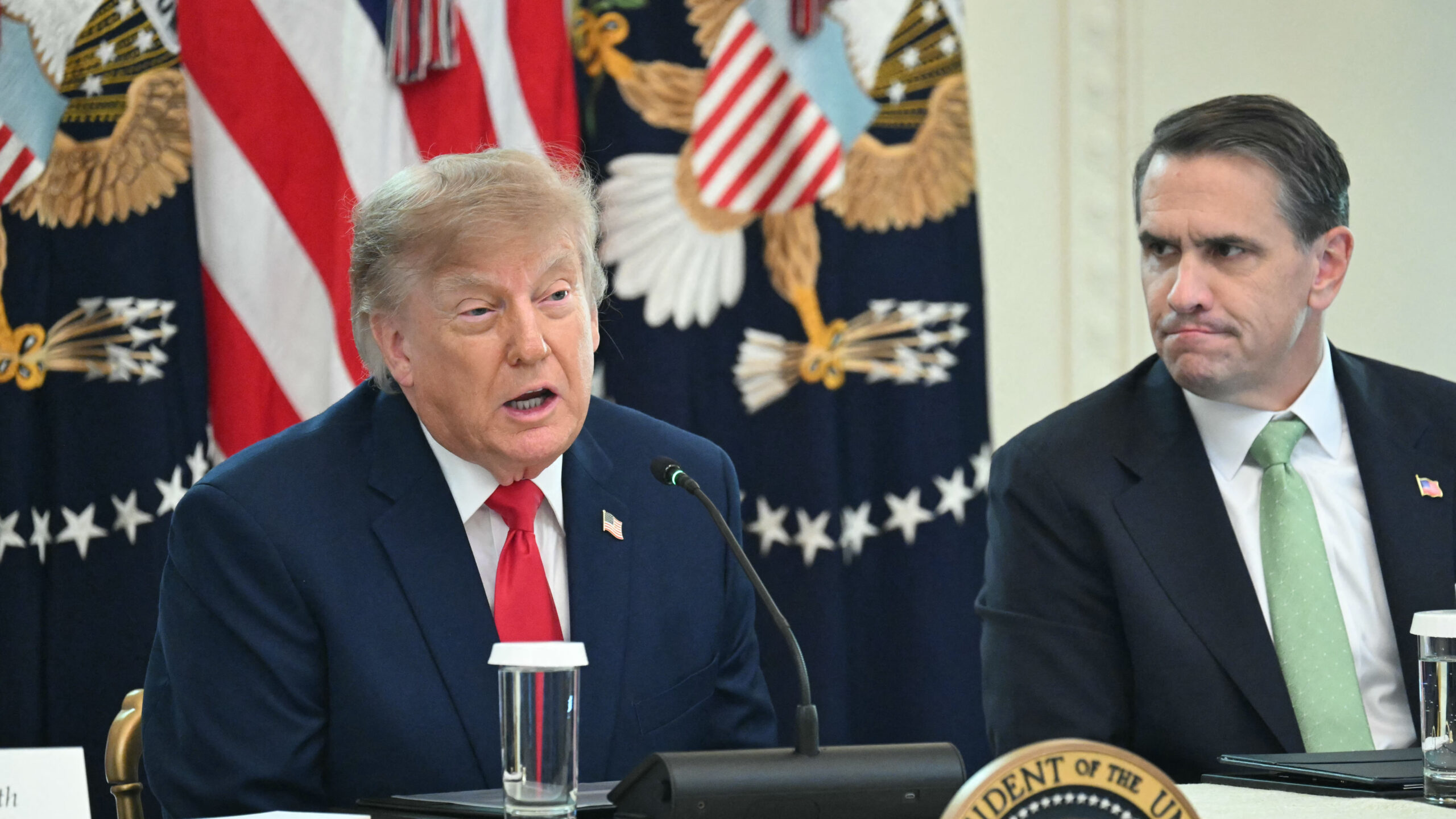
At the summit between President Donald Trump and Chinese leader Xi Jinping, Xi asked if the two countries could avoid the Thucydides trap. Here’s what he had to say:
Freedom Is Back
In Style
Premium domains for sale
Currently, transformation not seen in a century is accelerating across the globe and the international situation is fluid and turbulent. The world has come to a new crossroads: Can China and the United States overcome the Thucydides Trap and create a new paradigm of major country relations? Can we meet global challenges together and provide more stability for the world?
The Thucydides Trap is a term coined by Harvard professor Graham Allison. It theorizes that when a rising power threatens a global power, conflict generally follows. For Allison, a historian, the Thucydides model was the rise of Athens, which threatened Sparta’s regional dominance. When Sparta saw Athens rising, war became inevitable. Sparta tried to shut down Athens to prevent the Athenians from overcoming them.
There’s only one problem here: China is not Athens, and we are not Sparta. China is not the rising power, and we are not the declining power.
In reality, if conflict arises in this moment, it would not be because of the so-called Thucydides Trap. It would be much more in line with the closing window theory: the idea that sometimes a power sees its window closing because of a self-defeating policy and has to act aggressively as the window closes.
To take an example, Nazi Germany attacked the Soviet Union in 1941 largely because it saw its window of opportunity closing. It had conquered Poland; it had conquered France, and it was dominant over the European continent.
But it was also unable to conquer Britain.

Nazi Germany saw that Britain would likely survive Operation Sea Lion, the Nazi attempt to take over the British Isles. They saw that the United States might enter the war, feared the Soviets might attack first, and thus needed a lot of oil resources and land in the east, which catalyzed their attack on the Soviet Union.
The window, in other words, was closing.
This is one of the theories behind why Nazi Germany decided to initiate a bunch of foreign wars, because despite all the talk about how the Nazis had revitalized the economy, that was nonsense. They had created a kind of Chinese-like economy in the sense that it was heavily regulated, heavily subsidized, heavily controlled by the government, massively debt-ridden, and then they had to invade other countries for resources.
The real risk here is that China feels threatened; Xi has actually put China’s economy on a road to nowhere. They have a demographic problem. They have a military problem. They have an economic problem. And so China might lash out, knowing that its window is closing.
What can the United States do about that?
We have to ease their transition back into second-rate status, which means, basically, de-escalation on issues like Taiwan. We don’t want them attacking Taiwan because that’s bad for them and it’s bad for us. But we have to box them in simultaneously, which is why I have been encouraging — for literally decades at this point — better trade relations with all of Eastern Asia. We should have better trade relations with Japan and better trade relations with South Korea.
The Chinese are particularly weak opposition right now. This is why all of the headlines about how the war in Iran is going are incorrect. The real way that the war is going is that the people predominantly being deprived of the oil are the Chinese.
Not only that, if this war was supposed to create momentum against the United States in the region, why is every single country in the region on the side of the United States and against the Iranian regime, so much so that, apparently, the Saudis actually participated in foreign attacks in Iran?
I’ve spoken to top officials in many of these governments; they want to align with the United States. They increasingly want to align with Israel. Some are openly aligning with Israel, such as the UAE.
The Saudis would like to openly align with the United States and Israel, as well. They just have to run the gauntlet of domestic opposition to recognition of Israel.
Let’s reverse the clock back to the first Gulf War, when the United States was so afraid of Israel being unable to work with the Arab states because the Arab states would not work with Israel, that Israel took dozens of incoming Scuds from Iraq in the middle of that war. The United States, under President George H.W. Bush, told Israel they could not respond because he was afraid it would break up the coalition of the Saudis and the rest of the countries in the region.
But now, Israel is openly operating in coordination with all of those countries against Iran. That’s how much things have changed, which is why the Iranian foreign minister, knowing Iran is now isolated, issued a statement basically threatening the UAE, Bahrain, and others.
The regimes in the Middle East that know what the future looks like, a future that is largely reliant on American and Israeli technology and American oil and Western economic development, are not reliant on solidarity with a government in Iran that wishes to destroy them.
What has happened with oil is the single greatest untold story in modern American politics. Back in 1973, Israel fought the Yom Kippur War —yet another war where they were near extermination — in which Arab armies attacked Israel unprovoked, trying to destroy the state of Israel and wipe the Jews off the map.
They failed.
However, their failure led to the Saudi royal kingdom deciding to impose an oil embargo against the United States for the U.S.’s support for Israel in the late stages of the war, and that had a significant economic impact on the United States for a full decade.
Things have radically changed because America is now the leading producer of oil and liquefied natural gas on planet Earth. We control the means of production. We control the means of distribution. We control what is leaving the Strait of Hormuz via Iran. We control what exits Venezuela.
This is a radical shift.
The story of how America’s drilling freed up our geopolitical position is an amazing one. U.S. crude oil exports have been rising precipitously because we are the dominant producers. We have completely shifted geopolitics through our capacity to innovate and the natural resources we can access.
By the way, it is not just the presence of natural resources that makes a country rich. Venezuela has the largest oil reserves on the planet, but it’s barely able to produce 1.5 million barrels of crude per day because it nationalized its oil industry.
We do have problems here, but economically speaking, we are blowing everyone out of the water. If you’ve got a buck, you are not investing it in China. You’re not investing it in the Europeans. You’re not investing it in Japan.
You’re investing it in the United States. That is the reality.
That’s because of our free-market system, the innovations, and the private companies, which are unbelievably efficient.
We have totally shifted geopolitics. China is weaker because of our oil industry. They are not rising while we are declining.
In fact, it is just the opposite.
More from this network:
Domains for Sale · GOTPeople.org · TheDSAPlatform · The Truth About Socialism
What's Your Reaction?
 Like
0
Like
0
 Dislike
0
Dislike
0
 Love
0
Love
0
 Funny
0
Funny
0
 Wow
0
Wow
0
 Sad
0
Sad
0
 Angry
0
Angry
0

I am just an average American. My teen years were in the late 70s and I participated in all that that decade offered. Started working young, too young. Then I joined the Army before I graduated High School. I spent 25 years in, mostly in Infantry units. Since then I've worked in information technology positions all at small family owned companies. At this rate I'll never be a tech millionaire. When I was young I rode horses as much as I could. I do believe I should have been a cowboy. I'm getting in the saddle again by taking riding lessons and see where it goes.
Premium domains for sale













Comments (0)