

There’s No Crystal Ball for the Economy
Premium domains for sale
Freedom Is Back In Style
Pew Research reports what any precinct captain could have told you for the price of a beer: affordability, not abstraction, is what voters carry into the ballot box this fall.
Freedom Is Back
In Style
Premium domains for sale
Gas, groceries, rent—the three horsemen of kitchen-table economics—are top of mind for voters this midterm season.
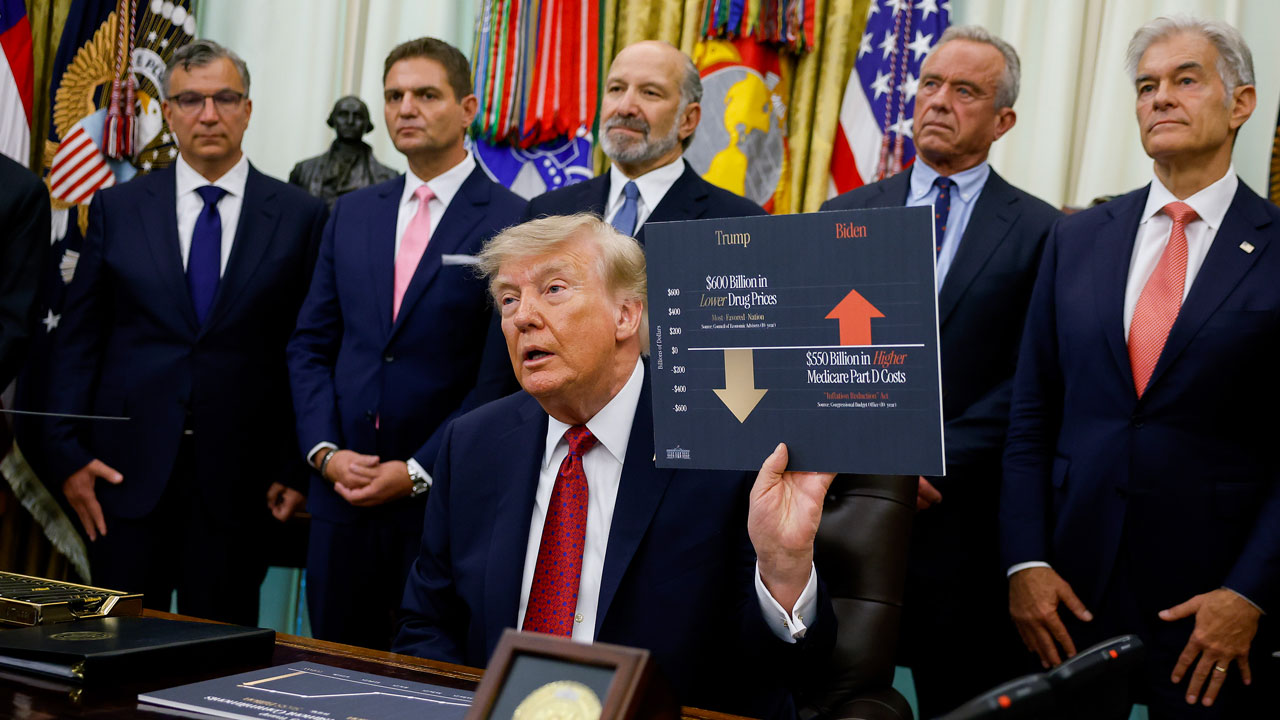
The Trump administration, to its credit, has noticed. It has struck an oil arrangement with Venezuela, announced a drug-pricing initiative, lifted tariffs on beef imports, and taken up other such measures besides. Reasonable people can debate their merits. What is less reasonable is the question put to this writer, with wearying regularity, by television hosts and reporters alike: When will we see results?
The question is understandable. It is also a category error, one that reveals more about the assumptions of those asking it than about the policies in question. It presumes that an economy is a machine with a dial, that a lever pulled in Washington in September produces an outcome in November, calibrated and on schedule, the way a thermostat produces heat.
An economy is not a machine. It’s more like an ecosystem: vast, adaptive, and complex. No official, however well-briefed, can specify in advance precisely when a policy will bite, whether it will bite as intended, or what else, unbidden, will be biting at the same time.
There are limits to what any mind, or any committee of minds, however intelligent, can know about a system built from the choices of hundreds of millions of people.
Consider how much lies outside anyone’s control. The Iran conflict could escalate or subside, and either would move oil markets before any economist in D.C. could issue a statement about it. Shipping lanes reroute, or get struck again, depending on decisions made by people whose names appear in no American briefing book. Cattle herds do not grow in a fiscal quarter; they rebuild over years, one calf at a time, and the rebuilding can be undone overnight by a screwworm outbreak that no analyst saw coming and no policy could have prevented.
Time lags stretch on, indifferent to election calendars. And effects surface in the last place anyone looked: e.g., ranchers, mid-rebuild, upset about cheaper beef imports.
The political trouble here is real, and worth stating plainly. A president can order a border closed. A governor can order the National Guard into a city. Neither can order prices down, and if either somehow could, the ordering could produce shortages, black markets, and other miseries considerably worse than the prices being complained about.
An economy of our size and intricacy cannot be tuned to a November deadline. What it can be given, however, is room: barriers removed, rules simplified, supply allowed to do what supply does when it is not obstructed. That is a policy of patience, which is precisely the kind of policy a two-year election cycle punishes.
What can honestly be said is this: look back.
Whatever discomfort households feel now, measure it against 2022, when annual inflation ran at roughly 8% and hit 9.1% (year over year) that June—the worst reading in four decades—while the national average for a gallon of gas that same month touched $5.01.
Today’s national average sits closer to $4.10.
The distance between those two figures is not nothing. You might say that it’s the distance between a genuine emergency and a genuine grievance, and that conflating the two serves no one but those who benefit from public panic.
That distance would narrow considerably, and the pain would deepen, if policymakers were to embrace wage, price, and rent controls as remedies for high costs. These proposals rest on a familiar premise: that government can improve economic outcomes by determining what workers, landlords, and businesses may charge. The history of such interventions suggests otherwise.
Among the clearest historical examples is Venezuela, once the wealthiest nation in Latin America. Its experience offers a cautionary illustration of what can happen when government attempts to substitute administrative judgments for the information conveyed by prices and markets.
Which returns us to the trouble: Beneath “when will it work” predictions lies a deeper and more flattering assumption: that somewhere in Washington sits a mind, or a model, capable of holding the whole of a $28 trillion economy in view and adjusting it like a recipe.
No such mind exists, and pretending otherwise is the beginning of every policy failure worth remembering. The honest posture toward an economy this large is not mastery but humility, a recognition that the most any government can do is clear away what it has needlessly piled in the road and then wait, as the rest of us must, to see what an unmanaged multitude of free people choose to build.
More from this network:
Domains for Sale · GOTPeople.org · TheDSAPlatform · The Truth About Socialism
What's Your Reaction?
 Like
0
Like
0
 Dislike
0
Dislike
0
 Love
0
Love
0
 Funny
0
Funny
0
 Wow
0
Wow
0
 Sad
0
Sad
0
 Angry
0
Angry
0

I am just an average American. My teen years were in the late 70s and I participated in all that that decade offered. Started working young, too young. Then I joined the Army before I graduated High School. I spent 25 years in, mostly in Infantry units. Since then I've worked in information technology positions all at small family owned companies. At this rate I'll never be a tech millionaire. When I was young I rode horses as much as I could. I do believe I should have been a cowboy. I'm getting in the saddle again by taking riding lessons and see where it goes.
Premium domains for sale












Comments (0)