

What’s Quietly Shaping Kids While Parents Aren’t Watching
This article is part of Upstream, The Daily Wire’s new home for culture and lifestyle. Real human insight and human stories — from our featured writers to you.
Live Your Best Retirement
Fun • Funds • Fitness • Freedom
***
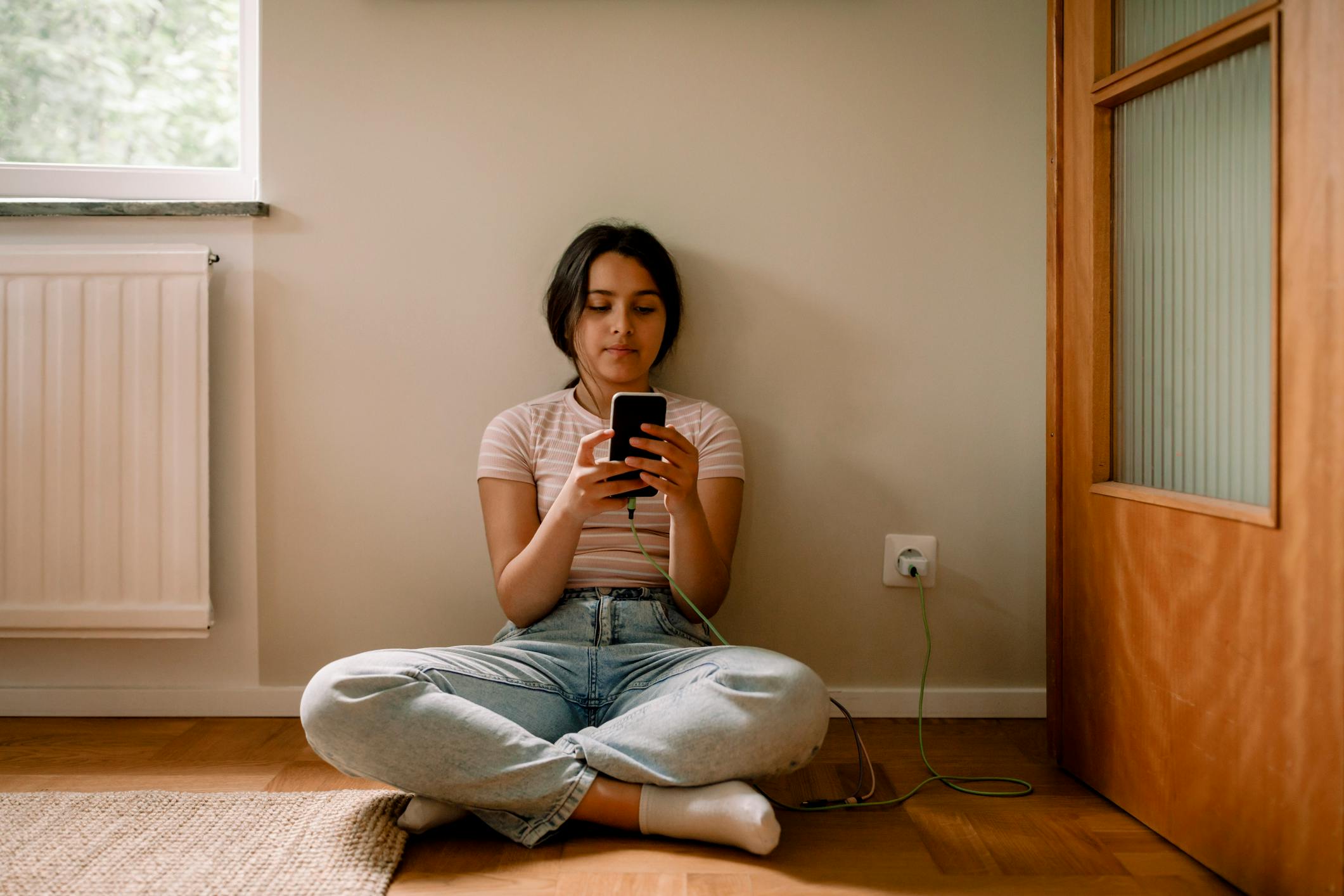
“We’re sending him to a recovery center in Bali this summer to kick his phone habit,” an exasperated mother informed me of her teenage son. I was an easy target, waiting in an empty booth for my to-go burger and fries, trying to be “in the moment” without faceplanting into Instagram. She showed me her lock screen: “Here’s a photo of him in ‘The Hot Chocolate Nutcracker’ with Blue Ivy.” Intrigued by her oversharing and financial resources, I took a long sip from my wine-in-a-can and braced myself for the long haul; she clearly had more than a half-eaten order of onion rings on her plate. “He’s been kicking his dad,” she said.
I casually ordered another overpriced pinot grigio and sympathetically touched her elbow. “Like, while he’s looking at his phone?”
As real-life proof of studies linking smartphone addiction to aggression, this kid had completely stopped talking to his parents and had seemingly resorted to kung fu. No nearby Los Angeles-based rehab centers could snap him out of the funk, so after throwing roughly $150,000 at the problem, this mother’s only hope was to send her kid to a place 8,600 miles away from his iPhone. She hoped Indonesian fruit and flora, and perhaps a restorative bungalow over crystal blue water, could sever the electromagnetic lifeline between her sweet son’s brain and AI baddies jet-skiing with gorillas on TikTok. Or whatever he was watching.
He’s not the only one. Teens self-report using social media “almost constantly.” Gen Z hits up TikTok, Instagram, and Snapchat as trusted sources of information, while Gen Alpha is into Roblox, YouTube, WhatsApp, TikTok, and Snapchat. Six-seven, no cap. Even though TikTok theoretically limits users to no younger than 13 years old, five-year-old “TikTots” open so many accounts that they have a cute nickname.
Cautionary messaging about the negative blah blah of social media feels like a broken record, a constant drone about stunted brain development, depression, cyberbullying, catfishing, and anxiety. But, whatever, Mr. Beast vaccinated a herd of wild giraffes with a life-saving sniper rifle from a helicopter! Subscribe to win an iPhone, smash that freakin’ bell, and shoot it into our veins! Sure, girls jump on Instagram and TikTok more than boys, and the reverse is true over on YouTube, which attracts 90% of teens, but no one’s getting out of this scot-free. Overall, kids spend an average of 3.5 hours a day on their platforms of choice (and almost half of them claim they feel worse after doing it, despite the spin on healthy “connection”).
So what exactly are kids watching? On the top platform YouTube, Mr. Beast serves over 460 million subscribers with flashy, cashy stunts; Dude Perfect brings the buddy sports; AishaMarieVlogs dishes lifestyle behind the scenes; and Markiplier built 38.4 million subs by getting really into gaming. Over on the second most-favorited TikTok, Charli D’Amelio rocks the choreography for 156 million followers, Khaby Lame posts 2.6 billion likes worth of comedy gold, and Bella Poarch dazzles 93 million followers with lip syncs. And as the bronze medalist in the popularity contest, Instagram hangs on with Niana Guerro’s dance moves for 16 million fans and the curated lifestyles of Lauren Orlando and Jules Leblanc.
While the digital apple of any teen’s eye can change in an instant, the gentle art of mind control lands the knockout punch. Going beyond the dope show of the infinite scroll, mind-meltingly effective marketing does the real dirty work. A silly M&M’s bit on Ryan’s World does more than teach colors using “yummy candy.” Kids are shown at least one ad by fast food, soda, or other processed food for every post, drummed up by marketers set on funneling colorful, cartoony, music-backed content directly to children.
Some kids consume more than 4,000 food ads per year on social media. Even if you stock a MAHA kitchen full of real food, little Leo’s still getting a daily dose of digital junk. Maybe the rise in childhood obesity has nothing to do with a surge in food marketing on YouTube leading to children’s poor eating habits off-screen, but it sure isn’t helping.
Happy to cash in on comparison culture, retailers turn social media into an infinite shopping mall. Considered by some to be “43 million young consumers,” Gen Alpha became a cash cow for national brands, with 84% begging their parents to buy something they saw online. For anyone keeping score, in 2025, teens were shelling out for Nike, On Running, e.l.f. Cosmetics, Ulta, and Sephora. They had to be at least 13 years old to use Apple Pay, even though no one younger than 18 can get a credit card, but what’s math when it’s your parents’ money?
Considering kids can also navigate age restrictions using the age-old technique of plugging in a fake birthday, there’s a clear danger in underage users exploring the darkest corners of social media. With nearly 70% of teens reporting they’ve seen explicit sexual content online, and 75% of parents claiming their kids have not, sexualized marketing sneaks under the radar, vaulting children into decidedly adult behavior in real life. Consumption of violent social media content only compounds aggressive actions in teens. And you can thank Instagram’s algorithm for working around its own ban on illicit drugs to autofill searches by teens for ecstasy, Xanax, and opioids. Can’t use “#MDMA” or “#buyfentanyl”? Don’t let us stop you, kids. Love, Instagram.
So do we just have to let Ms. Rachel and her overalls wash us all out to A-B-sea? While there may be no turning back to non-addictive landlines with coiled cords and rotary dials, there’s a tiny glimmer of hope. Depending on maturity, holding off on letting kids use social media until they’re at least 13 can help. Of course, while teens are more vulnerable to the social media marketing complex, adults are susceptible, too. (Just scroll through my purchase history on TikTok Shop as evidence.)
Better yet, you can model the responsible behavior you want to see in your kids by limiting your own phone usage as you monitor theirs. Plus, as AI continues to devour social media, maybe we could all use a little phone-free human interaction … in Bali or by your nearest backyard sprinkler.
***
The views expressed in this piece are those of the author and do not necessarily represent those of The Daily Wire.
What's Your Reaction?
 Like
0
Like
0
 Dislike
0
Dislike
0
 Love
0
Love
0
 Funny
0
Funny
0
 Wow
0
Wow
0
 Sad
0
Sad
0
 Angry
0
Angry
0

I am just an average American. My teen years were in the late 70s and I participated in all that that decade offered. Started working young, too young. Then I joined the Army before I graduated High School. I spent 25 years in, mostly in Infantry units. Since then I've worked in information technology positions all at small family owned companies. At this rate I'll never be a tech millionaire. When I was young I rode horses as much as I could. I do believe I should have been a cowboy. I'm getting in the saddle again by taking riding lessons and see where it goes.























Comments (0)