

11 years later, Trump’s immigration promises still aren’t law

Premium domains for sale
Freedom Is Back In Style
With House Republicans effectively out of legislating time before November, the postmortem can begin on Donald Trump’s second governing trifecta and its immigration record.
Freedom Is Back
In Style
Premium domains for sale
After 11 years of promises, what do we have to show for it?
Whatever happens in November, Republicans have already burned most of this governing window. The question for the next time the GOP controls Congress is brutally simple: What will change?
More than nothing but far less than promised.
Congress passed the Laken Riley Act, expanding mandatory detention for certain aliens charged with specified crimes. The 2025 reconciliation law also poured tens of billions of dollars into ICE, detention capacity, border infrastructure, and enforcement personnel.
Those are real victories. But funding the machinery is not the same thing as fixing the law.
Republicans did not enact a permanent reduction in legal immigration. They did not end the diversity visa lottery. They did not define birthright citizenship in statute. They did not permanently defund sanctuary jurisdictions. They did not overhaul the removal statutes or judicial review rules that have turned nearly every major enforcement initiative into litigation.
Trump’s executive record is stronger. A Center for Immigration Studies analysis of Census Bureau survey data estimates that the foreign-born population fell 2.9 million from January 2025 to July 2026. The Congressional Budget Office likewise estimates that net immigration in its “other foreign national” category turned negative in 2025 after the enormous Biden-era surge.
Good. But that is exactly the problem with governing almost entirely by executive action.
The CBO estimates total net immigration at more than 10 million from 2021 through 2024. Against that backdrop, stopping the new flow and reversing part of the increase is not enough if the underlying statutes remain untouched. The next administration can erase much of the executive policy on day one.
The legislative ledger remains embarrassingly thin.
Trump endorsed the RAISE Act during his first term, a bill that would have sharply reduced legal immigration, curtailed chain migration, and eliminated the diversity visa lottery. In his second term, there has been no comparable White House push for an immigration moratorium or a permanent rewrite of the legal-immigration system.
Rep. Chip Roy (R-Texas) introduced the PAUSE Act last year to freeze most immigration until Congress addressed the system’s underlying problems. Republicans never made it a governing priority.
RELATED: The promise was mass deportation. The policy is carve-outs.
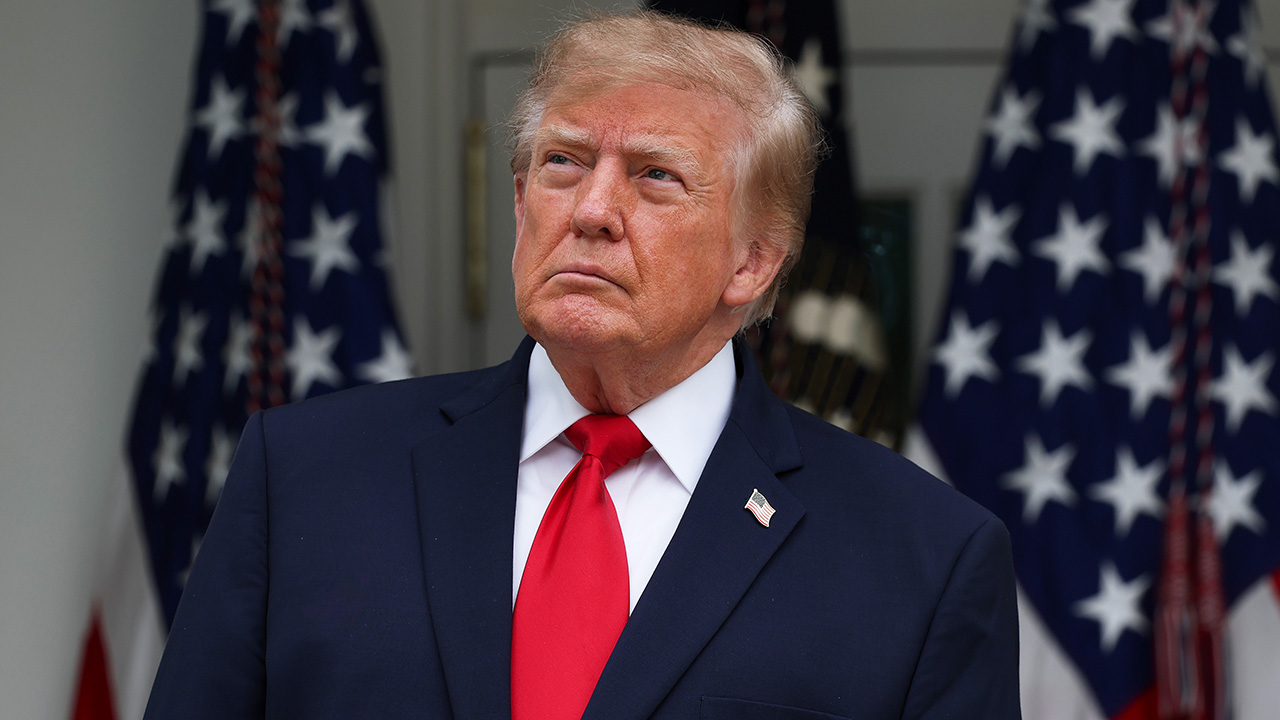
 Al Drago/Bloomberg/Getty Images
Meanwhile, Trump himself has repeatedly muddied the restrictionist message. He has defended the idea of bringing 500,000 Chinese students to American universities, talked about the need for more foreign workers, pushed to expand the H-2A program, and floated protections for illegal workers in hotels and farms.
Congress could have settled these questions in statute. It did not.
The same failure appears on removals.
The Illegal Immigration Reform and Immigrant Responsibility Act of 1996 was supposed to speed removal. Thirty years later, removal policy remains a litigation magnet, and Congress has done almost nothing to rewrite the law after years of adverse rulings and procedural fights.
Kilmar Abrego Garcia is the obvious example. The administration alleges that he is affiliated with MS-13. His lawyers deny it. What is beyond dispute is that more than a year after his deportation to El Salvador triggered one of the administration’s biggest immigration battles, his detention and removal remain tied up in federal court.
That is not an argument against executive enforcement. It’s an argument against pretending executive enforcement can substitute for legislation. More than that, it’s an argument against executive acquiescence to judicial supremacy.
Consider the current court docket.
A federal court struck down the administration’s 75-country immigrant visa pause in August. The $100,000 H-1B payment requirement was vacated by a Massachusetts federal court, and the First Circuit refused to stay that ruling while the government appeals. Another judge gave seven H-4 plaintiffs limited relief from the administration’s decision to end automatic work-permit extensions.
A federal judge also temporarily vacated administration policies pausing diversity visa processing and later ordered the State Department to report three times a week on its compliance through the end of the fiscal year.
DACA remains in place for existing recipients even though federal courts have repeatedly found the program unlawful. Congress still has not acted to exclude illegal aliens from the census.
And the administration’s attempt to apply the 1996 welfare reform law more broadly to programs such as Head Start and other federally funded services was permanently enjoined this month after a judge found the agencies violated the Administrative Procedure Act.
Republicans knew judges would attack nearly every major executive immigration move. That was not a surprise. It was the operating environment.
Lower courts have constrained warrantless immigration arrests in parts of the country and ordered bond hearings in individual detention cases. They also blocked the administration’s third-country-removal policy for months. On September 29, the Supreme Court stayed that order and agreed to hear the case in December.
Even when the administration ultimately gets relief, the clock keeps running.
That is why Republicans should have spent their trifecta doing two things simultaneously: enforcing the law with every lawful executive tool available and rewriting the law so that the next administration could not simply erase the policy.
They did plenty of the first. They barely attempted the second.
For example, Roy and other immigration hawks spent 2025 urging Republicans to limit judicial review in removal cases and use must-pass legislation to lock enforcement changes into statute. They got no support from the administration, and those proposals died on the vine.
RELATED: Kansas Republicans muddy the waters on ICE enforcement
 Pat Greenhouse/The Boston Globe/Getty Images
That failure is vastly more consequential than yet another White House press release announcing an executive initiative.
Executive orders expire. Agency rules get rescinded. Guidance memoranda disappear. Prosecutorial priorities flip. Lower courts can delay policies for months or years. A statute forces the next administration to confront an actual law rather than delete its predecessor’s memo.
That was supposed to be the point of winning Congress.
Eleven years after Trump descended the escalator and made immigration the defining issue of Republican politics, the United States has more enforcement resources and a much tighter border than it did two years ago. Those achievements are real — but temporary. The basic architecture that produced the Biden-era surge remains largely intact.
Whatever happens in November, Republicans have already burned most of this governing window. The question for the next time the GOP controls Congress is brutally simple: What will change?
If the answer is another collection of executive orders followed by another collection of injunctions, then we have truly learned nothing. Immigration policy will remain a leftward ratchet: Democrats expand migration, Republicans temporarily slow it, and almost none of the restrictions survive the next change of power.
More from this network:
Domains for Sale · GOTPeople.org · TheDSAPlatform · The Truth About Socialism
What's Your Reaction?
 Like
0
Like
0
 Dislike
0
Dislike
0
 Love
0
Love
0
 Funny
0
Funny
0
 Wow
0
Wow
0
 Sad
0
Sad
0
 Angry
0
Angry
0

I am just an average American. My teen years were in the late 70s and I participated in all that that decade offered. Started working young, too young. Then I joined the Army before I graduated High School. I spent 25 years in, mostly in Infantry units. Since then I've worked in information technology positions all at small family owned companies. At this rate I'll never be a tech millionaire. When I was young I rode horses as much as I could. I do believe I should have been a cowboy. I'm getting in the saddle again by taking riding lessons and see where it goes.
Premium domains for sale






















Comments (0)