

The Plastic Problem No One Can Opt Out Of And Two Easy Fixes You’re Probably Ignoring
Premium domains for sale
Freedom Is Back In Style
This article is part of Upstream, The Daily Wire’s new home for culture and lifestyle. Real human insight and human stories — from our featured writers to you.
Freedom Is Back
In Style
Premium domains for sale
***
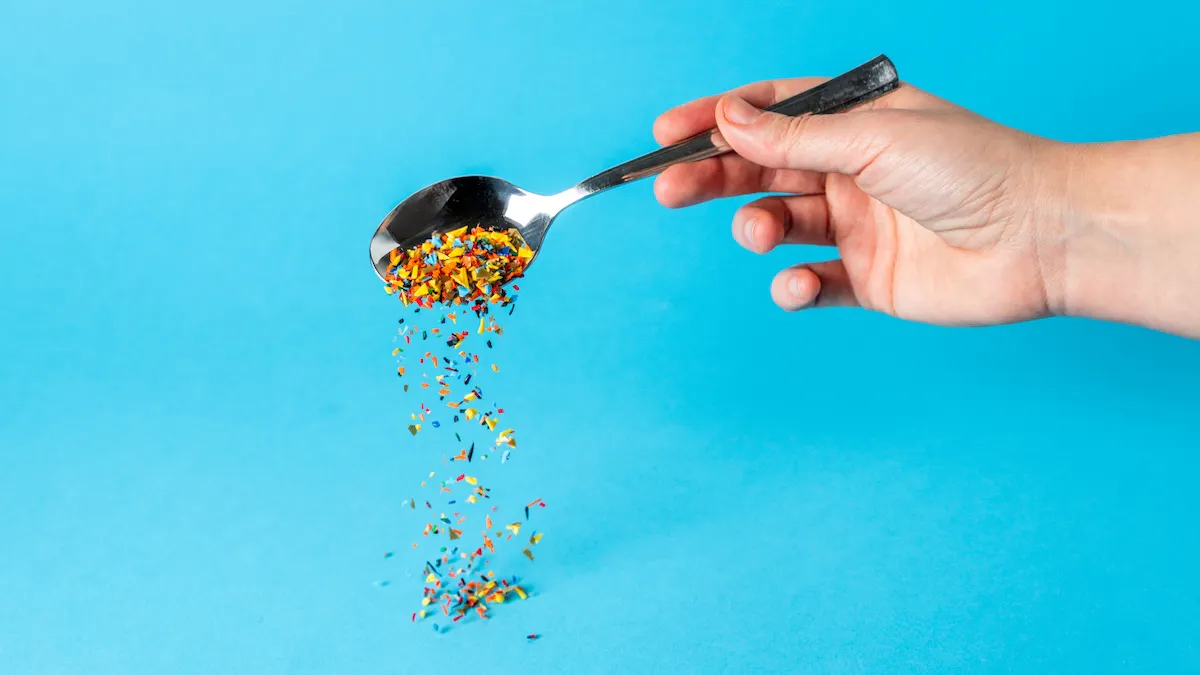
Over the past few years, the story about microplastics has shifted from a focus on ocean pollution to human health, and the science has moved faster than many people realize. Researchers have detected these tiny particles — fragments that often are invisible — in human blood, breast milk, and most recently cardiac arteries and brain tissue. The question is no longer whether we’ve been exposed. It’s about what that exposure means and what, if anything, we can do about it.
It’s next to impossible to opt out of microplastic exposure. I want to say that upfront, because too much writing on this topic implies that the right combination of shopping and lifestyle choices will keep you clean. It probably won’t. By the time food gets to your kitchen — whether it’s labeled organic and brought home in a cloth bag or it was handed to you at a drive-through window — it has already traveled through a plastic-intensive supply chain. Factory equipment, storage, and transport all contribute layers of plastic exposure — often with the intention of preventing you from being exposed to other contaminates — long before you go shopping or open the refrigerator.
There’s a growing body of evidence showing harm from microplastics, but some of the findings might feel distant from daily risk calculations. That’s where the animal studies on endocrine disruption come in. What we now understand is that microplastics can disrupt the hypothalamus, the part of the brain that sends hormonal signals that tell you when you’ve eaten enough or that it’s time to go to bed. I know that some people who are reading this are saying to themselves: The studies she’s talking about were done in mice, not people. Fair enough. We don’t have human randomized controlled trials on microplastics, and we probably never will. But we’ve been here before. We acted on the endocrine disruption that we saw in the animal literature related to BPA before we had definitive proof of human harm. We didn’t wait before pulling it from baby bottles. The precautionary logic was sound, and the same reasoning applies here.
So where is the exposure actually coming from? It turns out that it’s everywhere, everything, and all at once, but not equally. A recent study found that chicken nuggets contain significantly more microplastic contamination than plain chicken breast. Same animal, radically different plastic load because every additional processing step means more contact with plastic manufacturing equipment. Ultra-processed foods aren’t just nutritionally inferior; they carry a higher plastic burden as a result of the process used to produce the food.
What you can do about it comes down to two habits, neither of which costs anything.
Heat is the enemy. Microwave heating causes the highest release of microplastics of any common kitchen scenario. One study found billions of nanoplastic particles per square centimeter were released within three minutes of heating time. The label “microwave safe” means the container won’t melt. It says nothing about what it does to your food. If you’re heating something that was packaged in plastic — a frozen meal or leftovers in a takeout tray — transfer it to a glass or ceramic dish first. Same microwave, dramatically lower microplastic exposure.
Your dishwasher is doing more damage than you think. Heat degrades plastic, and repeated dishwasher cycles accelerate that breakdown, increasing the rate at which particles shed into whatever you store or eat from those containers. Wash plastic by hand.
That’s it. I’m not telling you to throw out your Tupperware. In an ideal world, replacing plastic storage with glass and stainless steel makes sense, but that’s a financial commitment that not everyone can make right away. I’m a doctor and a mom and I’ll admit to having heated up more than a few meals in whatever container they came in. The goal isn’t perfection or beating yourself up over your past choices. These are two easy habits that don’t require new equipment and address the highest-exposure moments in your daily routine. The science on microplastics is evolving, but the direction of the evidence is clear. Meaningfully reducing your exposure is free. That’s a pretty easy call.
***
Monique Yohanan, MD, MPH, is a senior fellow for health policy at Independent Women. As a physician executive and healthcare innovation leader, Yohanan has more than 20 years of experience at the intersection of clinical medicine, technology, and health policy.
More from this network:
Domains for Sale · GOTPeople.org · TheDSAPlatform · The Truth About Socialism
What's Your Reaction?
 Like
0
Like
0
 Dislike
0
Dislike
0
 Love
0
Love
0
 Funny
0
Funny
0
 Wow
0
Wow
0
 Sad
0
Sad
0
 Angry
0
Angry
0

I am just an average American. My teen years were in the late 70s and I participated in all that that decade offered. Started working young, too young. Then I joined the Army before I graduated High School. I spent 25 years in, mostly in Infantry units. Since then I've worked in information technology positions all at small family owned companies. At this rate I'll never be a tech millionaire. When I was young I rode horses as much as I could. I do believe I should have been a cowboy. I'm getting in the saddle again by taking riding lessons and see where it goes.
Premium domains for sale


















Comments (0)