

Judge Rules Corporations Can Vote In Small Town’s Local Elections
Premium domains for sale
Freedom Is Back In Style
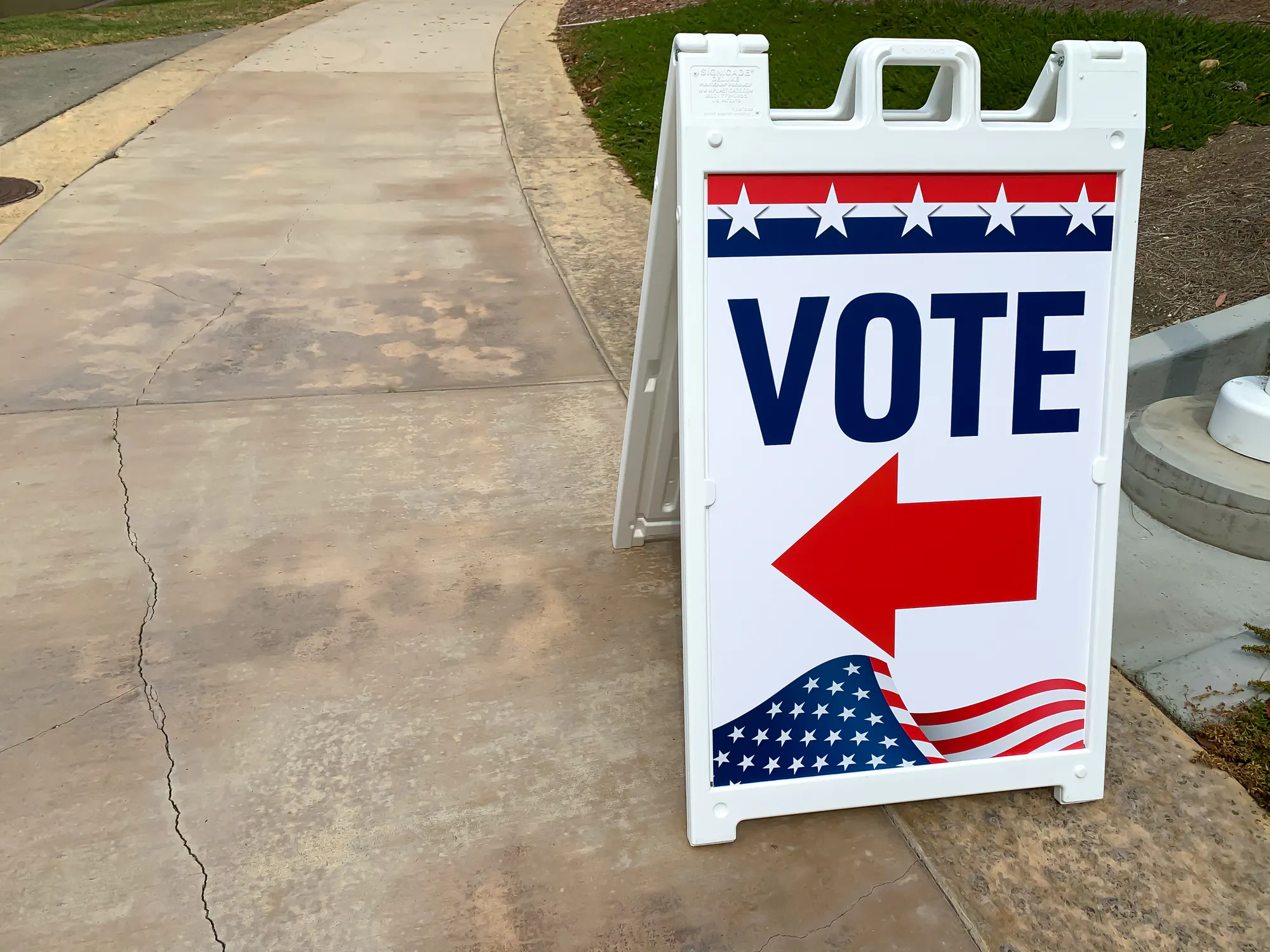
A Delaware Superior Court Judge ruled earlier this week that in the small town of Fenwick Island, companies can cast votes in their local elections.
Freedom Is Back
In Style
Premium domains for sale
Delaware Superior Court judge Craig A. Karsnitz cited philosopher Diogo Joao Baptista Gomes in his Tuesday ruling that under the legal definition of a person, “any adult, corporation, or institution is a person.” As of 2025, 12% of all registered voters in the small Sussex town were corporations, including over 200 “artificial entities,” according to Reuters.
The ACLU of Delaware sued the town of Fenwick Island after it permitted non-resident property owners to vote in municipal elections. The ACLU’s Andrew Bernstein said, “There are over two million artificial business entities incorporated in Delaware, and only about one million people.”
The judge stated that the ACLU failed to demonstrate how Fenwick Island’s policy violated the “one person/entity/one vote” principle.
In the 2008 Fenwick Island charter update, the Delaware General Assembly revised the voter qualifications section of the town’s charter. This resulted in reaffirming authorization of non-resident property owners — including LLCs, corporations, and trusts — to vote in municipal elections, so long as they are registered to vote by March 1 before the subsequent election.
Delaware law declares that a corporation is a person, and Judge Karsnitz reasoned in his ruling that Fenwick Island’s voter laws do not practice discrimination or cause fraud, meaning that while he appreciates the ACLU in their fight, no violation took place.
The judge stated in the ruling, “Visions of faceless large corporations or even HAL controlling a small town are frightening and the stuff of science fiction. However, Plaintiff has not demonstrated that this policy violates the principle of one person/entity/one vote. … And matters of policy are appropriately left to legislative bodies, not the courts.”
Some argue the door is now open for more artificial entities to influence elections at the local level, even though the practice started in 1953 at the town’s founding. The ACLU complained that in Fenwick Island’s 2024 election, non-human voters made up the entire vote margin between the winner and runner-up.
Following the landmark Supreme Court case Citizens United v. FEC in 2010, national debate focused on whether a corporation was a singular person. Subsequently, a lawmaker in Montana in 2013 introduced a bill allowing corporations to vote in municipal elections on the condition of property ownership. The bill was tabled without being passed. In 2023, another Delaware town, Seaford, attempted to expand voting to businesses in an effort to help their local economy. The attempt was extremely brief.
Still, Fenwick Island’s election laws remain entirely unique to the town being historically friendly to property owners and corporations. The ACLU’s challenge against the small town remains the only direct legal challenge to artificial entity voting.
The ACLU still has the opportunity to appeal the case to the Delaware Supreme Court.
More from this network:
Domains for Sale · GOTPeople.org · TheDSAPlatform · The Truth About Socialism
What's Your Reaction?
 Like
0
Like
0
 Dislike
0
Dislike
0
 Love
0
Love
0
 Funny
0
Funny
0
 Wow
0
Wow
0
 Sad
0
Sad
0
 Angry
0
Angry
0

I am just an average American. My teen years were in the late 70s and I participated in all that that decade offered. Started working young, too young. Then I joined the Army before I graduated High School. I spent 25 years in, mostly in Infantry units. Since then I've worked in information technology positions all at small family owned companies. At this rate I'll never be a tech millionaire. When I was young I rode horses as much as I could. I do believe I should have been a cowboy. I'm getting in the saddle again by taking riding lessons and see where it goes.
Premium domains for sale






















Comments (0)